Hadkar Vrushali Manoj, Mohanty Chirasmita, Selvaraj Chinnadurai Immanuel
School of Biosciences and Technology, Vellore Institute of Technology (VIT) Vellore 632014 Tamil Nadu India.
Department of Genetics and Plant Breeding, VIT School of Agricultural Sciences and Advanced Learning (VAIAL), VIT Vellore 632014 Tamil Nadu India
RSC Adv. 2024 Aug 12;14(35):25149-25173. doi: 10.1039/d4ra03911d.
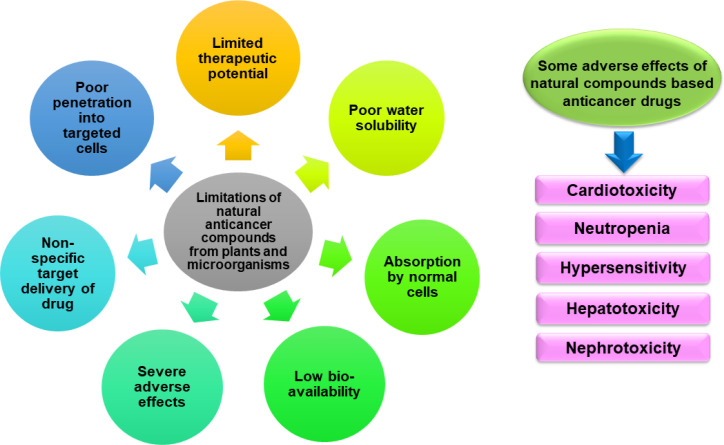
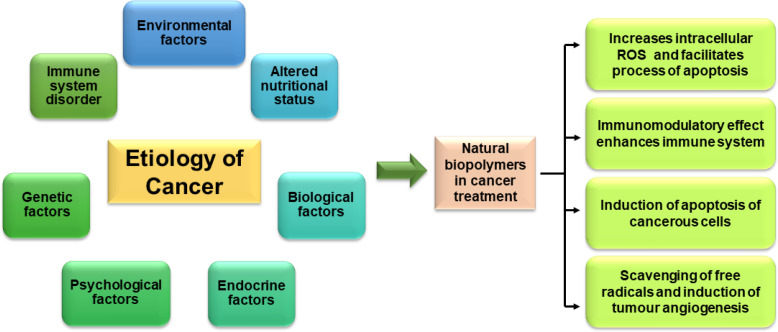
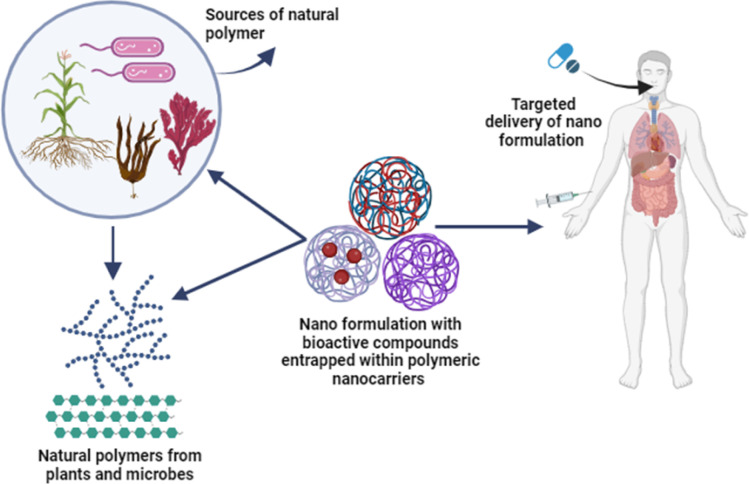
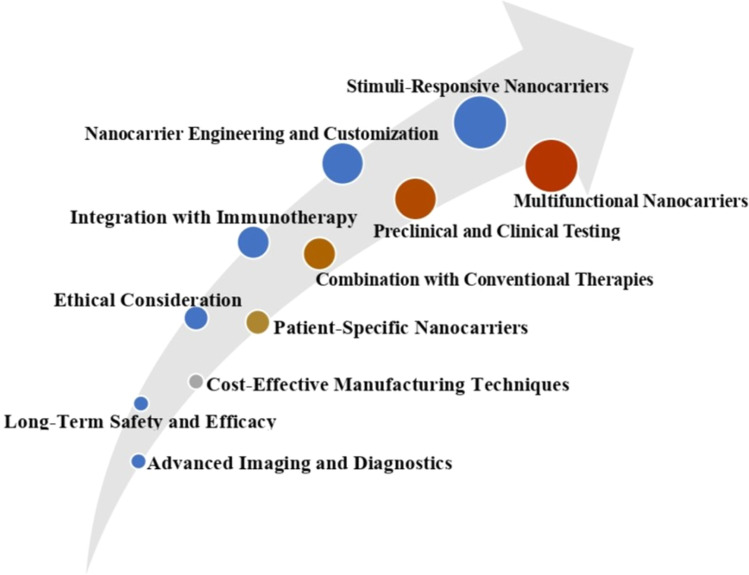
Effective cancer treatment is becoming a global concern, and recent developments in nanomedicine are essential for its treatment. Cancer is a severe metabolic syndrome that affects the human population and is a significant contributing factor to deaths globally. In science, nanotechnology offers rapidly developing delivery methods for natural bioactive compounds that are becoming increasingly prominent and can be used to treat diseases in a site-specific way. Chemotherapy and radiotherapy are conventional approaches for preventing cancer progression and have adverse effects on the human body. Many chemically synthesized drugs are used as anticancer agents, but they have several side effects; hence, they are less preferred. Medicinal plants and marine microorganisms represent a vast, mostly untapped reservoir of bioactive compounds for cancer treatment. However, they have several limitations, including nonspecific targeting, weak water solubility and limited therapeutic potential. An alternative option is the use of biopolymeric nanocarriers, which can generate effective targeted treatment therapies when conjugated with natural anticancer compounds. The present review focuses on biopolymeric nanocarriers utilizing natural sources as anticancer drugs with improved tumor-targeting efficiency. This review also covers various natural anticancer compounds, the advantages and disadvantages of natural and synthetic anticancer compounds, the problems associated with natural anticancer drugs and the advantages of biopolymeric nanocarriers over synthetic nanocarriers as drug delivery agents. This review also discusses various biopolymeric nanocarriers for enhancing the controlled delivery of anticancer compounds and the future development of nanomedicines for treating cancer.
有效的癌症治疗正成为全球关注的问题,纳米医学的最新进展对其治疗至关重要。癌症是一种严重的代谢综合征,影响着人类,是全球死亡的一个重要促成因素。在科学领域,纳米技术为天然生物活性化合物提供了快速发展的递送方法,这些化合物正变得越来越突出,并可用于以位点特异性方式治疗疾病。化疗和放疗是预防癌症进展的传统方法,对人体有不良影响。许多化学合成药物被用作抗癌剂,但它们有几种副作用;因此,它们不太受青睐。药用植物和海洋微生物代表了用于癌症治疗的生物活性化合物的巨大、大多未开发的宝库。然而,它们有几个局限性,包括非特异性靶向、水溶性差和治疗潜力有限。另一种选择是使用生物聚合物纳米载体,当与天然抗癌化合物结合时,它们可以产生有效的靶向治疗疗法。本综述重点关注利用天然来源作为抗癌药物的生物聚合物纳米载体,其具有提高的肿瘤靶向效率。本综述还涵盖了各种天然抗癌化合物、天然和合成抗癌化合物的优缺点、与天然抗癌药物相关的问题以及生物聚合物纳米载体作为药物递送剂相对于合成纳米载体的优势。本综述还讨论了用于增强抗癌化合物控释的各种生物聚合物纳米载体以及用于治疗癌症的纳米医学的未来发展。