Abdel-Magied Rasha A, Mokhtar Nehal W, Abdullah Noha M, Abdel-Naiem Al-Shaimaa M
Rheumatology, Rehabilitation and Physical Medicine Department, Minia University, Minia, Egypt.
Clinical Pathology Departement, Minia University, Minia, Egypt.
BMC Rheumatol. 2024 Aug 14;8(1):34. doi: 10.1186/s41927-024-00395-6.
to detect the role of procalcitonin, erythrocyte sedimentation rate to c-reactive protein (ESR/CRP) ratio, neutrophils-to-lymphocyte ratio (NLR), and platelets-to-lymphocyte ratio (PLR) in the diagnosis of infection in systemic lupus erythematosus (SLE) patients with fever, their diagnostic value to differentiate between infection and disease activity, and their correlation with disease activity.
Forty SLE patients and forty healthy control cases were included in the study. Disease activity was assessed by the Systemic Lupus Erythematosus Disease Activity Index 2000 (SLEDAI-2 K), and quality of life was assessed by Lupus QoL. A bacterial infection was detected by clinical symptoms and positive culture results. Laboratory tests were done for all patients and controls: complete blood count (CBC), ESR, CRP, and procalcitonin (PCT). NLR, PLR, and ESR/CRP ratios were calculated.
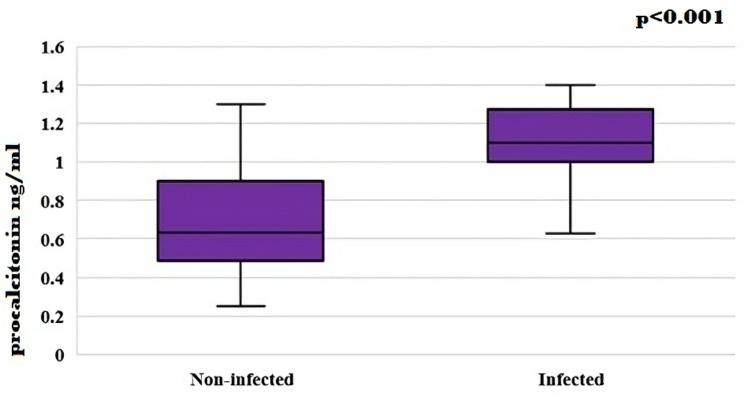
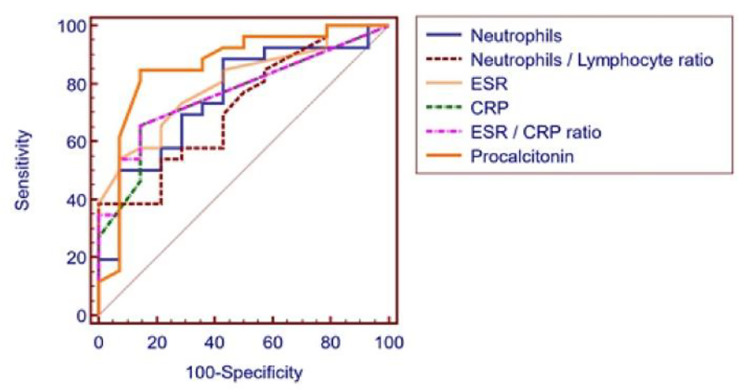
There was a statistically significant difference between infected SLE patients and non-infected SLE patients regarding PCT (p < 0.001), ESR (p = 0.002), CRP (p = 0.005), ESR/CRP ratio (0.002), and NLR (p = 0.023). PCT, ESR, CRP, and NLR were positively correlated with the presence of infection in SLE patients, while the ESR/CRP ratio was negatively correlated. There was no significant correlation with the SLEDAI-2 K score. Logistic regression analysis revealed that PCT was the best significant predictor of infection (OR 224.37, 95% CI 8.94-5631.35). PCT was a good predictor of infection, with a cut-off value of 0.90 ng/ml, which gave the best combination of sensitivity (84.62%) and specificity (85.71%).
PCT, ESR/CRP ratio, and NLR provide good diagnostic markers for the diagnosis of infection and can distinguish between infection and disease flare in SLE patients with fever.
检测降钙素原、红细胞沉降率与C反应蛋白比值(ESR/CRP)、中性粒细胞与淋巴细胞比值(NLR)以及血小板与淋巴细胞比值(PLR)在系统性红斑狼疮(SLE)发热患者感染诊断中的作用、它们在区分感染与疾病活动方面的诊断价值以及与疾病活动的相关性。
本研究纳入40例SLE患者和40例健康对照者。采用系统性红斑狼疮疾病活动指数2000(SLEDAI - 2K)评估疾病活动度,采用狼疮生活质量量表评估生活质量。通过临床症状和阳性培养结果检测细菌感染。对所有患者和对照者进行实验室检查:全血细胞计数(CBC)、ESR、CRP和降钙素原(PCT)。计算NLR、PLR和ESR/CRP比值。
感染的SLE患者与未感染的SLE患者在PCT(p < 0.001)、ESR(p = 0.002)、CRP(p = 0.005)、ESR/CRP比值(0.002)和NLR(p = 0.023)方面存在统计学显著差异。PCT、ESR、CRP和NLR与SLE患者感染的存在呈正相关,而ESR/CRP比值呈负相关。与SLEDAI - 2K评分无显著相关性。逻辑回归分析显示,PCT是感染的最佳显著预测指标(OR 224.37,95% CI 8.94 - 5631.35)。PCT是感染的良好预测指标,截断值为0.90 ng/ml,其敏感性(84.62%)和特异性(85.71%)的组合最佳。
PCT、ESR/CRP比值和NLR为感染诊断提供了良好的诊断标志物,可区分SLE发热患者的感染与疾病发作。