Division of Dento-Oral Anesthesiology, Tohoku University Graduate School of Dentistry, Miyagi, Japan.
Graduate School of Engineering, Tohoku University, Miyagi, Japan.
PLoS One. 2024 Aug 15;19(8):e0308755. doi: 10.1371/journal.pone.0308755. eCollection 2024.
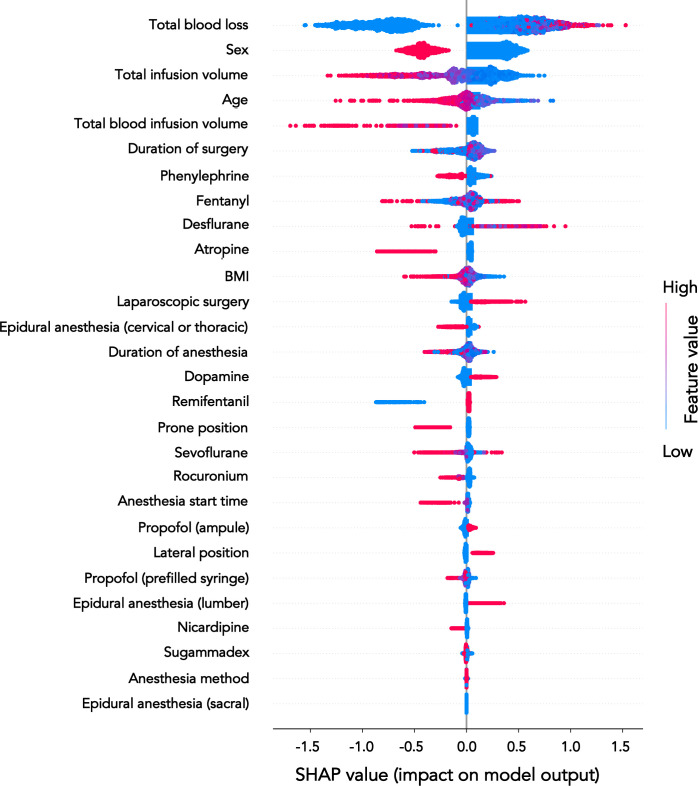
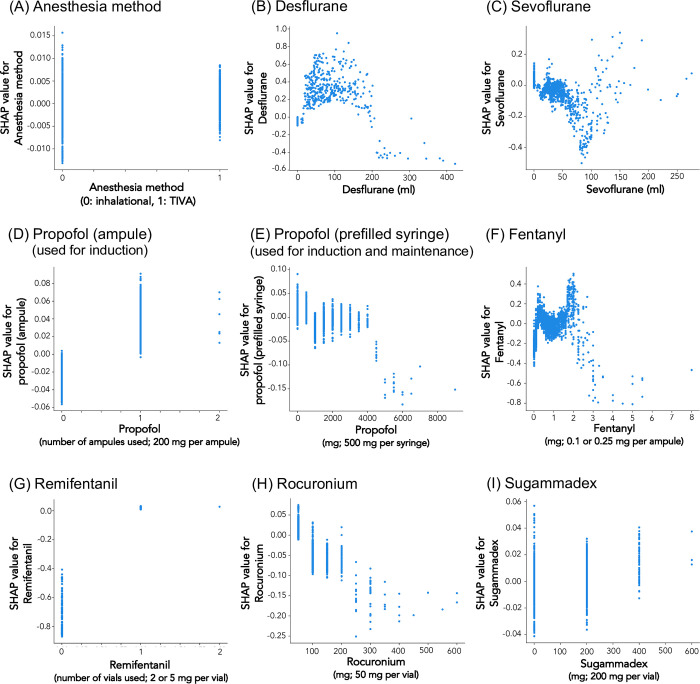
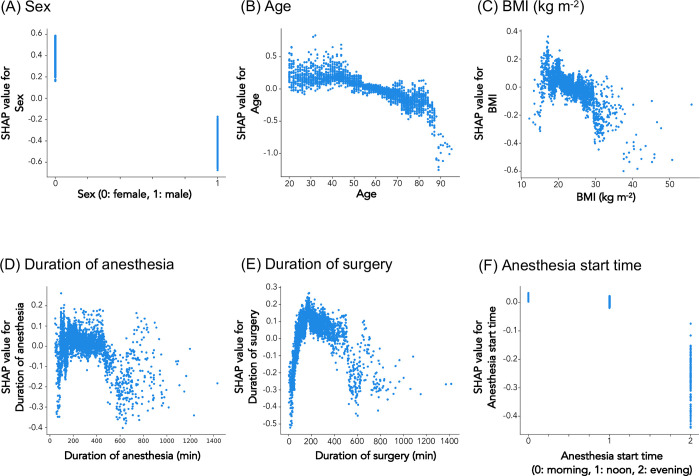
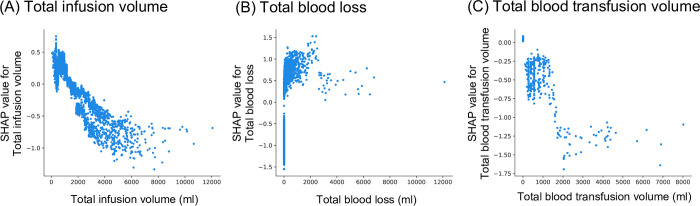
Postoperative nausea and vomiting (PONV) is a common adverse effect of anesthesia. Identifying risk factors for PONV is crucial because it is associated with a longer stay in the post-anesthesia care unit, readmissions, and perioperative costs. This retrospective study used artificial intelligence to analyze data of 37,548 adult patients (aged ≥20 years) who underwent surgery under general anesthesia at Tohoku University Hospital from January 1, 2010 to December 31, 2019. To evaluate PONV, patients who experienced nausea and/or vomiting or used antiemetics within 24 hours after surgery were extracted from postoperative medical and nursing records. We create a model that predicts probability of PONV using the gradient tree boosting model, which is a widely used machine learning algorithm in many applications due to its efficiency and accuracy. The model implementation used the LightGBM framework. Data were available for 33,676 patients. Total blood loss was identified as the strongest contributor to PONV, followed by sex, total infusion volume, and patient's age. Other identified risk factors were duration of surgery (60-400 min), no blood transfusion, use of desflurane for maintenance of anesthesia, laparoscopic surgery, lateral positioning during surgery, propofol not used for maintenance of anesthesia, and epidural anesthesia at the lumbar level. The duration of anesthesia and the use of either sevoflurane or fentanyl were not identified as risk factors for PONV. We used artificial intelligence to evaluate the extent to which risk factors for PONV contribute to the development of PONV. Intraoperative total blood loss was identified as the potential risk factor most strongly associated with PONV, although it may correlate with duration of surgery, and insufficient circulating blood volume. The use of sevoflurane and fentanyl and the anesthesia time were not identified as risk factors for PONV in this study.
术后恶心和呕吐(PONV)是麻醉的常见不良反应。确定 PONV 的风险因素至关重要,因为它与麻醉后监护病房停留时间延长、再入院和围手术期成本增加有关。这项回顾性研究使用人工智能分析了 2010 年 1 月 1 日至 2019 年 12 月 31 日期间在东北大学医院接受全身麻醉下手术的 37548 名成年患者(年龄≥20 岁)的数据。为了评估 PONV,从术后医疗和护理记录中提取了在手术后 24 小时内出现恶心和/或呕吐或使用止吐药的患者。我们创建了一个使用梯度提升树模型预测 PONV 概率的模型,该模型是一种在许多应用中由于其效率和准确性而广泛使用的机器学习算法。该模型的实现使用了 LightGBM 框架。数据可用于 33676 名患者。总失血量被确定为 PONV 的最强影响因素,其次是性别、总输液量和患者年龄。其他确定的风险因素包括手术时间(60-400 分钟)、无输血、使用地氟醚维持麻醉、腹腔镜手术、手术中侧卧位、不使用丙泊酚维持麻醉以及腰段硬膜外麻醉。麻醉时间和使用七氟醚或芬太尼均未被确定为 PONV 的危险因素。我们使用人工智能来评估 PONV 的风险因素对 PONV 发展的影响程度。术中总失血量被确定为与 PONV 最密切相关的潜在危险因素,尽管它可能与手术时间和循环血量不足有关。在本研究中,未发现使用七氟醚和芬太尼以及麻醉时间是 PONV 的危险因素。