Wu Feilong, Che Kai, Chang Yawen
College School of Sports Science, Shenyang Normal University, Shenyang, China.
Department of Physical Education, Xi'an Aeronautical University, Xi'an, China.
Alpha Psychiatry. 2024 Jun 1;25(3):356-361. doi: 10.5152/alphapsychiatry.2024.231511. eCollection 2024 Jun.
This study aimed to evaluate the effectiveness of Qi Gong fitness in alleviating stress, anxiety, and depression among underprivileged working youth with a follow-up study.
Eighty subjects were randomly assigned to normal groups (NG) and treatment groups (TG), with 40 participants in each group. The Perceived Stress Scale (PSS), Generalized Anxiety Disorder 7 (GAD-7), and 24-Item Hamilton Rating Scale for Depression (HAMD-24) were used to evaluate the effect of Qi Gong fitness on alleviating stress, anxiety, and depression symptoms in underprivileged working youth.
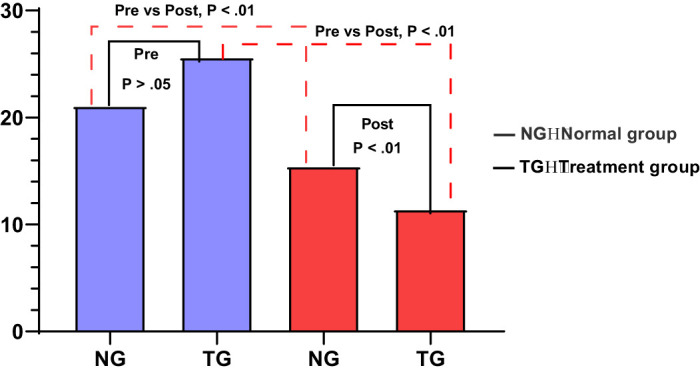
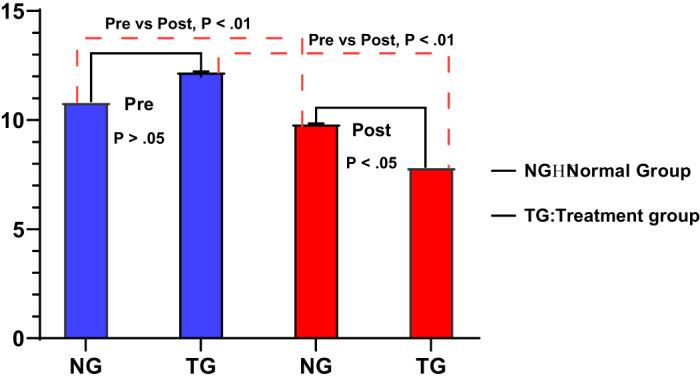
There was no significant difference in demographic outcome indicators between NG and TG. The main analytic results showed significant differences ( < .05) in the intra- and inter-group comparisons of NG and TG in stress, anxiety, and depression before and after intervention. When compared with prior intervention, NG and TG after intervention showed more favorable scores in PSS, GAD-7, and HAMD-24, among which PSS (NG: 51.61 ± 4.32 vs. 29.80 ± 3.08; TG: 55.21 ± 5.41 vs. 15.85 ± 2.25; < .01), GAD-7 (NG: 10.83 ± 2.45 vs. 9.85 ± 2.52; TG: 12.23 ± 1.90 vs. 7.84 ± 1.57; < .01), and HAMD-24 (NG: 10.83 ± 2.45 vs. 9.85 ± 2.52; TG: 25.63 ± 3.94 vs. 11.40 ± 3.82; < .01); These results indicate that NG and TG have significant effects on alleviating occupational stress, anxiety, and depression in young underprivileged people.
The study indicates that Qi Gong fitness had a positive effect on reducing and alleviating stress, anxiety, and depression among young underprivileged professionals. This highlights the potential benefits of incorporating Qi Gong fitness into treatment plans.
本研究旨在通过一项随访研究,评估气功健身对贫困在职青年缓解压力、焦虑和抑郁的效果。
80名受试者被随机分为正常组(NG)和治疗组(TG),每组40人。采用感知压力量表(PSS)、广泛性焦虑障碍7项量表(GAD-7)和24项汉密尔顿抑郁评定量表(HAMD-24)来评估气功健身对缓解贫困在职青年压力、焦虑和抑郁症状的效果。
NG和TG在人口统计学结果指标上无显著差异。主要分析结果显示,在干预前后,NG和TG在压力、焦虑和抑郁方面的组内和组间比较存在显著差异(<.05)。与干预前相比,干预后的NG和TG在PSS、GAD-7和HAMD-24上的得分更优,其中PSS(NG:51.61±4.32对29.80±3.08;TG:55.21±5.41对15.85±2.25;<.01),GAD-7(NG:10.83±2.45对9.85±2.52;TG:12.23±1.90对7.84±1.57;<.01),以及HAMD-24(NG:10.83±2.45对9.85±2.52;TG:25.63±3.94对11.40±3.82;<.01);这些结果表明,NG和TG对缓解贫困青年的职业压力、焦虑和抑郁有显著效果。
该研究表明,气功健身对减轻和缓解贫困青年专业人员的压力、焦虑和抑郁有积极作用。这突出了将气功健身纳入治疗计划的潜在益处。