University of Notre Dame, Department of Civil and Environmental Engineering and Earth Sciences, Notre Dame, IN, USA.
Boston University, Department of Materials Science and Engineering, Boston, MA, USA.
NPJ Biofilms Microbiomes. 2024 Aug 19;10(1):70. doi: 10.1038/s41522-024-00544-2.
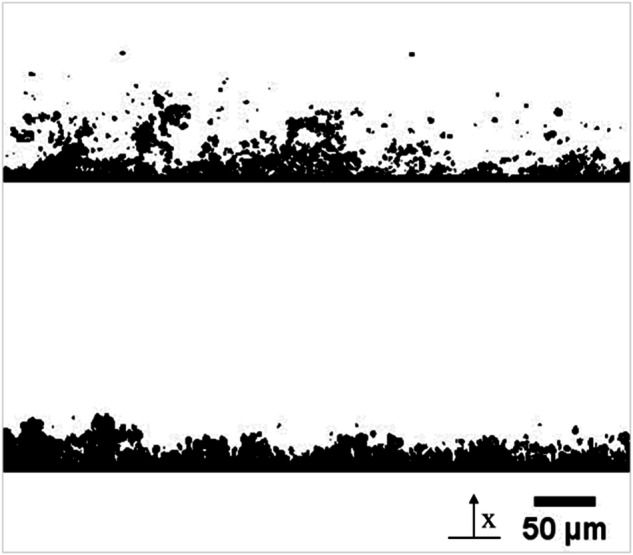
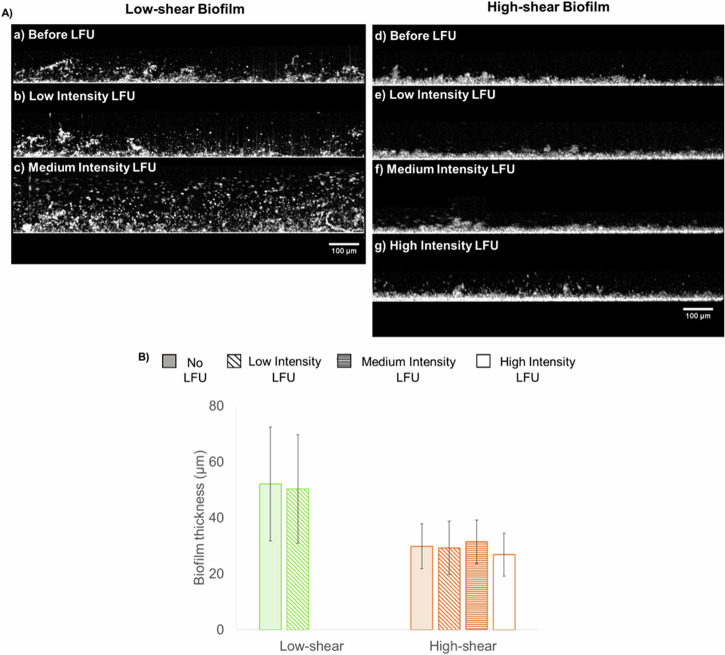
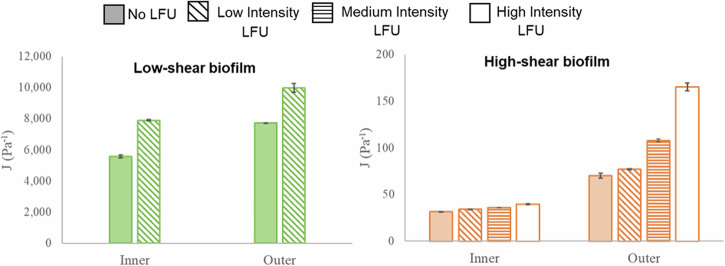
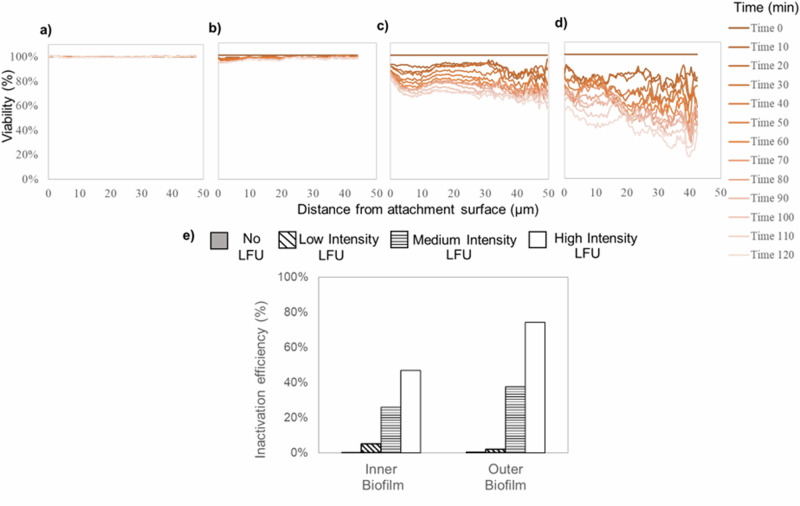
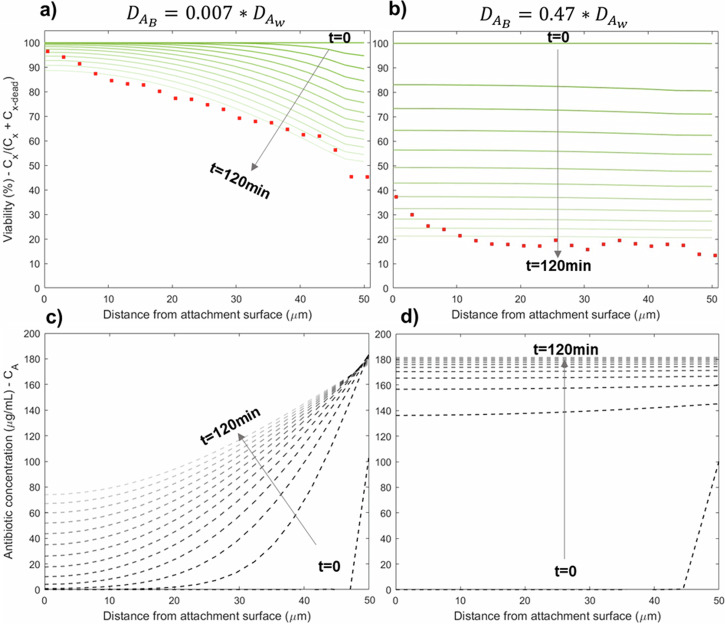
Biofilms are highly resistant to antimicrobials, often causing chronic infections. Combining antimicrobials with low-frequency ultrasound (LFU) enhances antimicrobial efficiency, but little is known about the underlying mechanisms. Biofilm physical characteristics, which depend on factors such as growth conditions and age, can have significant effects on inactivation efficiency. In this study, we investigated the susceptibility of Pseudomonas aeruginosa biofilms to tobramycin, with and without LFU treatment. The biofilms were grown under low and high fluid shear to provide different characteristics. Low-shear biofilms exhibited greater thickness, roughness, and porosity and lower density, compared to high-shear biofilms. The biofilm matrix of the high-shear biofilms had a three times higher protein-to-polysaccharide ratio, suggesting greater biofilm stiffness. This was supported by microrheology measurements of biofilm creep compliance. For the low-shear biofilms without LFU, the viability of the biofilms in their inner regions was largely unaffected by the antibiotic after a 2-hour treatment. However, when tobramycin was combined with LFU, the inactivation for the entire biofilm increased to 80% after 2 h. For the high-shear biofilms without LFU, higher LFU intensities were needed to achieve similar inactivation results. Microrheology measurements revealed that changes in biofilm inactivation profiles were closely related to changes in biofilm mechanical properties. Modeling suggests that LFU changes antibiotic diffusivity within the biofilm, probably due to a "decohesion" effect. Overall, this research suggests that biofilm physical characteristics (e.g., compliance, morphology) are linked to antimicrobial efficiency. LFU weakens the biofilm while increasing its diffusivity for antibiotics.
生物膜对杀菌剂具有很强的抵抗力,经常导致慢性感染。将杀菌剂与低频超声(LFU)结合使用可以提高杀菌效率,但对于其潜在机制知之甚少。生物膜的物理特性取决于生长条件和年龄等因素,对失活动力学有显著影响。在这项研究中,我们研究了铜绿假单胞菌生物膜对妥布霉素的敏感性,以及有无 LFU 处理。生物膜在低和高流体剪切力下生长,以提供不同的特性。与高剪切力生物膜相比,低剪切力生物膜表现出更大的厚度、粗糙度和孔隙率以及更低的密度。高剪切力生物膜的生物膜基质中蛋白质与多糖的比例是其三倍,表明生物膜的刚性更大。生物膜蠕变顺应性的微流变学测量结果支持了这一点。对于没有 LFU 的低剪切力生物膜,在没有 LFU 的情况下,抗生素处理 2 小时后,生物膜内层的生物膜活力基本不受抗生素影响。然而,当妥布霉素与 LFU 联合使用时,整个生物膜的失活率在 2 小时后增加到 80%。对于没有 LFU 的高剪切力生物膜,需要更高的 LFU 强度才能达到类似的失活效果。微流变学测量结果表明,生物膜失活动力学的变化与生物膜机械性能的变化密切相关。建模表明,LFU 改变了生物膜内抗生素的扩散性,可能是由于“解聚”效应。总的来说,这项研究表明生物膜的物理特性(如顺应性、形态)与抗菌效率有关。LFU 削弱生物膜的同时增加了抗生素的扩散性。