Department of Cell and Molecular Biology, University of Rhode Island, Kingston, Rhode Island, USA.
Department of Microbiology, ADA Forsyth Institute, Cambridge, Massachusetts, USA.
mSystems. 2024 Sep 17;9(9):e0067424. doi: 10.1128/msystems.00674-24. Epub 2024 Aug 21.
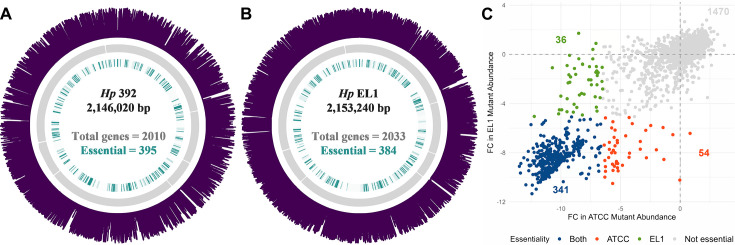
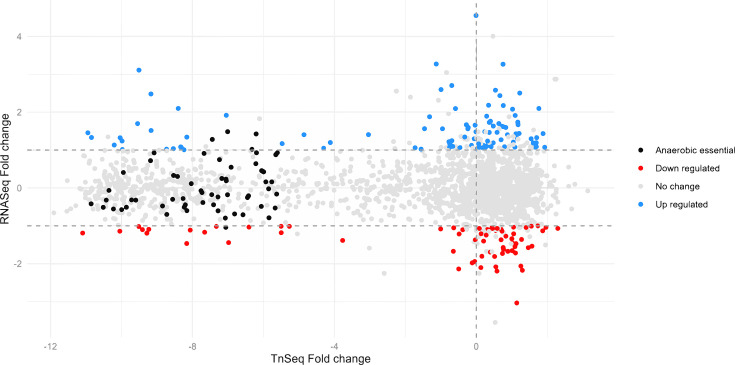
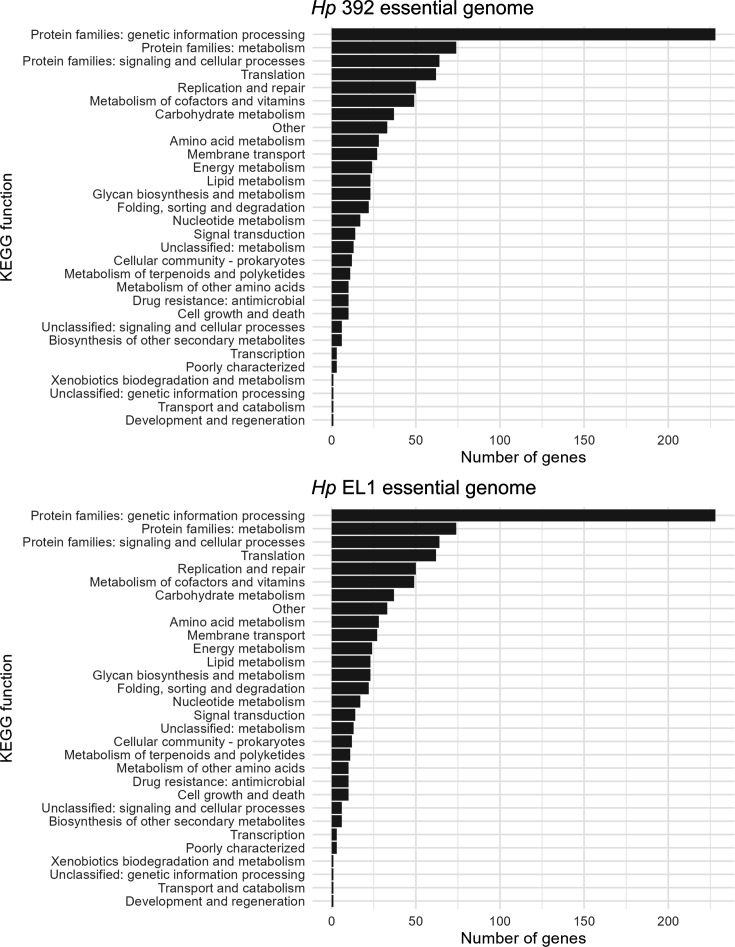
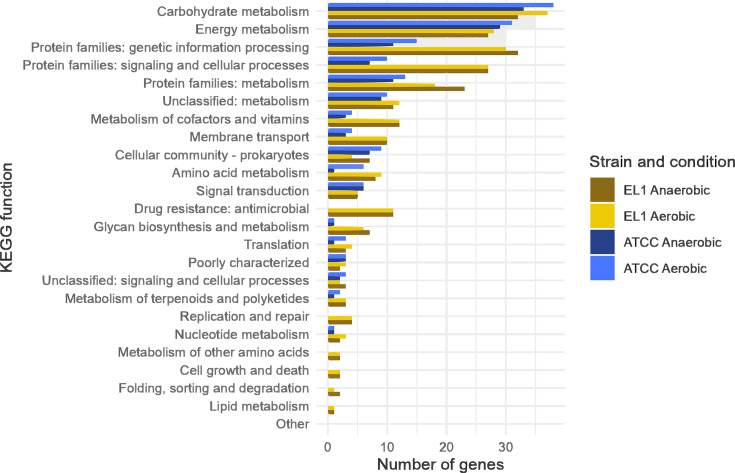
() is a Gram-negative, highly prevalent, and abundant commensal in the human oral cavity, and an infrequent extraoral opportunistic pathogen. occupies multiple niches in the oral cavity, including the supragingival plaque biofilm. Little is known about how interacts with its neighbors in healthy biofilms nor its mechanisms of pathogenesis as an opportunistic pathogen. To address this, we identified the essential genome and conditionally essential genes in biofilms aerobically and anaerobically. Using transposon insertion sequencing (TnSeq) with a highly saturated transposon library in two strains, the ATCC33392 type-strain ( 392) and oral isolate EL1 ( EL1), we show that the essential genomes of 392 and EL1 are composed of 395 (20%) and 384 (19%) genes, respectively. The core essential genome, consisting of 341 (17%) essential genes conserved between both strains, was composed of genes associated with genetic information processing, carbohydrate, protein, and energy metabolism. We also identified conditionally essential genes for aerobic and anaerobic biofilm growth, which were associated with carbohydrate and energy metabolism in both strains. RNAseq analysis determined that most genes upregulated during anaerobic growth are not essential for 392 anaerobic survival. The completion of this library and analysis under these conditions gives us a foundational insight into the basic biology of in differing oxygen conditions, similar to its habitat. This library presents a valuable tool for investigation into conditionally essential genes for an organism that lives in close contact with many microbial species in the human oral habitat.IMPORTANCE is a highly abundant human commensal microbe, present in most healthy individuals where it colonizes the mouth. correlates with good oral health and may play a role in preservation of healthy host status. Also, can cause opportunistic infections outside of the oral cavity. To date, little is known about how colonizes the human host, despite being such a frequent and abundant part of our human microbiome. Here, we demonstrate the creation and use of a powerful tool, a TnSeq library, used to identify genes necessary for both the outright growth of this organism and also genes conditionally essential for growth in varying oxygen status which it can encounter in the human host. This tool and these data serve as a foundation for further study of this relatively unknown organism that may play a role in preserving human health.
()是一种革兰氏阴性、高度流行和丰富的人类口腔共生菌,也是一种罕见的口腔外机会性病原体。它占据了口腔中的多个生态位,包括龈上菌斑生物膜。目前尚不清楚它在健康生物膜中如何与相邻微生物相互作用,也不清楚它作为机会性病原体的发病机制。为了解决这个问题,我们在有氧和无氧条件下鉴定了生物膜中的必需基因组和条件必需基因。我们使用转座子插入测序(TnSeq)和两种菌株(ATCC33392 型株(392)和口腔分离株 EL1(EL1))中高度饱和的转座子文库,表明 392 和 EL1 的必需基因组分别由 395(20%)和 384(19%)个基因组成。由两个菌株中 341 个(17%)保守的必需基因组成的核心必需基因组,包含与遗传信息处理、碳水化合物、蛋白质和能量代谢相关的基因。我们还鉴定了有氧和无氧生物膜生长的条件必需基因,这些基因与两种菌株中的碳水化合物和能量代谢有关。RNAseq 分析确定,在厌氧生长过程中上调的大多数基因不是 392 厌氧生存所必需的。在这些条件下完成该文库并进行分析,使我们对不同氧条件下的基本生物学有了基础性的了解,类似于其栖息地。该文库为研究与人类口腔栖息地中许多微生物密切接触的生物体的条件必需基因提供了宝贵的工具。
是一种高度丰富的人类共生微生物,存在于大多数健康个体中,定植于口腔。它与良好的口腔健康相关,可能在维持宿主健康状态方面发挥作用。此外,还可以引起口腔外的机会性感染。迄今为止,尽管是我们人类微生物组中如此频繁和丰富的一部分,但人们对其如何定植于人类宿主知之甚少。在这里,我们展示了一种强大工具的创建和使用,即 TnSeq 文库,用于鉴定该生物体绝对生长所必需的基因,以及在其可能在人类宿主中遇到的不同氧状态下条件必需的生长基因。该工具和这些数据为进一步研究这个相对未知的生物体奠定了基础,该生物体可能在维持人类健康方面发挥作用。