Zhan Liying, Lv Zhihua, Zhang Yunjing, Chen Jingdi, Wang Lu, Huang Raojuan, Sun Yaqi, Wu Wei
Department of Critical Care Medicine, Renmin Hospital of Wuhan University, Wuhan, Hubei, People's Republic of China.
Department of Clinical Laboratory, Institute of Translational medicine, Renmin Hospital of Wuhan University, Wuhan, Hubei, People's Republic of China.
Infect Drug Resist. 2024 Aug 17;17:3605-3615. doi: 10.2147/IDR.S474410. eCollection 2024.
Application of metagenomic next-generation sequencing (mNGS) in identifying nosocomial central nervous system (CNS) infections in critical care units remains understudied.
We conducted a retrospective analysis of microbiological results through both mNGS and routine examination of cerebrospinal fluid (CSF) samples from patients with nosocomial CNS infections. The aim of this study was to assess the clinical diagnostic effect of nosocomial mNGS in this population.
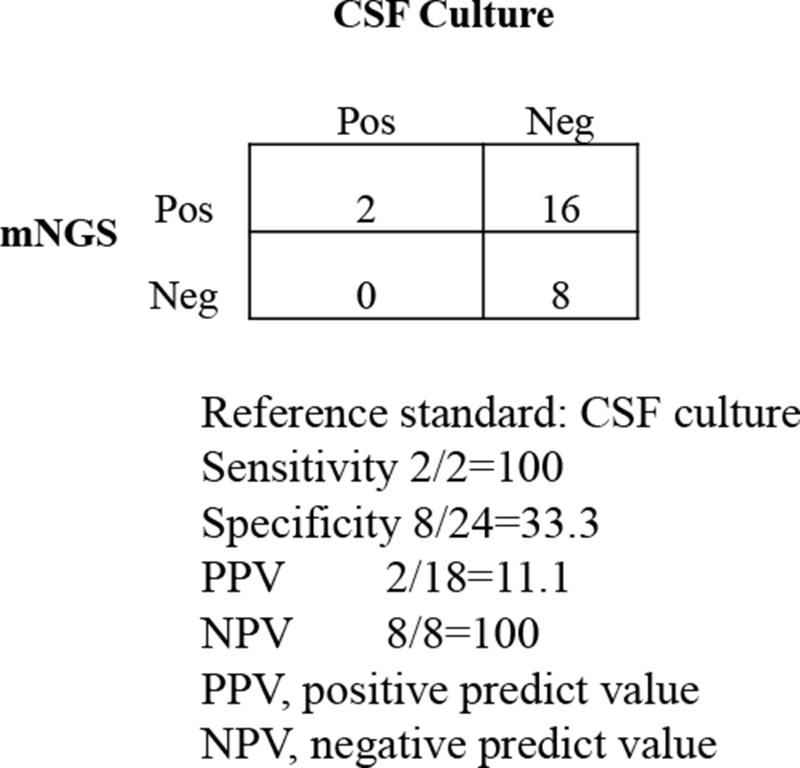
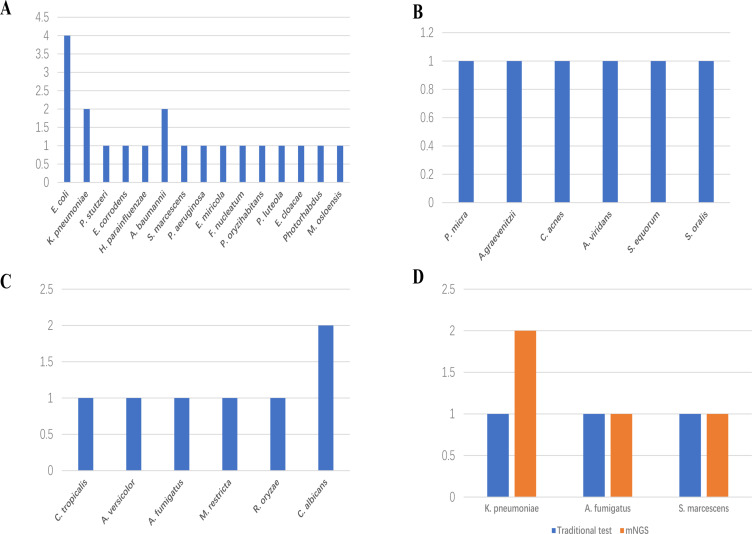
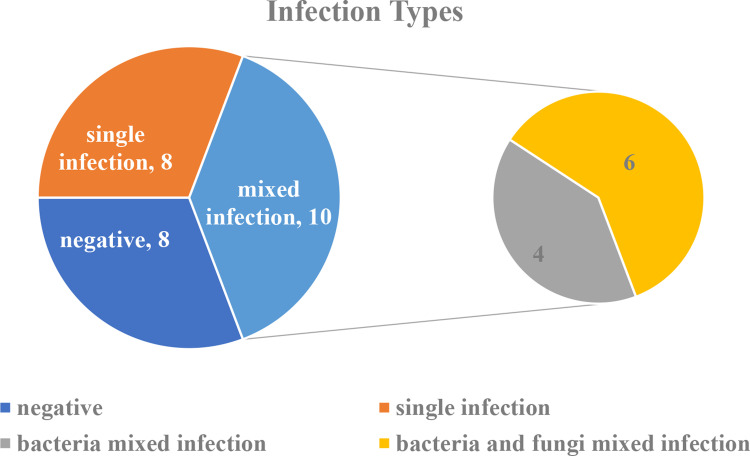
The study included 26 cases of nosocomial CNS infections in total. A total of 69.2% (18/26) of the samples tested positive for mNGS, which is substantially greater than the 7.7% (2/26; <0.05) detected through conventional techniques. Administration of antibiotics before culture is most likely the cause of the low CSF culture rate. Twenty-five pathogenic strains that were missed by standard testing. Three pathogens that were consistent with the mNGS results were positive by routine tests. Eight cases were negative by mNGS due to low pathogen CSF titres. Compared to traditional testing, mNGS demonstrated 100% sensitivity and 33.3% specificity in diagnosing CNS infections. The thirty-day mortality rate was 26.9% (7/26).
Routine microbiologic testing frequently falls short of detecting all neuroinvasive pathogens. Our research suggests that mNGS offers an alternative means of detecting nosocomial CNS infections. By applying mNGS to CSF samples from patients with meningitis or encephalitis, we were able to improve the ability to diagnose nosocomial neurologic infections.
宏基因组下一代测序(mNGS)在重症监护病房医院获得性中枢神经系统(CNS)感染的诊断中的应用仍未得到充分研究。
我们对医院获得性CNS感染患者脑脊液(CSF)样本进行mNGS和常规检测的微生物学结果进行了回顾性分析。本研究的目的是评估医院获得性mNGS在该人群中的临床诊断效果。
该研究共纳入26例医院获得性CNS感染病例。mNGS检测样本的阳性率为69.2%(18/26),显著高于传统技术检测的7.7%(2/26;P<0.05)。培养前使用抗生素很可能是脑脊液培养率低的原因。标准检测遗漏了25种致病菌株。常规检测有3种病原体与mNGS结果一致呈阳性。8例因病原体脑脊液滴度低mNGS检测为阴性。与传统检测相比,mNGS在诊断CNS感染方面的敏感性为100%,特异性为33.3%。30天死亡率为26.9%(7/26)。
常规微生物检测常常无法检测到所有神经侵袭性病原体。我们的研究表明,mNGS为检测医院获得性CNS感染提供了一种替代方法。通过将mNGS应用于脑膜炎或脑炎患者的脑脊液样本,我们能够提高诊断医院获得性神经感染的能力。