Department of Neurology, The Second Hospital of Hebei Medical University, Shijiazhuang, 050000, Hebei, People's Republic of China.
Ann Clin Microbiol Antimicrob. 2023 Jun 2;22(1):44. doi: 10.1186/s12941-023-00596-w.
Neurobrucellosis (NB) presents a challenge for rapid and specific diagnosis. Next-generation sequencing (NGS) of cerebrospinal fluid (CSF) has showed power in detection of causative pathogens, even some infrequent and unexpected pathogens. In this study, we presented 8 cases of NB diagnosed by the NGS of CSF.
Between August 1, 2018 and September 30, 2020, NGS was used to detect causative pathogens in clinically suspected central nervous system (CNS) infections. Data on demographics, clinical features, and laboratory tests, imaging results and NGS results were collected and reviewed.
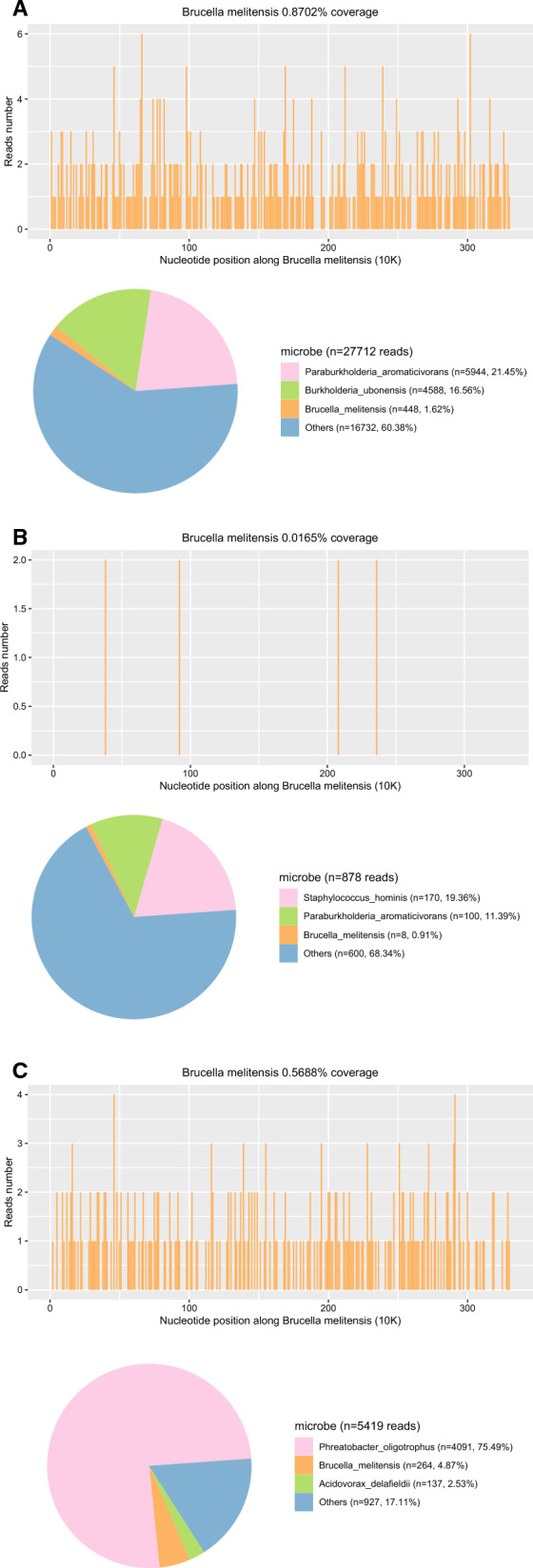
Among the presented 8 patients, Brucella was rapidly detected using NGS of CSF within 1-4 days, despite those eight patients had variable medical history, disease course, clinical manifestations, laboratory tests and imaging findings. NGS showed the sequence reads corresponded to Brucella species were 8 to 448, with genomic coverage of 0.02 to 0.87%. The relative abundance was 0.13% to 82.40% and sequencing depth was 1.06 to 1.24. Consequently, patients were administered with 3 to 6 months of doxycycline, ceftriaxone and rifampicin, double or triple combination, supplemented with symptomatic therapy and were fully recovered except for case 1.
NGS of CSF provides a powerful tool in detection of Brucella in a prompt and specific manner, and can be considered for first-line diagnostic use in practice.
神经布鲁氏菌病(NB)的快速和特异性诊断具有挑战性。脑脊液(CSF)的下一代测序(NGS)在检测病原体方面具有强大的作用,甚至可以检测到一些不常见和意外的病原体。在本研究中,我们报告了 8 例通过 CSF 的 NGS 诊断的 NB 病例。
在 2018 年 8 月 1 日至 2020 年 9 月 30 日期间,我们使用 NGS 检测了临床疑似中枢神经系统(CNS)感染的病原体。收集并回顾了人口统计学、临床特征、实验室检查、影像学结果和 NGS 结果的数据。
在所呈现的 8 例患者中,尽管这 8 例患者具有不同的病史、病程、临床表现、实验室检查和影像学表现,但通过 CSF 的 NGS 在 1-4 天内快速检测到布鲁氏菌。NGS 显示与布鲁氏菌属相对应的序列读数为 8 到 448,基因组覆盖率为 0.02 到 0.87%。相对丰度为 0.13%到 82.40%,测序深度为 1.06 到 1.24。因此,患者接受了 3 至 6 个月的多西环素、头孢曲松和利福平的治疗,双或三联药物联合治疗,辅以对症治疗,除了 1 例患者外,其他患者均完全康复。
CSF 的 NGS 提供了一种快速、特异性检测布鲁氏菌的强大工具,可以考虑将其作为临床一线诊断方法。