Zhu Quanfeng, Zhang Peng, Liu Daqun, Tang Leilei, Yu Jiawen, Zhang Chengcheng, Jiang Guojun
Affiliated Xiaoshan Hospital, Hangzhou Normal University, Hangzhou, China.
Food Science Institute, Zhejiang Academy of Agricultural Sciences, Hangzhou, China.
Front Nutr. 2024 Aug 8;11:1442535. doi: 10.3389/fnut.2024.1442535. eCollection 2024.
Radish seed is a functional food with many beneficial health effects. Glucosinolates are characteristic components in radish seed that can be transformed into bioactive isothiocyanates by gut microbiota.
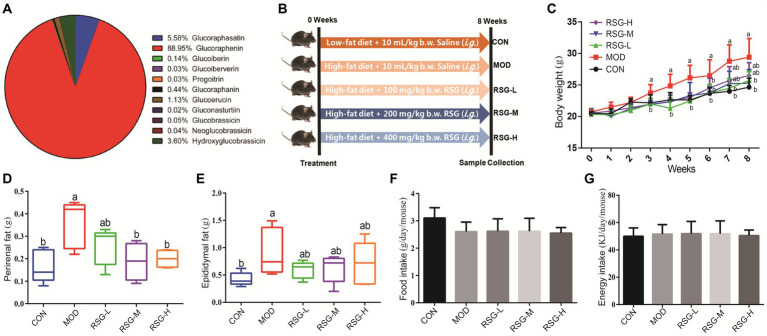
The present study aims to assess anti-obesity efficacy of radish seed glucosinolates (RSGs) and explored the underlying mechanisms with a focus on gut microbiota and fecal metabolome.
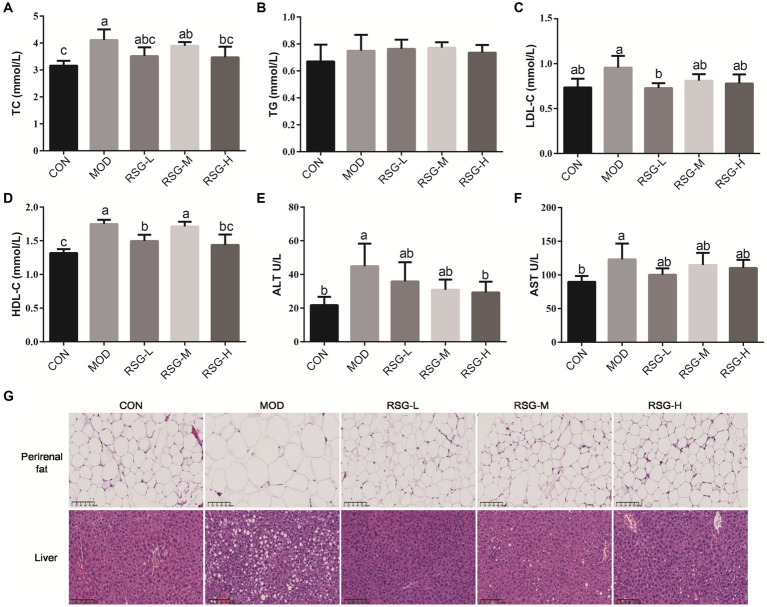
High-fat diet-induced obese mice were supplemented with different doses of RSGs extract for 8 weeks. Changes in body weight, serum lipid, alanine aminotransferase (ALT), and aspartate aminotransferase (AST) levels; and pathological changes in the liver and adipose tissue were examined. Fecal metabolome and 16S rRNA gene sequencing were used to analyze alterations in fecal metabolite abundance and the gut microbiota, respectively.
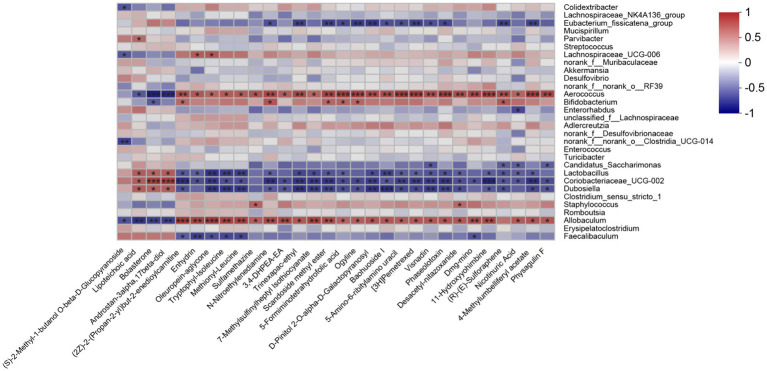
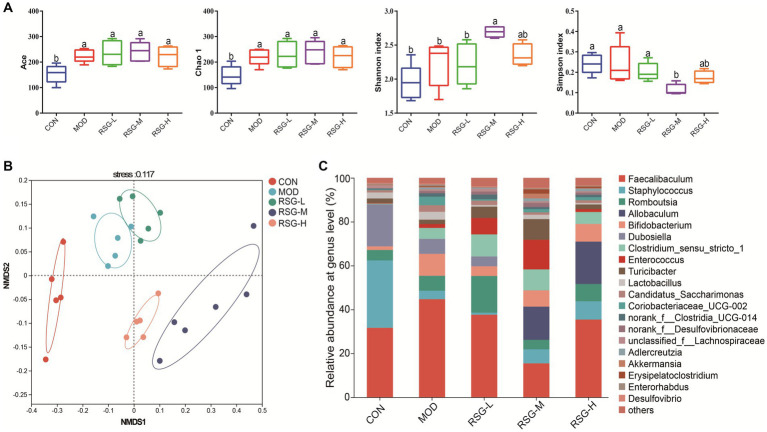
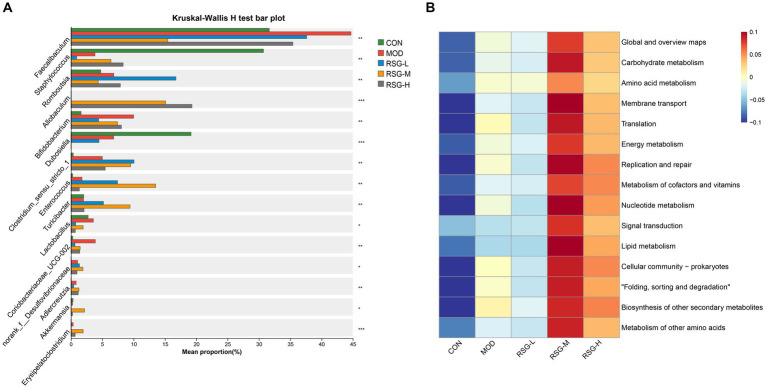
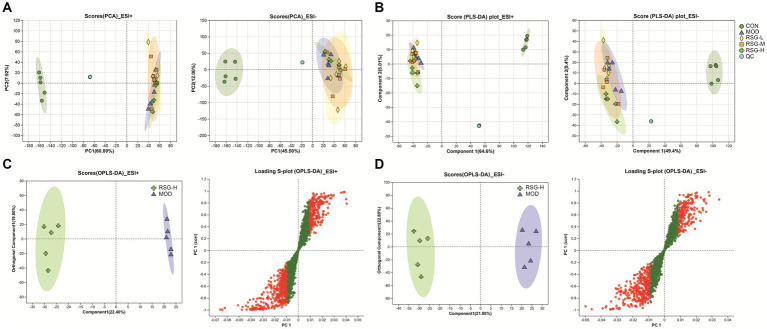
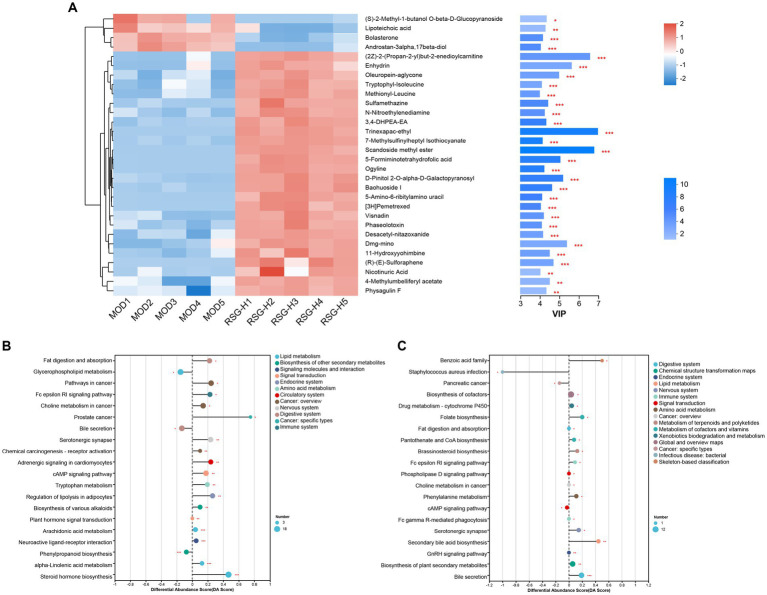
Results showed that RSG extract prevented weight gain and decreased serum lipid, ALT, AST levels and lipid deposition in liver and epididymal adipocytes in obese mice. Treatment with RSG extract also increased gut microbiota diversity and altered the dominant bacteria genera in the gut microbiota, decreasing the abundance of and increasing the abundance of , , , and . Fecal metabolome results identified 570 differentially abundant metabolites, of which glucosinolate degradation products, such as sulforaphene and 7-methylsulfinylheptyl isothiocyanate, were significantly upregulated after RSG extract intervention. Furthermore, enrichment analysis of metabolic pathways showed that the anti-obesity effects of RSG extract may be mediated by alterations in bile secretion, fat digestion and absorption, and biosynthesis of plant secondary metabolites. Overall, RSG extract can inhibit the development of obesity, and the obesity-alleviating effects of RSG are related to alternative regulation of the gut microbiota and glucosinolate metabolites.
萝卜籽是一种具有多种有益健康功效的功能性食品。硫代葡萄糖苷是萝卜籽中的特征性成分,可被肠道微生物群转化为生物活性异硫氰酸盐。
本研究旨在评估萝卜籽硫代葡萄糖苷(RSGs)的抗肥胖功效,并探讨其潜在机制,重点关注肠道微生物群和粪便代谢组。
给高脂饮食诱导的肥胖小鼠补充不同剂量的RSGs提取物,持续8周。检测体重、血清脂质、丙氨酸氨基转移酶(ALT)和天冬氨酸氨基转移酶(AST)水平的变化,以及肝脏和脂肪组织的病理变化。分别采用粪便代谢组学和16S rRNA基因测序分析粪便代谢物丰度和肠道微生物群的变化。
结果表明,RSG提取物可防止肥胖小鼠体重增加,降低血清脂质、ALT、AST水平以及肝脏和附睾脂肪细胞中的脂质沉积。RSG提取物处理还增加了肠道微生物群的多样性,改变了肠道微生物群中的优势细菌属,降低了[未提及的菌属]的丰度,增加了[提及的菌属]的丰度。粪便代谢组学结果鉴定出570种差异丰富的代谢物,其中萝卜硫素和7-甲基亚磺酰基庚基异硫氰酸酯等硫代葡萄糖苷降解产物在RSG提取物干预后显著上调。此外,代谢途径富集分析表明,RSG提取物的抗肥胖作用可能通过胆汁分泌、脂肪消化吸收和植物次生代谢物生物合成的改变来介导。总体而言,RSG提取物可抑制肥胖的发展,RSG的减肥作用与肠道微生物群和硫代葡萄糖苷代谢物的交替调节有关。