McDermott Ashley F, Brydges Christopher R, Norris Troy W
WellBalance Institute, Boston, MA, United States.
NIH West Coast Center, University of California, Davis, Davis, CA, United States.
Front Psychol. 2024 Aug 8;15:1396543. doi: 10.3389/fpsyg.2024.1396543. eCollection 2024.
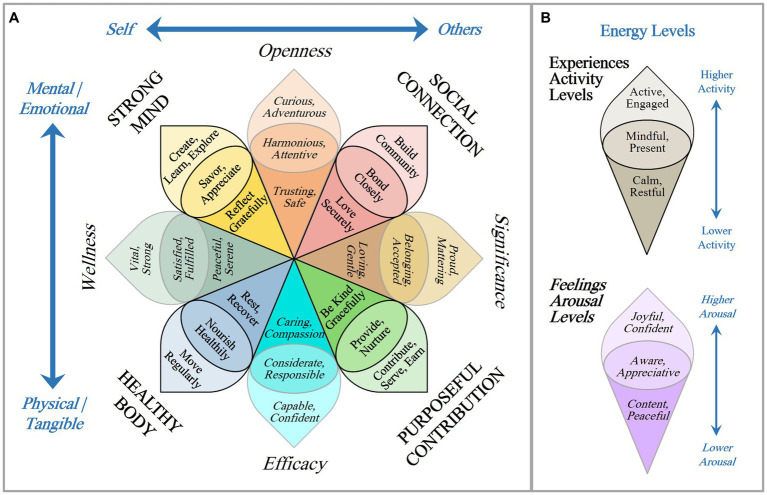
Widely used measures of self-reported subjective well-being and flourishing generally do not directly measure positive experiences that have been demonstrated to improve subjective well-being and flourishing, which could aid in developing personalized interventions to improve individuals' well-being. The present study evaluated the validity of the Well-being Balance and Lived Experience (WBAL) Model and Assessment, a new model of well-being and corresponding assessment instrument that evaluates the self-reported frequency of positive experiences and positive feelings of well-being, balanced across activation and arousal levels.
A total of 496 evaluable subjects completed the WBAL Assessment, the PERMA+ Profiler (PERMA+) and the Well-Being Assessment Adult 24-item (WBA-24). A confirmatory factor model corresponding to the WBAL construct was created, and internal and external validity of the WBAL Assessment were interrogated.
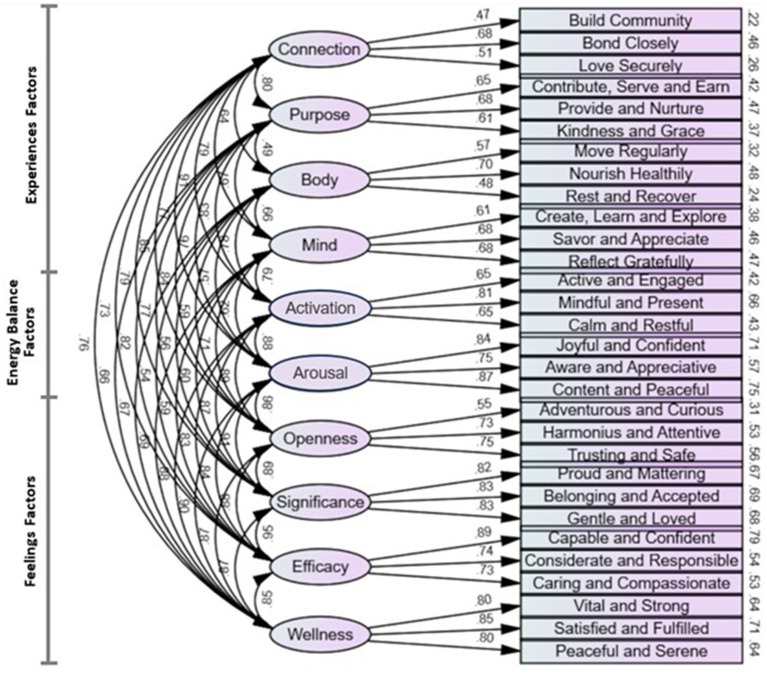
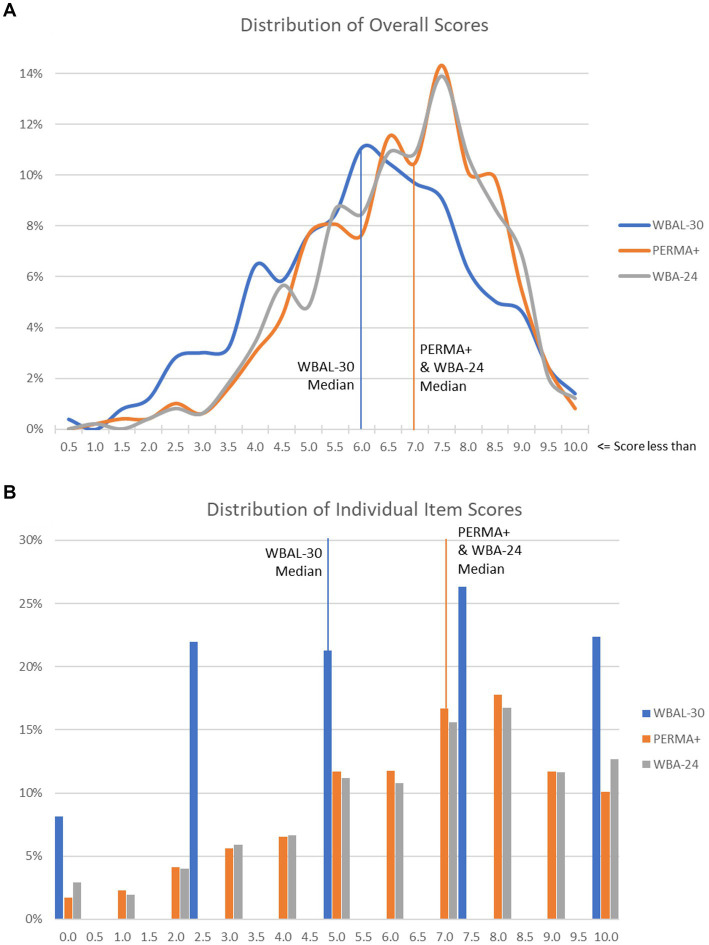
The confirmatory factor model showed good fit, indicating that each of the model factors are related but distinct and all items load significantly onto their factors. The WBAL Assessment demonstrated high internal consistency (Cronbach's = 0.95) and internal validity across well-being factors and Feelings ( = 0.96) and Experiences ( = 0.94) domains. The WBAL Assessment demonstrated strong convergent validity in comparison to PERMA+ ( = 0.80) and WBA-24 ( = 0.75), indicating that the WBAL Assessment measures a similar overall concept of well-being and flourishing. Discriminant validity of WBAL factors was demonstrated for an average of 14.3 of 17 comparator domains. The main differences between instruments are WBAL's assessment of positive Experiences, the comparator instruments' inclusion of feelings with negative valence, and WBA-24's inclusion of financial stability.
The WBAL Assessment is a reliable and valid instrument to comprehensively measure positive aspects of well-being that evaluates multiple modifiable contributors to individuals' well-being to guide design of personalized assessment and intervention programs to enhance positive well-being.
广泛使用的自我报告主观幸福感和蓬勃发展的衡量方法通常并不直接衡量已被证明能改善主观幸福感和蓬勃发展的积极体验,而这些积极体验有助于制定个性化干预措施以提升个体幸福感。本研究评估了幸福平衡与生活体验(WBAL)模型及评估方法的有效性,该模型是一种新的幸福模型及相应评估工具,用于评估自我报告的积极体验频率以及幸福的积极感受,并在激活和唤醒水平上保持平衡。
共有496名可评估受试者完成了WBAL评估、PERMA+ Profiler(PERMA+)和成人幸福感评估24项量表(WBA - 24)。创建了一个与WBAL结构相对应的验证性因素模型,并对WBAL评估的内部和外部有效性进行了检验。
验证性因素模型显示拟合良好,表明模型的每个因素相关但不同,且所有项目在其因素上的载荷均显著。WBAL评估在幸福感因素以及感受(Cronbach's α = 0.96)和体验(Cronbach's α = 0.94)领域表现出高内部一致性(Cronbach's α = 0.95)和内部有效性。与PERMA+(r = 0.80)和WBA - 24(r = 0.75)相比,WBAL评估显示出很强的收敛效度,表明WBAL评估测量的是类似的总体幸福感和蓬勃发展概念。在17个比较领域中,平均有14.3个领域证明了WBAL因素的区分效度。各工具之间的主要差异在于WBAL对积极体验的评估、比较工具对负性情绪的纳入以及WBA - 24对财务稳定性的纳入。
WBAL评估是一种可靠且有效的工具,可全面测量幸福感的积极方面,评估对个体幸福感有多种可改变影响因素,以指导个性化评估和干预计划的设计,从而增强积极幸福感。