Zhang Xiaotong, Anzalone Alfred Jerrod, Dai Daisy, Cochran Gary, Dai Ran, Rupp Mark E
Department of Pharmacy, Xuanwu Hospital, Capital Medical University, Beijing, China.
Department of Biostatistics, College of Public Health, University of Nebraska Medical Center, Omaha, Nebraska, USA.
Open Forum Infect Dis. 2024 Aug 23;11(8):ofae424. doi: 10.1093/ofid/ofae424. eCollection 2024 Aug.
Patients with coronavirus disease 2019 (COVID-19) often experience persistent symptoms, known as postacute sequelae of COVID-19 or long COVID, after severe acute respiratory syndrome coronavirus 2 (SARS-CoV-2) infection. Chronic lung disease (CLD) has been identified in small-scale studies as a potential risk factor for long COVID.
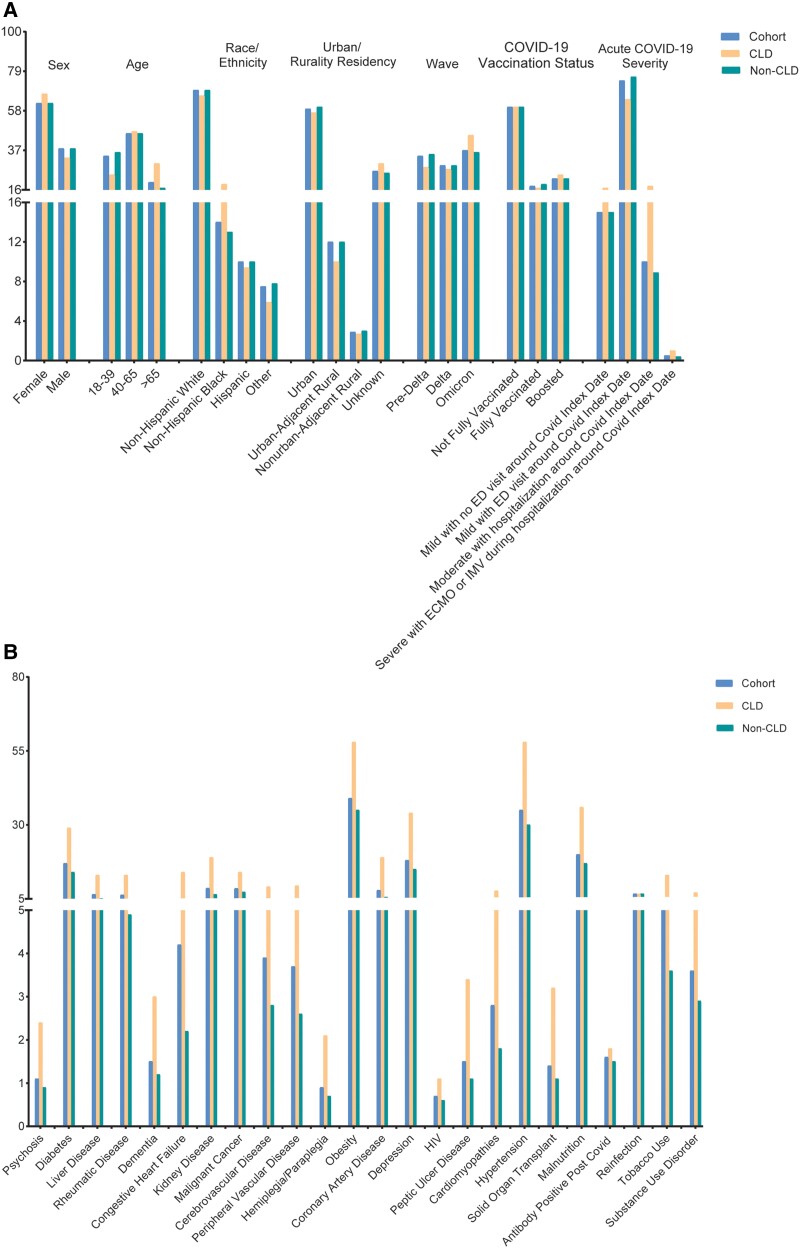
This large-scale retrospective cohort study using the National COVID Cohort Collaborative data evaluated the link between CLD and long COVID over 6 months after acute SARS-CoV-2 infection. We included adults (aged ≥18 years) who tested positive for SARS-CoV-2 during any of 3 SARS-CoV-2 variant periods and used logistic regression to determine the association, considering a comprehensive list of potential confounding factors, including demographics, comorbidities, socioeconomic conditions, geographical influences, and medication.
Of 1 206 021 patients, 1.2% were diagnosed with long COVID. A significant association was found between preexisting CLD and long COVID (adjusted odds ratio [aOR], 1.36). Preexisting obesity and depression were also associated with increased long COVID risk (aOR, 1.32 for obesity and 1.29 for depression) as well as demographic factors including female sex (aOR, 1.09) and older age (aOR, 1.79 for age group 40-65 [vs 18-39] years and 1.56 for >65 [vs 18-39] years).
CLD is associated with higher odds of developing long COVID within 6 months after acute SARS-CoV-2 infection. These data have implications for identifying high-risk patients and developing interventions for long COVID in patients with CLD.
2019冠状病毒病(COVID-19)患者在严重急性呼吸综合征冠状病毒2(SARS-CoV-2)感染后,常出现持续症状,即COVID-19急性后遗症或长期COVID。在小规模研究中,慢性肺病(CLD)已被确定为长期COVID的一个潜在风险因素。
这项大规模回顾性队列研究使用了国家COVID队列协作数据,评估了急性SARS-CoV-2感染后6个月以上CLD与长期COVID之间的联系。我们纳入了在3个SARS-CoV-2变异期内任何一个时期SARS-CoV-2检测呈阳性的成年人(年龄≥18岁),并使用逻辑回归来确定这种关联,同时考虑一系列潜在的混杂因素,包括人口统计学、合并症、社会经济状况、地理影响和药物治疗。
在1206021名患者中,1.2%被诊断为长期COVID。研究发现,既往存在的CLD与长期COVID之间存在显著关联(调整后的优势比[aOR],1.36)。既往肥胖和抑郁症也与长期COVID风险增加相关(肥胖的aOR为1.32,抑郁症的aOR为1.29),以及包括女性(aOR,1.09)和老年(40 - 65岁年龄组的aOR为1.79[对比18 - 39岁],>65岁的aOR为1.56[对比18 - 39岁])在内的人口统计学因素。
CLD与急性SARS-CoV-2感染后6个月内发生长期COVID的较高几率相关。这些数据对于识别高危患者以及为CLD患者制定长期COVID的干预措施具有重要意义。