Wang Xin, Ding Jianing, Chen Xiao, Wang Sicheng, Chen Zhiheng, Chen Yuanyuan, Zhang Guowang, Liu Ji, Shi Tingwang, Song Jian, Sheng Shihao, Wang Guangchao, Xu Jianguang, Su Jiacan, Zhang Wei, Lian Xiaofeng
Department of Orthopedic Surgery, Shanghai Sixth People's Hospital Affiliated to Shanghai Jiao Tong University School of Medicine, Shanghai, 200233, China.
Department of Orthopaedics, Xinhua Hospital Affiliated to Shanghai JiaoTong University School of Medicine, Shanghai, 200092, China.
Bioact Mater. 2024 Jul 30;41:385-399. doi: 10.1016/j.bioactmat.2024.07.009. eCollection 2024 Nov.
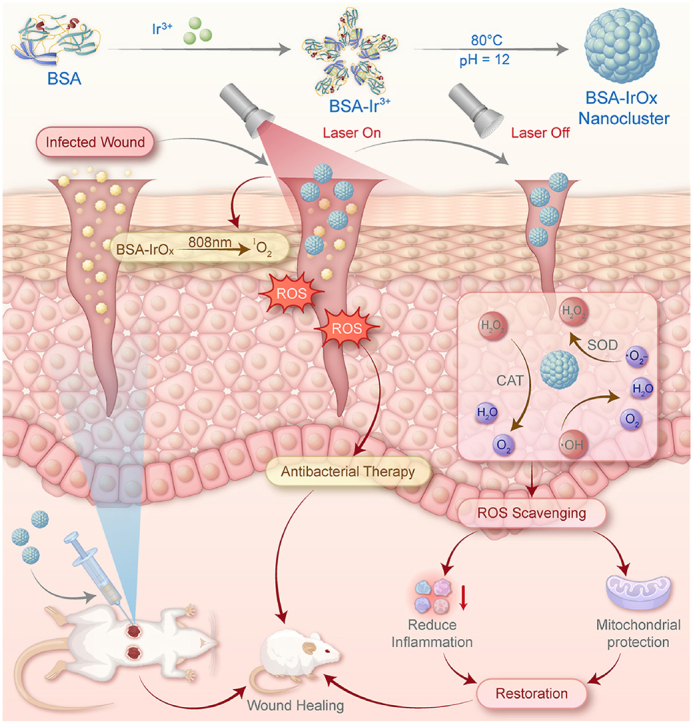
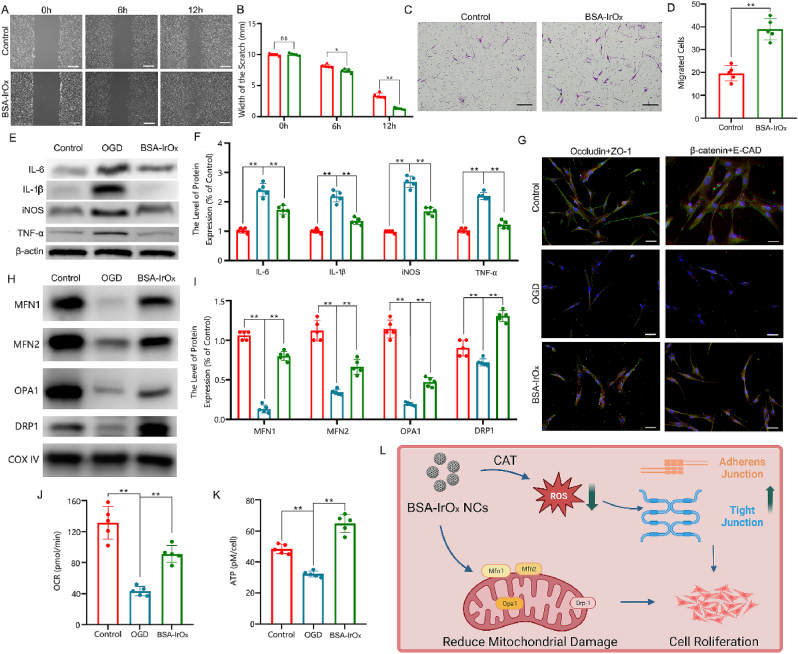
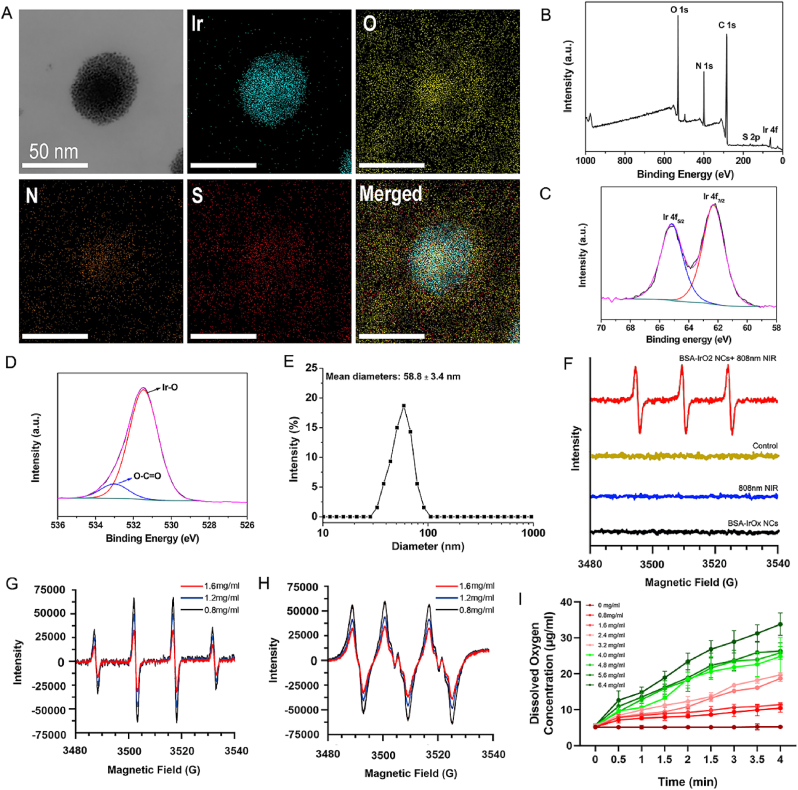
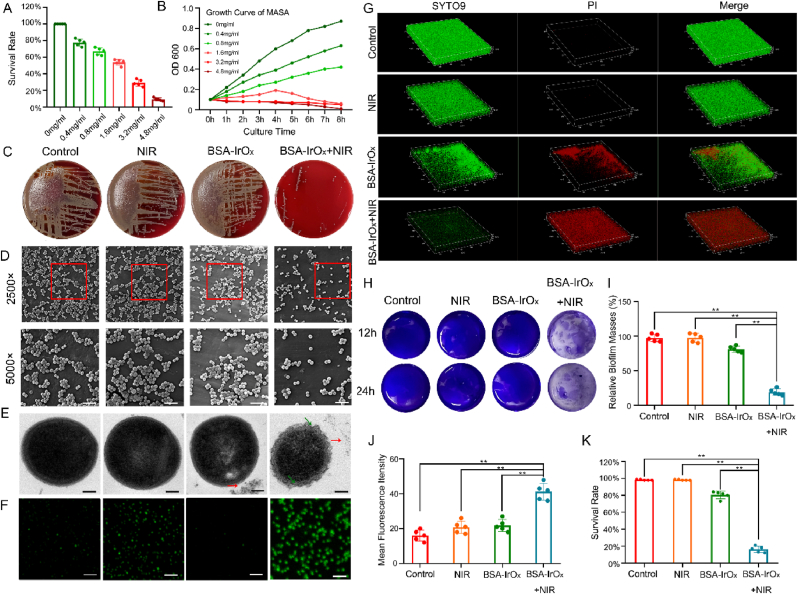
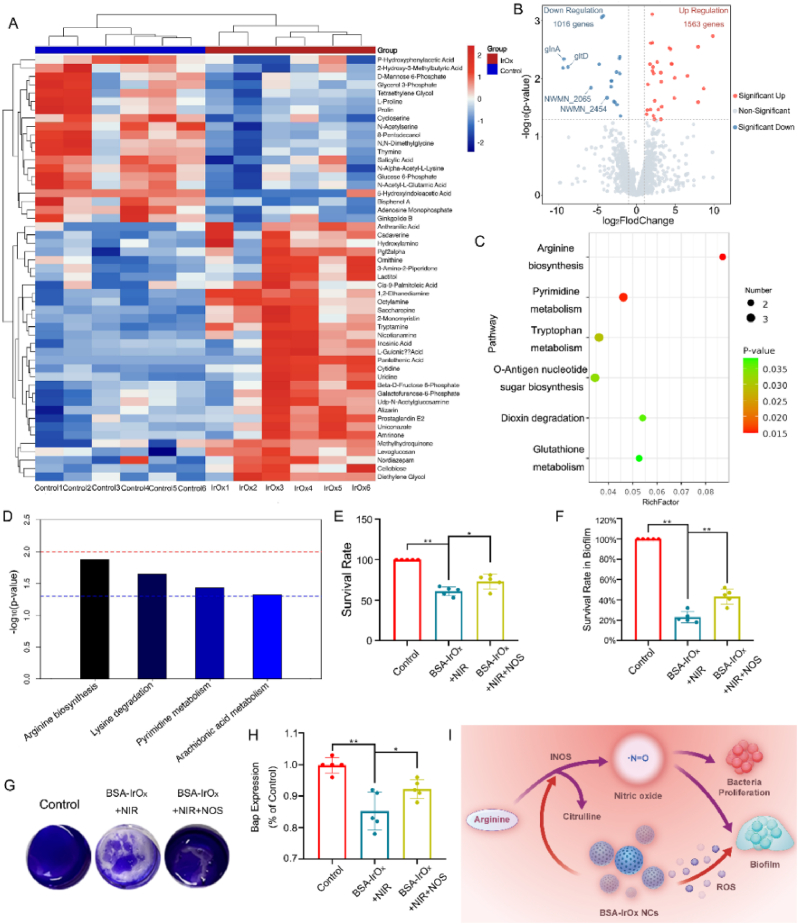
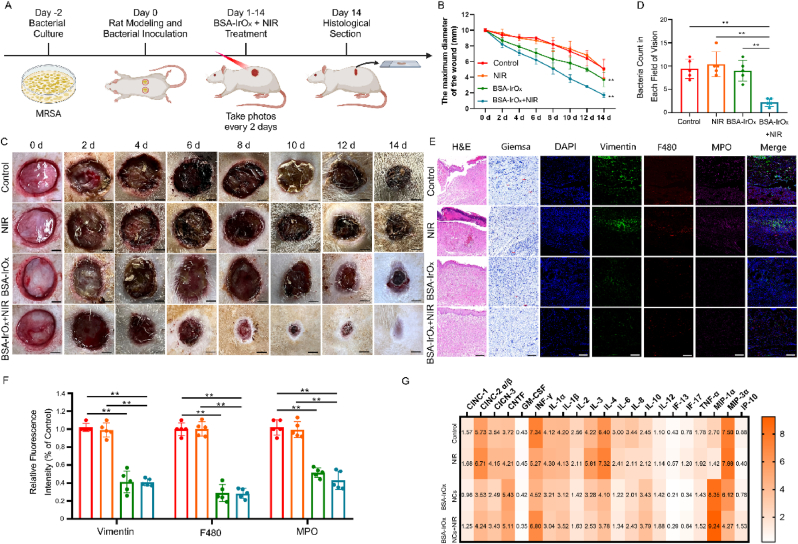
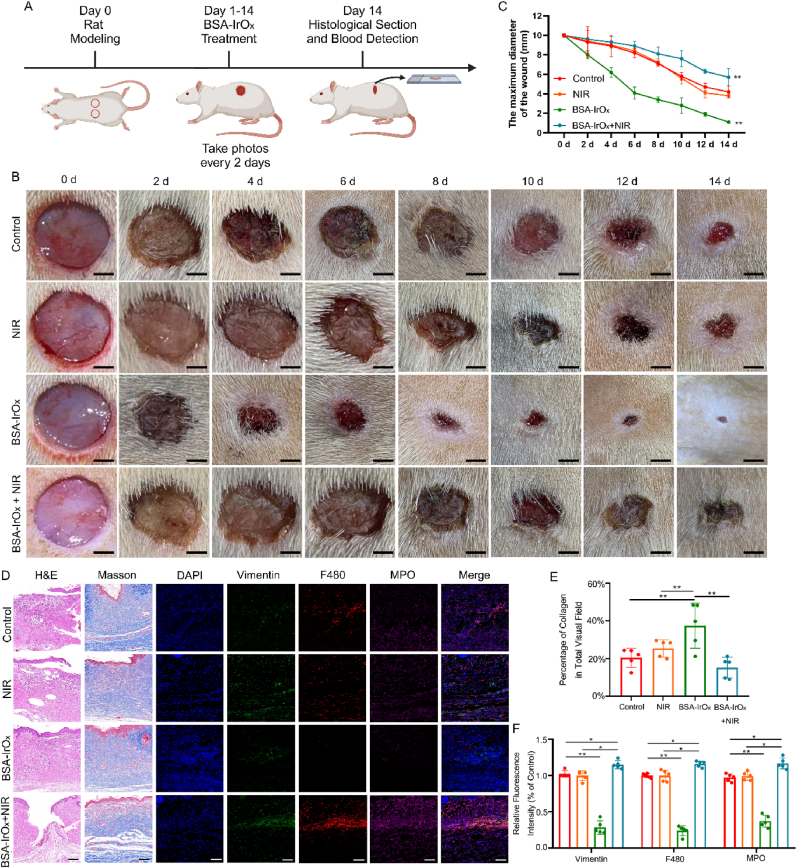
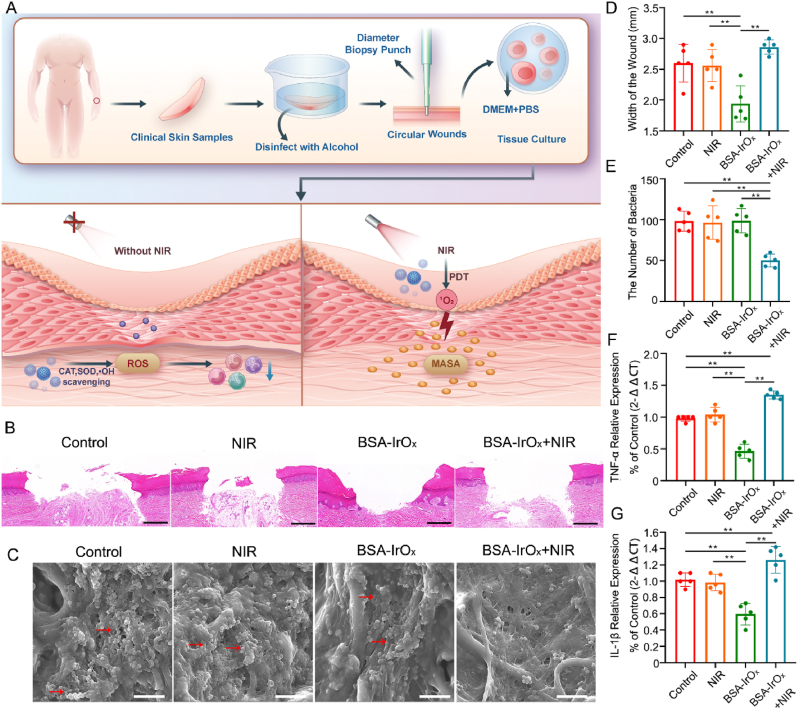
Infected wounds pose a significant clinical challenge due to bacterial resistance, recurrent infections, and impaired healing. Reactive oxygen species (ROS)-based strategies have shown promise in eradicating bacterial infections. However, the excess ROS in the infection site after treatments may cause irreversible damage to healthy tissues. To address this issue, we developed bovine serum albumin-iridium oxide nanoclusters (BSA-IrO NCs) which enable photo-regulated ROS generation and scavenging using near infrared (NIR) laser. Upon NIR laser irradiation, BSA-IrO NCs exhibit enhanced photodynamic therapy, destroying biofilms and killing bacteria. When the NIR laser is off, the nanoclusters' antioxidant enzyme-like activities prevent inflammation and repair damaged tissue through ROS clearance. Transcriptomic and metabolomic analyses revealed that BSA-IrO NCs inhibit bacterial nitric oxide synthase, blocking bacterial growth and biofilm formation. Furthermore, the nanoclusters repair impaired skin by strengthening cell junctions and reducing mitochondrial damage in a fibroblast model. In vivo studies using rat infected wound models confirmed the efficacy of BSA-IrO NCs. This study presents a promising strategy for treating biofilm-induced infected wounds by regulating the ROS microenvironment, addressing the challenges associated with current ROS-based antibacterial approaches.
由于细菌耐药性、反复感染和愈合受损,感染伤口带来了重大的临床挑战。基于活性氧(ROS)的策略在根除细菌感染方面已显示出前景。然而,治疗后感染部位过量的ROS可能会对健康组织造成不可逆的损害。为了解决这个问题,我们开发了牛血清白蛋白 - 氧化铱纳米簇(BSA-IrO NCs),它能够利用近红外(NIR)激光实现光调节ROS的产生和清除。在近红外激光照射下,BSA-IrO NCs表现出增强的光动力疗法,破坏生物膜并杀死细菌。当近红外激光关闭时,纳米簇的抗氧化酶样活性通过清除ROS来预防炎症并修复受损组织。转录组学和代谢组学分析表明,BSA-IrO NCs抑制细菌一氧化氮合酶,阻止细菌生长和生物膜形成。此外,在成纤维细胞模型中,纳米簇通过加强细胞连接和减少线粒体损伤来修复受损皮肤。使用大鼠感染伤口模型的体内研究证实了BSA-IrO NCs的疗效。本研究提出了一种通过调节ROS微环境来治疗生物膜诱导的感染伤口的有前景的策略,解决了当前基于ROS的抗菌方法所面临的挑战。