Lowe Neona M, Mizenko Rachel R, Nguyen Bryan B, Chiu Kwan Lun, Arun Vishalakshi, Panitch Alyssa, Carney Randy P
Department of Biomedical Engineering University of California Davis California USA.
Wallace H. Coulter Department of Biomedical Engineering Georgia Institute of Technology and Emory University Atlanta Georgia USA.
J Extracell Biol. 2024 Aug 23;3(8):e70003. doi: 10.1002/jex2.70003. eCollection 2024 Aug.
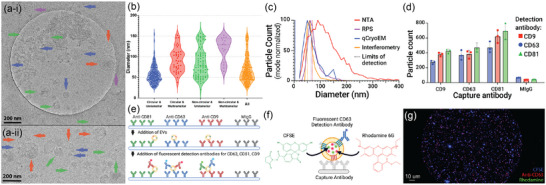
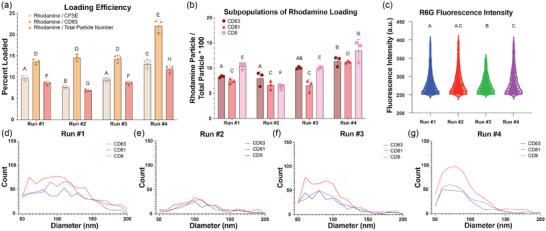
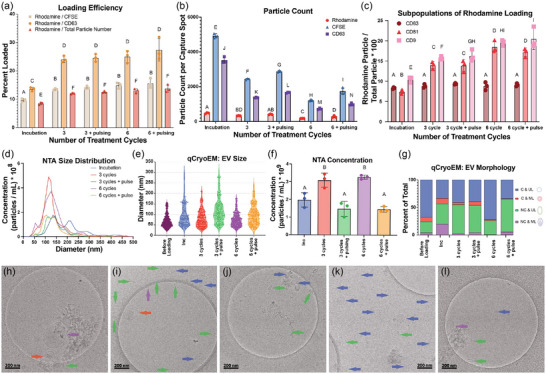
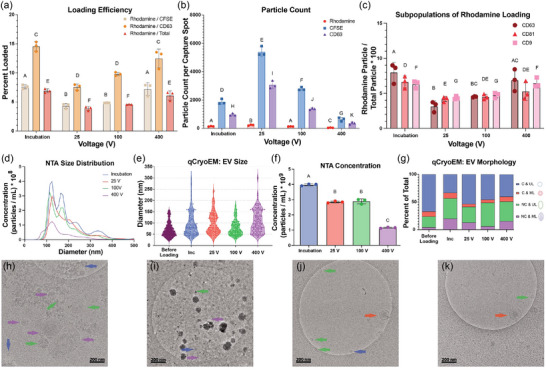
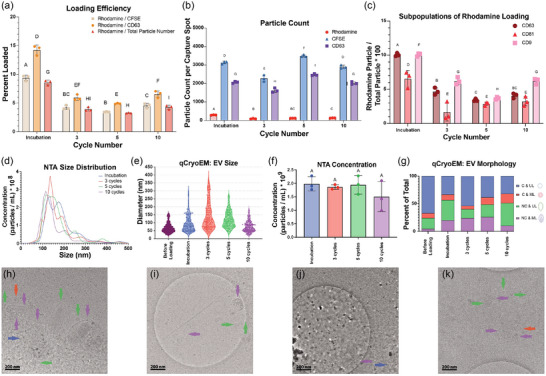
Since extracellular vesicles (EVs) have emerged as a promising drug delivery system, diverse methods have been used to load them with active pharmaceutical ingredients (API) in preclinical and clinical studies. However, there is yet to be an engineered EV formulation approved for human use, a barrier driven in part by the intrinsic heterogeneity of EVs. API loading is rarely assessed in the context of single vesicle measurements of physicochemical properties but is likely administered in a heterogeneous fashion to the detriment of a consistent product. Here, we applied a suite of single-particle resolution methods to determine the loading of rhodamine 6G (R6G) surrogate cargo mimicking hydrophilic small molecule drugs across four common API loading methods: sonication, electroporation, freeze-thaw cycling and passive incubation. Loading efficiencies and alterations in the physical properties of EVs were assessed, as well as co-localization with common EV-associated tetraspanins (i.e., CD63, CD81 and CD9) for insight into EV subpopulations. Sonication had the highest loading efficiency, yet significantly decreased particle yield, while electroporation led to the greatest number of loaded API particles, albeit at a lower efficiency. Moreover, results were often inconsistent between repeated runs within a given method, demonstrating the difficulty in developing a rigorous loading method that consistently loaded EVs across their heterogeneous subpopulations. This work highlights the significance of how chosen quantification metrics can impact apparent conclusions and the importance of single-particle characterization of EV loading.
由于细胞外囊泡(EVs)已成为一种很有前景的药物递送系统,在临床前和临床研究中,人们使用了多种方法将活性药物成分(API)装载到EVs中。然而,目前尚未有经过工程改造的EV制剂被批准用于人类,这一障碍部分是由EVs固有的异质性所导致的。在对EVs进行物理化学性质的单囊泡测量时,很少评估API的装载情况,但API的装载可能是以一种异质性的方式进行的,这不利于获得一致的产品。在这里,我们应用了一套单颗粒分辨率方法,以确定在四种常见的API装载方法(超声处理、电穿孔、冻融循环和被动孵育)中,罗丹明6G(R6G)替代货物模拟亲水性小分子药物的装载情况。我们评估了装载效率和EVs物理性质的变化,以及与常见的EV相关四跨膜蛋白(即CD63、CD81和CD9)的共定位情况,以深入了解EV亚群。超声处理的装载效率最高,但颗粒产量显著降低,而电穿孔导致装载API的颗粒数量最多,尽管效率较低。此外,在给定方法的重复实验中,结果往往不一致,这表明难以开发出一种能在EVs的异质亚群中持续装载的严格装载方法。这项工作强调了所选量化指标如何影响明显结论的重要性,以及EV装载单颗粒表征的重要性。