Mustafa Rawand A, Parkkila Petteri, Rosenholm Jessica M, Zhang Hongbo, Viitala Tapani
Pharmaceutical Sciences Laboratory Faculty of Science and Engineering Åbo Akademi University Turku Finland.
Division of Nano and Biophysics Department of Physics Chalmers University of Technology Gothenburg Sweden.
Smart Med. 2023 Jun 26;2(3):e20230012. doi: 10.1002/SMMD.20230012. eCollection 2023 Aug.
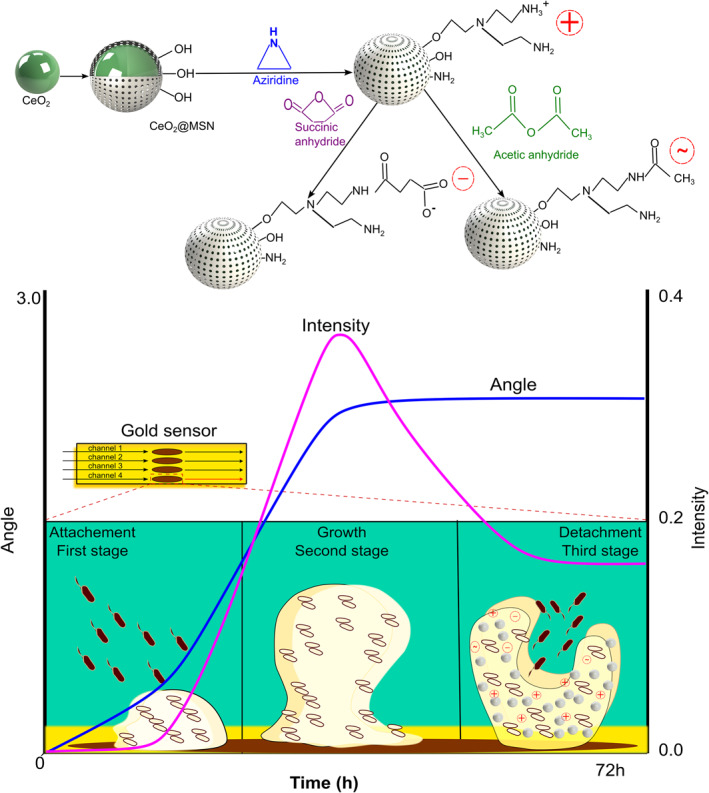
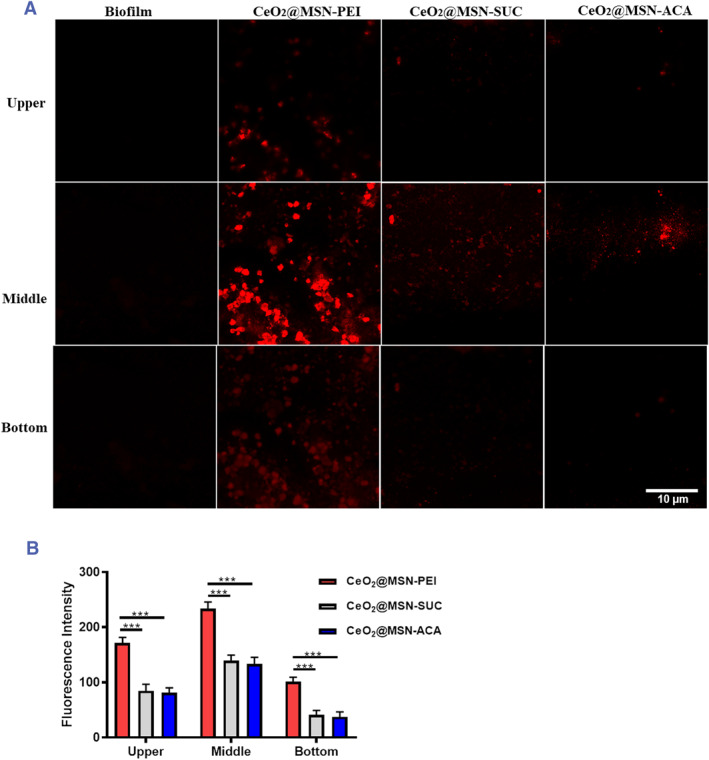
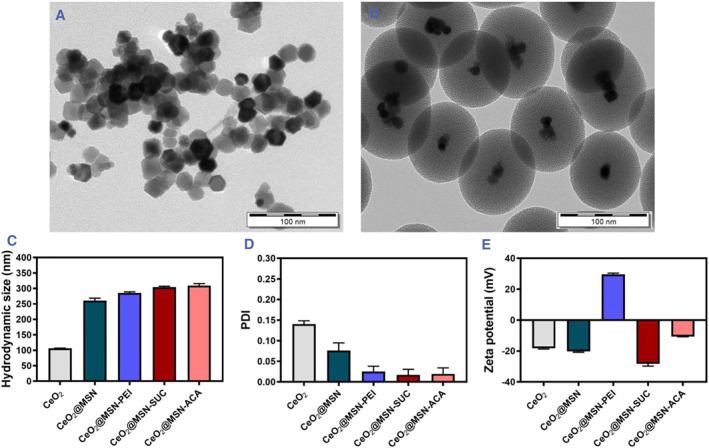
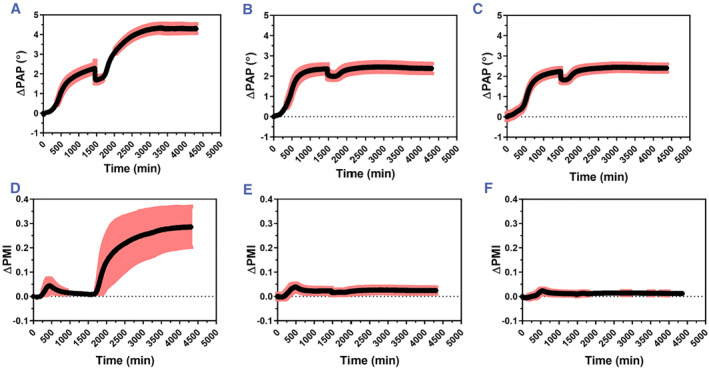
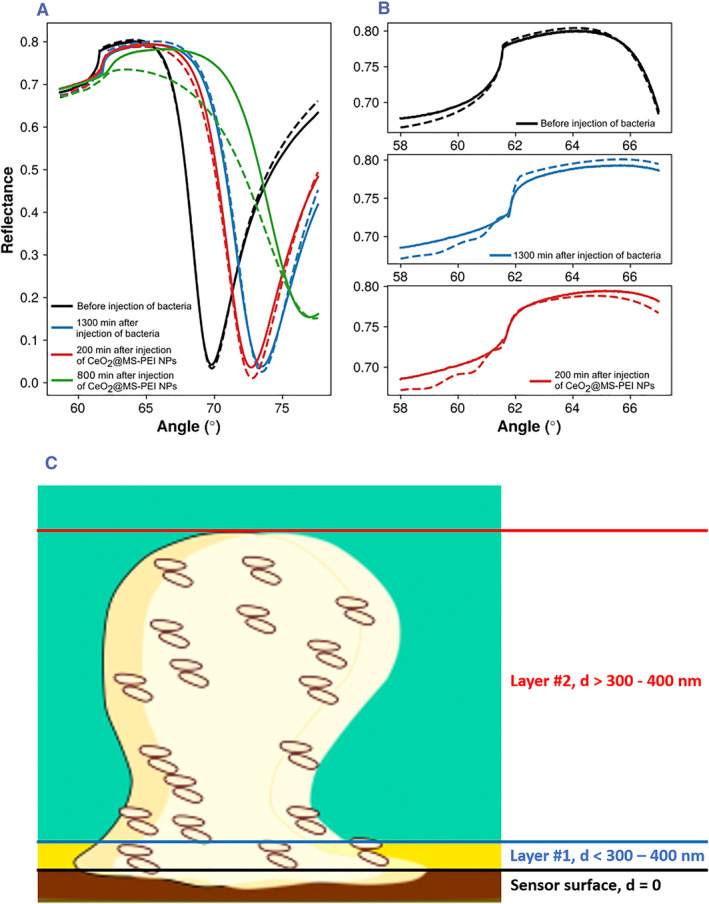
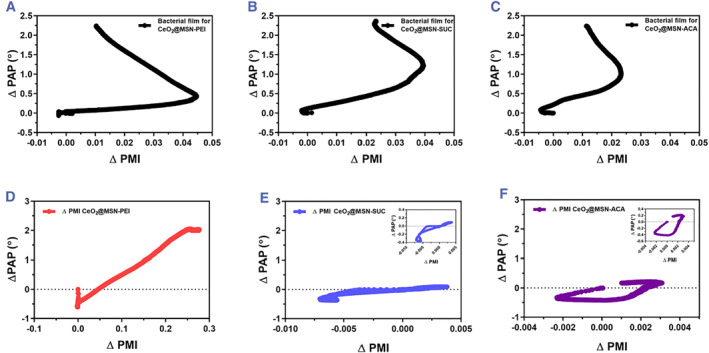
In a healthcare setting, biofilms are a major source of infection and difficult to eradicate once formed. Nanoparticles (NPs) can be designed to effectively penetrate biofilms to more efficiently either deliver antibiotic drugs throughout the biofilm matrix or elicit inherent antibiofilm activity. Antibacterial cerium oxide (CeO) NPs were employed as core material and coated with a mesoporous silica shell (MSN) to generate cerium oxide coated mesoporous silica NPs (CeO@MSN). Detailed studies of NP-biofilm interactions are required to rationally develop NP platforms to prevent biofilm-related infections. This work developed and implemented a unique label-free analysis platform for the real-time monitoring of bacterial biofilm formation and then assessed the interactions of antibacterial NPs. An analysis platform which allows bacterial biofilms to grow and develop in situ in flow within the multi-parametric surface plasmon resonance (MP-SPR) instrument was established. This enabled simultaneous monitoring and detection of biofilm growth phases, structure, and interactions between differentially charged CeO@MSNs and bacterial biofilms. Positively charged antibacterial NPs (polyethyleneimine functionalized CeO@MSNs) were found to be the most efficient to penetrate the biofilm. The MP-SPR analysis platform was shown to be a powerful tool for monitoring biofilm development in real-time and to analyze biofilm properties and NP-biofilm interactions.
在医疗环境中,生物膜是感染的主要来源,一旦形成就很难根除。纳米颗粒(NPs)可以被设计成有效地穿透生物膜,以便更高效地在整个生物膜基质中递送抗生素药物或引发固有的抗生物膜活性。抗菌氧化铈(CeO)纳米颗粒被用作核心材料,并包覆一层介孔二氧化硅壳(MSN),以制备氧化铈包覆介孔二氧化硅纳米颗粒(CeO@MSN)。为了合理开发用于预防生物膜相关感染的纳米颗粒平台,需要对纳米颗粒与生物膜的相互作用进行详细研究。这项工作开发并实施了一个独特的无标记分析平台,用于实时监测细菌生物膜的形成,然后评估抗菌纳米颗粒的相互作用。建立了一个分析平台,该平台允许细菌生物膜在多参数表面等离子体共振(MP-SPR)仪器内的流动中原位生长和发育。这使得能够同时监测和检测生物膜的生长阶段、结构以及带不同电荷的CeO@MSN与细菌生物膜之间的相互作用。发现带正电荷的抗菌纳米颗粒(聚乙烯亚胺功能化的CeO@MSN)穿透生物膜的效率最高。MP-SPR分析平台被证明是实时监测生物膜发育、分析生物膜特性以及纳米颗粒与生物膜相互作用的强大工具。