Hajdu Adrian Ioan, Dumitrescu Ramona, Balean Octavia, Lalescu Dacian Virgil, Buzatu Berivan Laura Rebeca, Bolchis Vanessa, Floare Lucian, Utu Diana, Jumanca Daniela, Galuscan Atena
Translational and Experimental Clinical Research Centre in Oral Health, Department of Preventive, Community Dentistry and Oral Health, Victor Babes University of Medicine and Pharmacy, 300040 Timisoara, Romania.
Clinic of Preventive, Community Dentistry and Oral Health, Victor Babes University of Medicine and Pharmacy, Eftimie Murgu Sq. no 2, 300041 Timisoara, Romania.
J Funct Biomater. 2024 Jul 25;15(8):208. doi: 10.3390/jfb15080208.
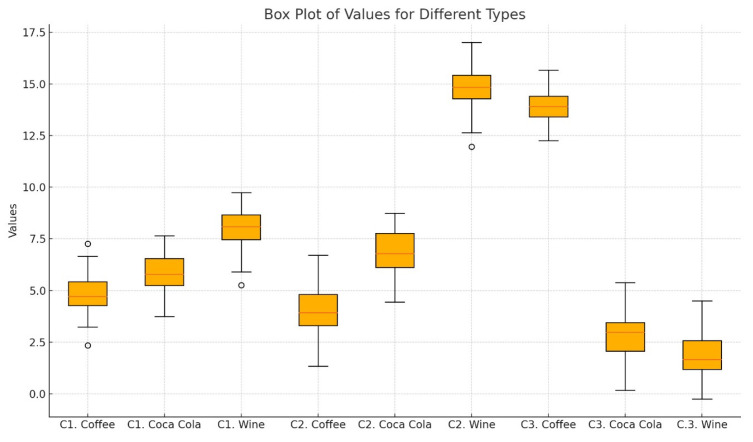
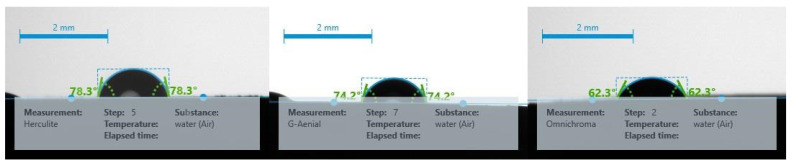
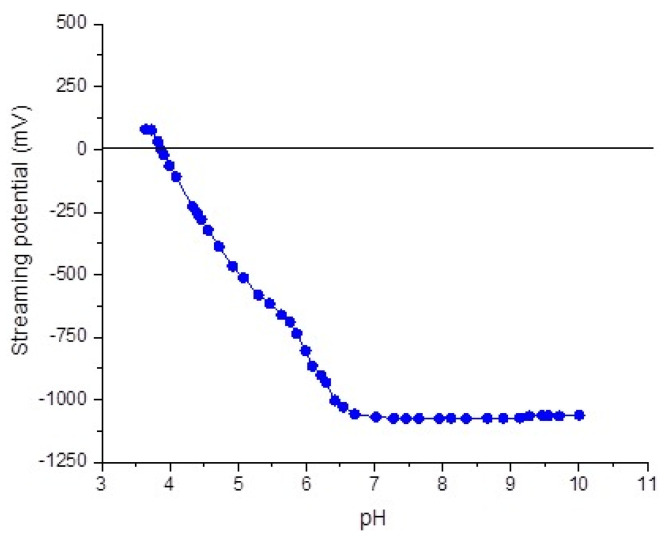
Dental restorations must replicate the natural appearance of teeth while ensuring biocompatibility and durability. This study evaluated the surface characteristics and color stability of three dental composites-Herculite Ultra XRV, G-ænial A'CHORD, and Omnichroma-exposed to acidic beverages (red wine, black coffee, and Coca-Cola). Sixty disk-shaped specimens were prepared, polished, and immersed in these beverages. Surface roughness was assessed using profilometry and SEM analysis, hydrophobicity via contact angle analysis, and surface charge through streaming potential measurements. Color stability was evaluated using a spectrophotometer, and the pH levels of the solutions were recorded. Results showed that Herculite Ultra XRV had the highest mean contact angle (79.46° ± 6.52), indicating superior hydrophobicity, while Omnichroma had the lowest (64.94° ± 3.08), indicating more hydrophilicity. Significant color changes were observed, especially in black coffee, with ∆E values indicating notable discoloration. The acidic pH of the solutions increased surface roughness and color changes. Statistical analyses confirmed significant increases in surface roughness and color change for all composites, with the nanohybrid resin composite showing the greatest variability. These findings highlight the need for dental restorative materials with enhanced resistance to acidic environments to improve the longevity and esthetics of dental treatments.
牙齿修复体必须在确保生物相容性和耐久性的同时,复制牙齿的自然外观。本研究评估了三种牙科复合材料——Herculite Ultra XRV、G-ænial A'CHORD和Omnichroma——在暴露于酸性饮料(红酒、黑咖啡和可口可乐)后的表面特性和颜色稳定性。制备了60个圆盘形试样,进行抛光处理后浸泡在这些饮料中。使用轮廓仪和扫描电子显微镜(SEM)分析评估表面粗糙度,通过接触角分析评估疏水性,并通过流动电位测量评估表面电荷。使用分光光度计评估颜色稳定性,并记录溶液的pH值。结果表明,Herculite Ultra XRV的平均接触角最高(79.46°±6.52),表明其疏水性优越,而Omnichroma的平均接触角最低(64.94°±3.08),表明其亲水性更强。观察到显著的颜色变化,尤其是在黑咖啡中,∆E值表明有明显的变色。溶液的酸性pH值增加了表面粗糙度和颜色变化。统计分析证实,所有复合材料的表面粗糙度和颜色变化均显著增加,其中纳米混合树脂复合材料的变异性最大。这些发现凸显了对具有增强耐酸性环境能力的牙科修复材料的需求,以提高牙科治疗的寿命和美观度。