Software Engineering Department, College of Computing and Information Sciences, King Saud University, Riyadh 11671, Saudi Arabia.
Tomography. 2024 Aug 3;10(8):1205-1221. doi: 10.3390/tomography10080091.
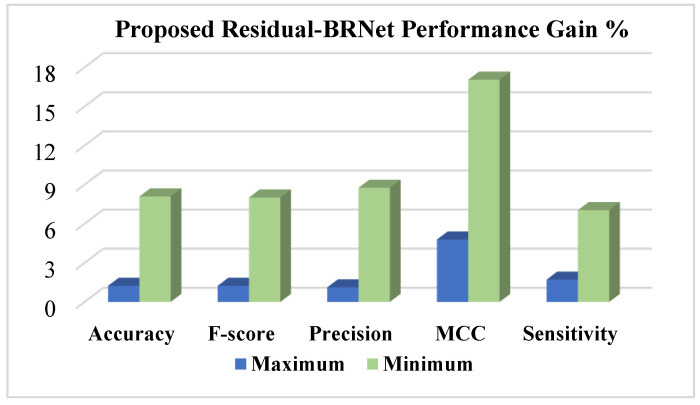
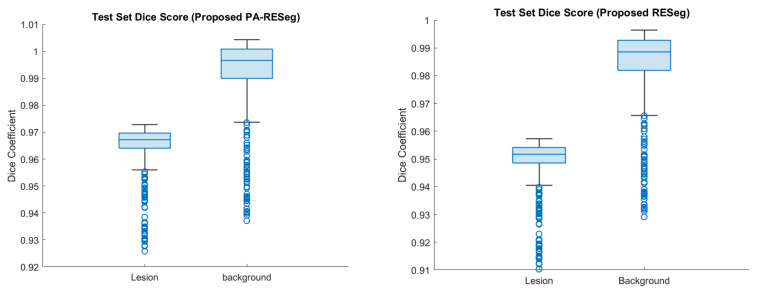
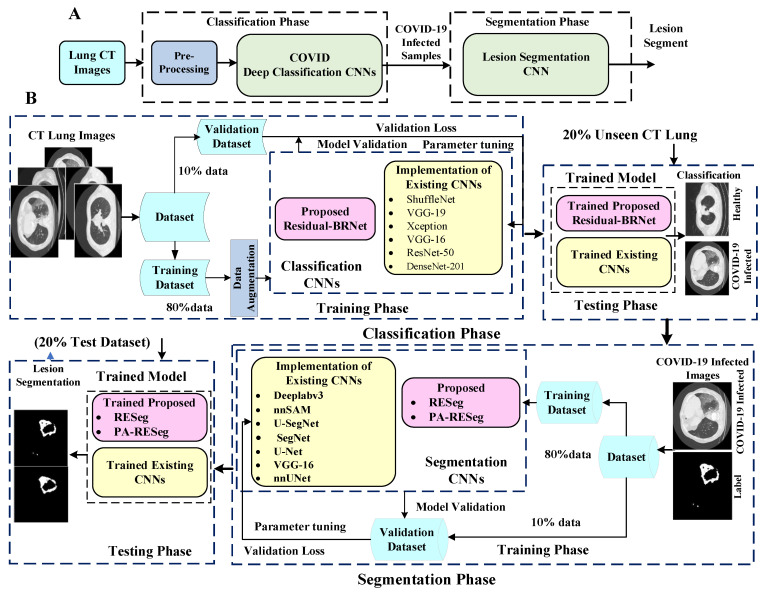
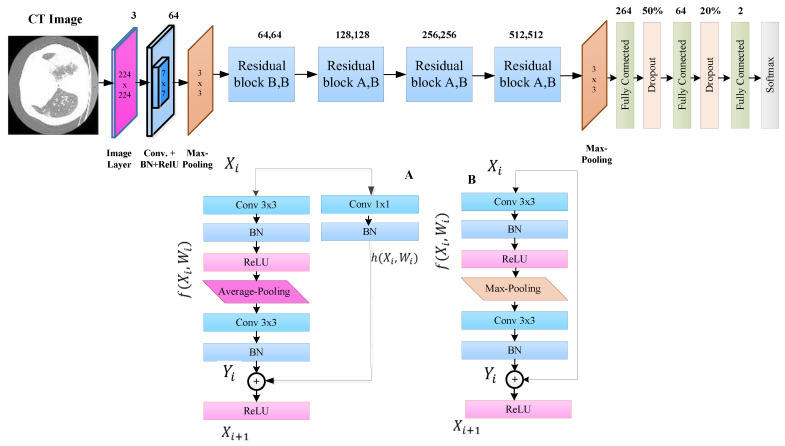
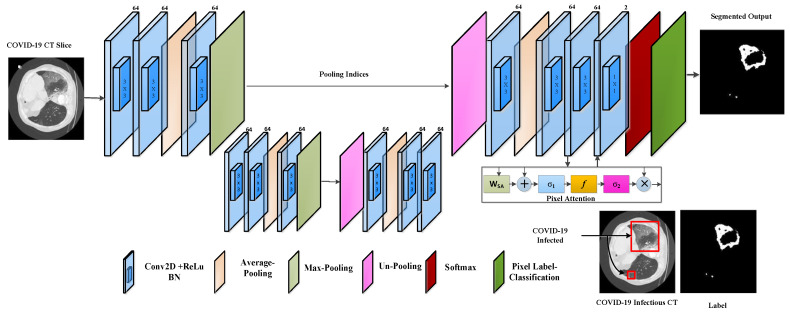
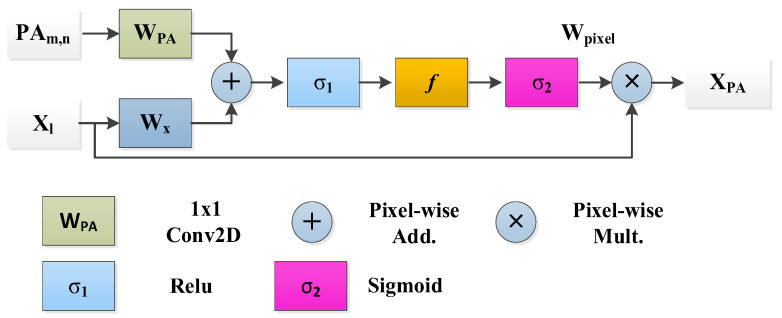
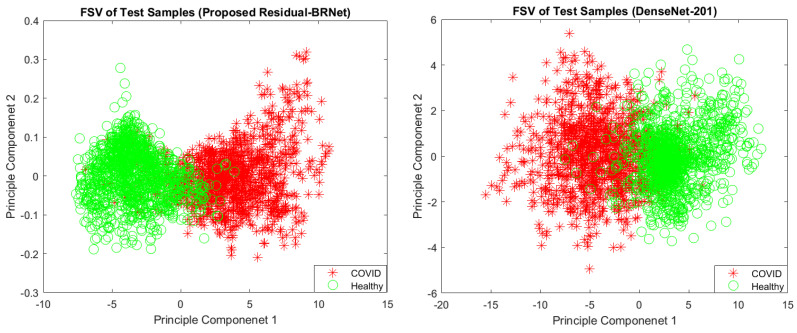
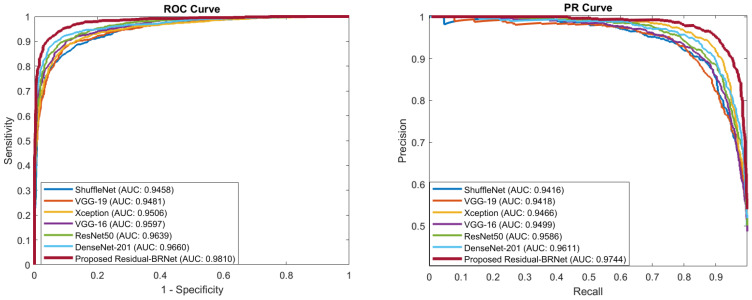
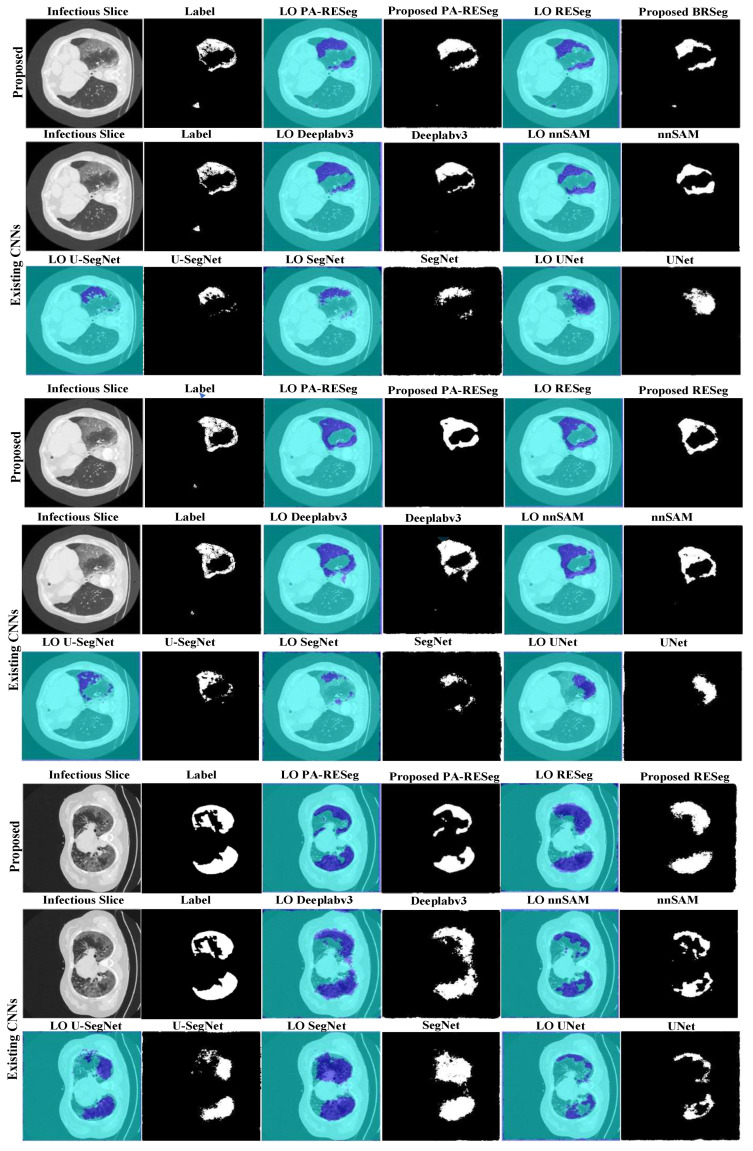
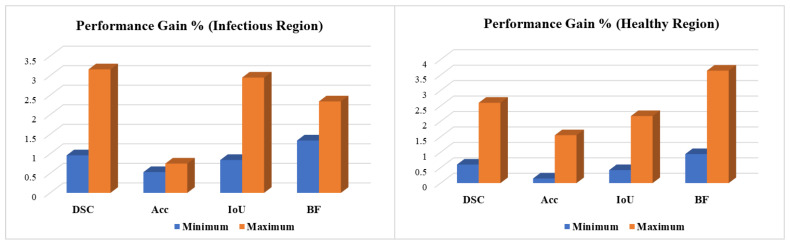
COVID-19 poses a global health crisis, necessitating precise diagnostic methods for timely containment. However, accurately delineating COVID-19-affected regions in lung CT scans is challenging due to contrast variations and significant texture diversity. In this regard, this study introduces a novel two-stage classification and segmentation CNN approach for COVID-19 lung radiological pattern analysis. A novel Residual-BRNet is developed to integrate boundary and regional operations with residual learning, capturing key COVID-19 radiological homogeneous regions, texture variations, and structural contrast patterns in the classification stage. Subsequently, infectious CT images undergo lesion segmentation using the newly proposed RESeg segmentation CNN in the second stage. The RESeg leverages both average and max-pooling implementations to simultaneously learn region homogeneity and boundary-related patterns. Furthermore, novel pixel attention (PA) blocks are integrated into RESeg to effectively address mildly COVID-19-infected regions. The evaluation of the proposed Residual-BRNet CNN in the classification stage demonstrates promising performance metrics, achieving an accuracy of 97.97%, F1-score of 98.01%, sensitivity of 98.42%, and MCC of 96.81%. Meanwhile, PA-RESeg in the segmentation phase achieves an optimal segmentation performance with an IoU score of 98.43% and a dice similarity score of 95.96% of the lesion region. The framework's effectiveness in detecting and segmenting COVID-19 lesions highlights its potential for clinical applications.
COVID-19 构成了全球健康危机,因此需要精确的诊断方法来及时控制疫情。然而,由于对比度变化和显著的纹理多样性,准确描绘肺部 CT 扫描中的 COVID-19 受影响区域具有挑战性。在这方面,本研究提出了一种新的两阶段分类和分割 CNN 方法,用于 COVID-19 肺部放射学模式分析。引入了一种新的 Residual-BRNet,将边界和区域操作与残差学习相结合,在分类阶段捕获关键的 COVID-19 放射学均匀区域、纹理变化和结构对比模式。随后,在第二阶段,使用新提出的 RESeg 分割 CNN 对传染性 CT 图像进行病变分割。RESeg 利用平均和最大池化实现,同时学习区域均匀性和与边界相关的模式。此外,还将新的像素注意力(PA)块集成到 RESeg 中,以有效地处理轻度 COVID-19 感染区域。在分类阶段评估提出的 Residual-BRNet CNN 时,展示了有前途的性能指标,准确率为 97.97%,F1 得分为 98.01%,灵敏度为 98.42%,MCC 为 96.81%。同时,PA-RESeg 在分割阶段实现了最佳分割性能,病变区域的 IoU 评分为 98.43%,骰子相似性评分(dice similarity score)为 95.96%。该框架在检测和分割 COVID-19 病变方面的有效性突出了其在临床应用中的潜力。