
乳酸链球菌素,一种益生菌细菌素,可调节由多微生物牙周感染介导的女性生殖器官的炎症和微生物组变化。
Nisin, a Probiotic Bacteriocin, Modulates the Inflammatory and Microbiome Changes in Female Reproductive Organs Mediated by Polymicrobial Periodontal Infection.
作者信息
Ye Changchang, Zhao Chuanjiang, Kuraji Ryutaro, Gao Li, Rangé Hélène, Kamarajan Pachiyappan, Radaic Allan, Kapila Yvonne L
机构信息
Orofacial Sciences Department, School of Dentistry, University of California, San Francisco, CA 94143, USA.
State Key Laboratory of Oral Diseases, National Clinical Research Center for Oral Diseases, Department of Periodontology, West China Hospital of Stomatology, Sichuan University, Chengdu 610041, China.
出版信息
Microorganisms. 2024 Aug 12;12(8):1647. doi: 10.3390/microorganisms12081647.
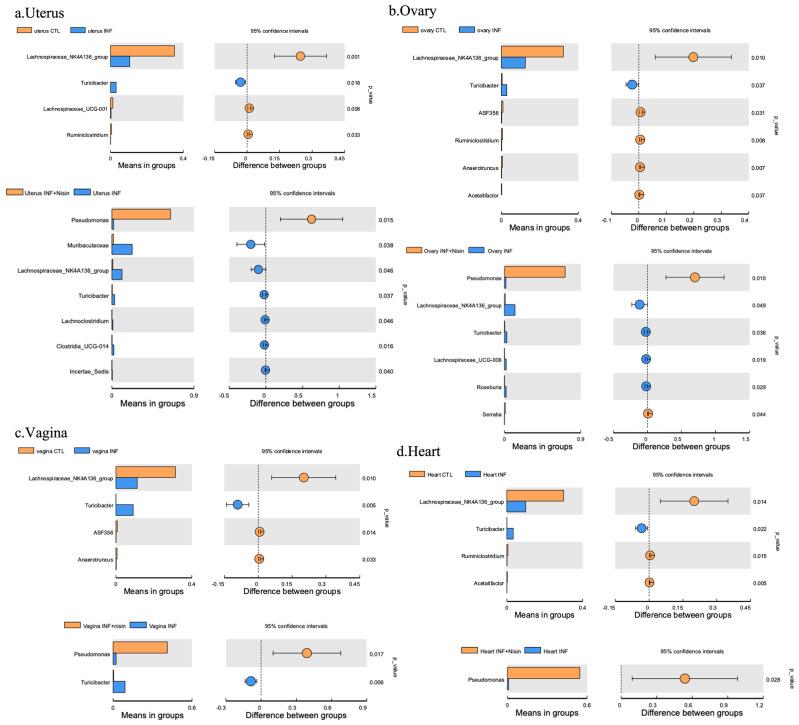
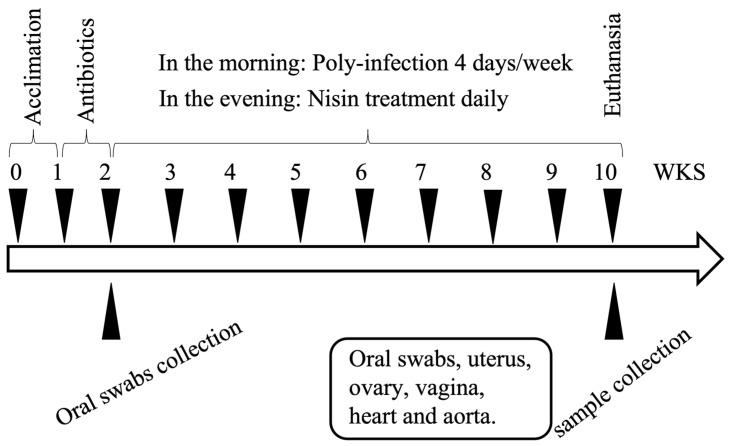
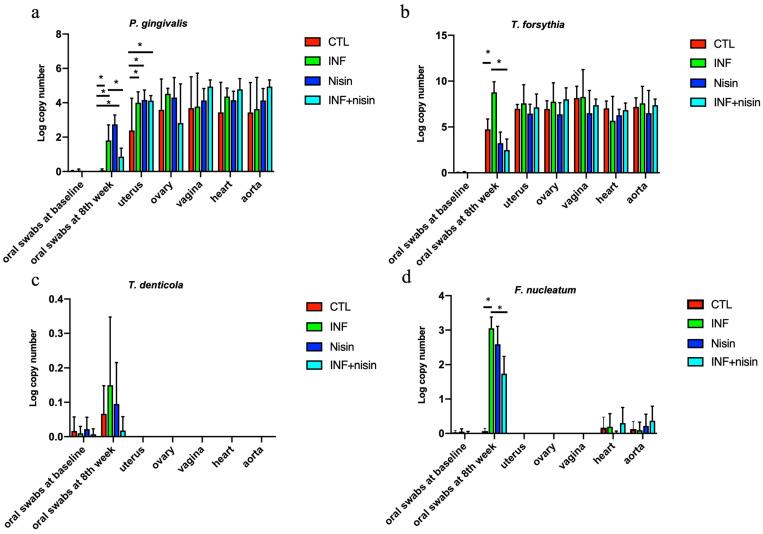
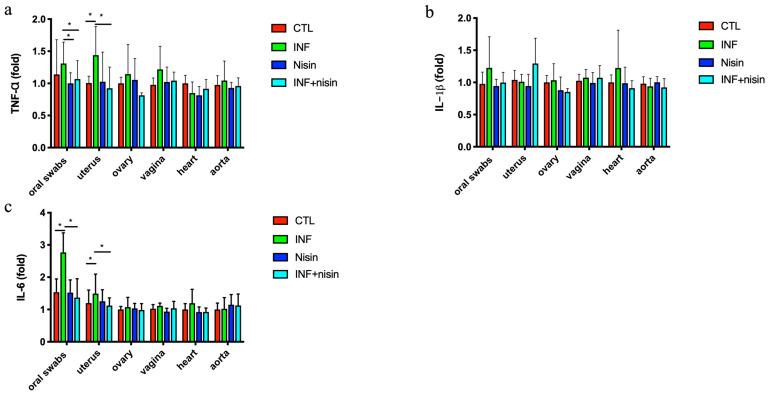
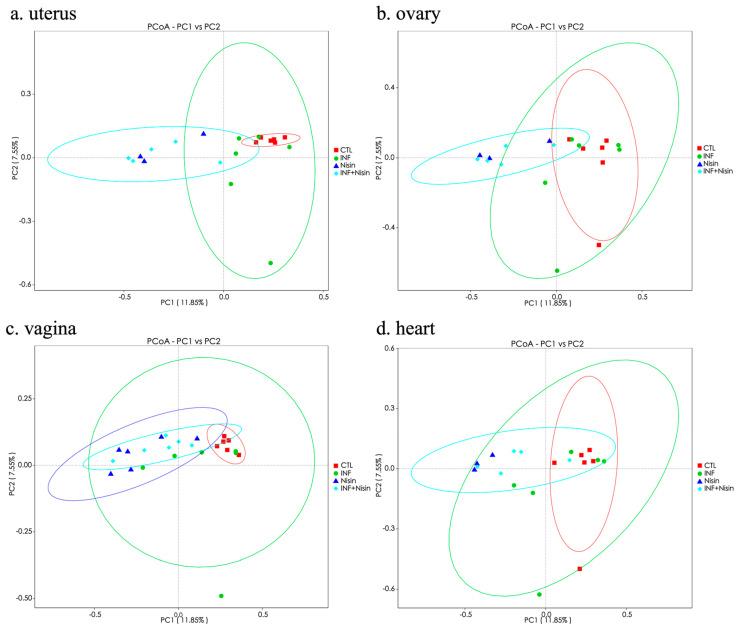
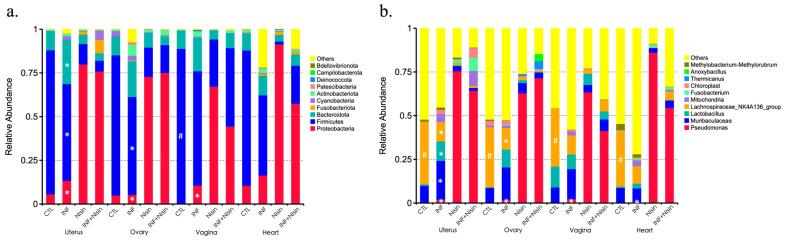
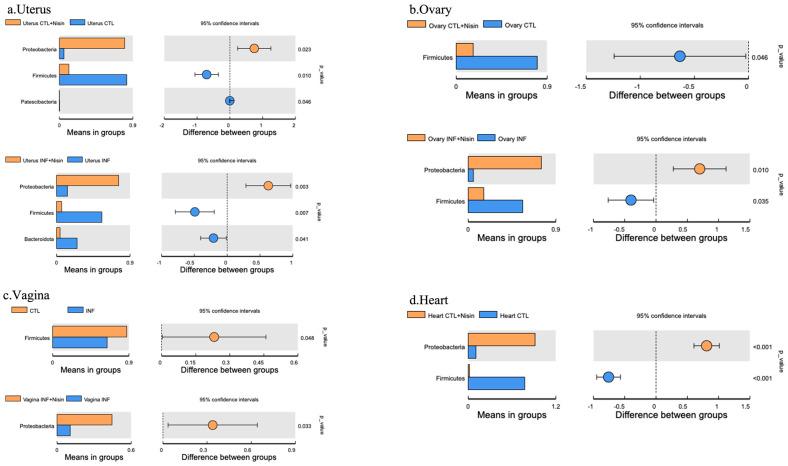
Periodontitis-related oral microbial dysbiosis is thought to contribute to adverse pregnancy outcomes (APOs), infertility, and female reproductive inflammation. Since probiotics can modulate periodontitis and oral microbiome dysbiosis, this study examined the effects of a probiotic bacteriocin, nisin, in modulating the reproductive microbiome and inflammation triggered by periodontitis. A total of 24 eight-week-old BALB/cByJ female mice were randomly divided into four treatment groups (control, infection, nisin, and infection+nisin group), with 6 mice per group. A polymicrobial (, , , ) mouse model of periodontal disease was used to evaluate the effects of this disease on the female reproductive system, with a focus on the microbiome, local inflammation, and nisin's therapeutic potential in this context. Moreover, 16s RNA sequencing was used to evaluate the changes in the microbiome and RT-PCR was used to evaluate the changes in inflammatory cytokines. Periodontal pathogen DNA was detected in the reproductive organs, and in the heart and aorta at the end of the experimental period, and the DNA was especially elevated in the oral cavity in the infection group. Compared to the control groups, only was significantly higher in the oral cavity and uterus of the infection groups, and and were significantly higher in the oral cavity of the infection groups. The infection and nisin treatment group had significantly lower levels of , , and in the oral cavity compared with the infection group. Since periodontal pathogen DNA was also detected in the heart and aorta, this suggests potential circulatory system transmission. The polymicrobial infection generally decreased the microbiome diversity in the uterus, which was abrogated by nisin treatment. The polymicrobial infection groups, compared to the control groups, generally had lower and higher in all the reproductive organs, with similar trends revealed in the heart. However, the nisin treatment group and the infection and nisin group, compared to the control or infection groups, generally had higher and lower and in the reproductive organs and the heart. Nisin treatment also altered the microbiome community structure in the reproductive tract to a new state that did not mirror the controls. Periodontal disease, compared to the controls, triggered an increase in inflammatory cytokines (IL-6, TNF-α) in the uterus and oral cavity, which was abrogated by nisin treatment. Polymicrobial periodontal disease alters the reproductive tract's microbial profile, microbiome, and inflammatory status. Nisin modulates the microbial profile and microbiome of the reproductive tract and mitigates the elevated uterine inflammatory cytokines triggered by periodontal disease.
牙周炎相关的口腔微生物群落失调被认为与不良妊娠结局、不孕和女性生殖系统炎症有关。由于益生菌可以调节牙周炎和口腔微生物群落失调,本研究检测了一种益生菌细菌素——乳链菌肽在调节由牙周炎引发的生殖微生物群落和炎症方面的作用。总共24只8周龄的BALB/cByJ雌性小鼠被随机分为四个治疗组(对照组、感染组、乳链菌肽组和感染+乳链菌肽组),每组6只小鼠。使用一种多微生物(、、、)牙周疾病小鼠模型来评估这种疾病对雌性生殖系统的影响,重点关注微生物群落、局部炎症以及在此背景下乳链菌肽的治疗潜力。此外,使用16s RNA测序来评估微生物群落的变化,使用RT-PCR来评估炎性细胞因子的变化。在实验期结束时,在生殖器官、心脏和主动脉中检测到牙周病原体DNA,且在感染组的口腔中DNA水平尤其升高。与对照组相比,感染组的口腔和子宫中只有显著更高,感染组的口腔中、和显著更高。与感染组相比,感染和乳链菌肽治疗组的口腔中、和水平显著更低。由于在心脏和主动脉中也检测到牙周病原体DNA,这表明存在潜在的循环系统传播。多微生物感染通常会降低子宫中的微生物群落多样性,而乳链菌肽治疗可消除这种影响。与对照组相比多微生物感染组在所有生殖器官中的通常更低而更高,在心脏中也呈现类似趋势。然而,与对照组或感染组相比,乳链菌肽治疗组以及感染和乳链菌肽组在生殖器官和心脏中的通常更高,而和更低。乳链菌肽治疗还将生殖道中的微生物群落结构改变为一种与对照组不同的新状态。与对照组相比,牙周疾病引发子宫和口腔中炎性细胞因子(IL-6、TNF-α)增加,而乳链菌肽治疗可消除这种增加。多微生物牙周疾病会改变生殖道的微生物谱、微生物群落和炎症状态。乳链菌肽可调节生殖道的微生物谱和微生物群落,并减轻由牙周疾病引发的子宫炎性细胞因子升高。

 Zotero 插件