Al Ani Zaid, Sharif Khalid, Verghese Sumant C, Singh Sarvpreet, Killampalli Vijay V
Trauma and Orthopaedics, Peterborough City Hospital, Peterborough, GBR.
Trauma & Orthopaedics, Diana, Princess of Wales Hospital, Grimsby, GBR.
Cureus. 2024 Jul 31;16(7):e65860. doi: 10.7759/cureus.65860. eCollection 2024 Jul.
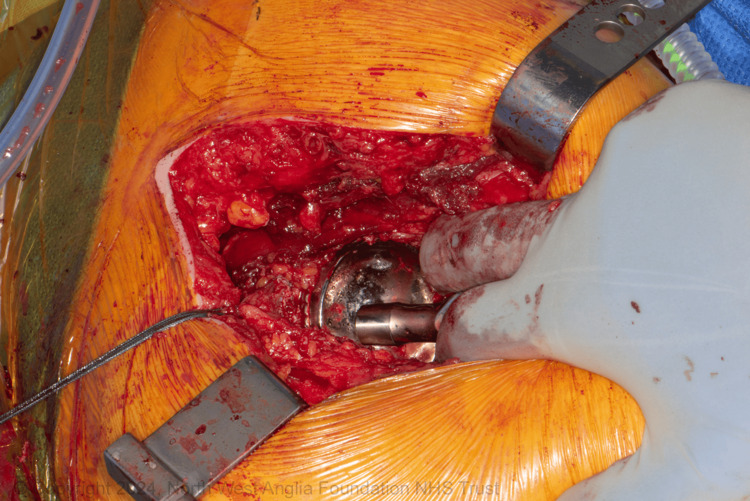
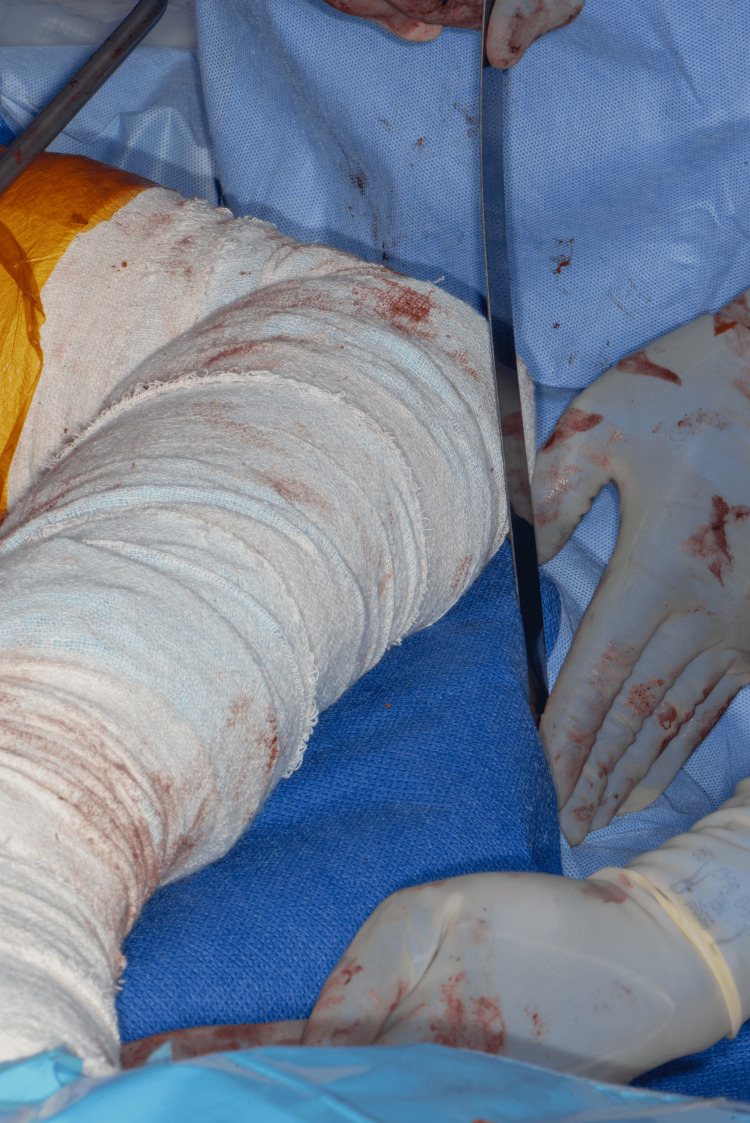
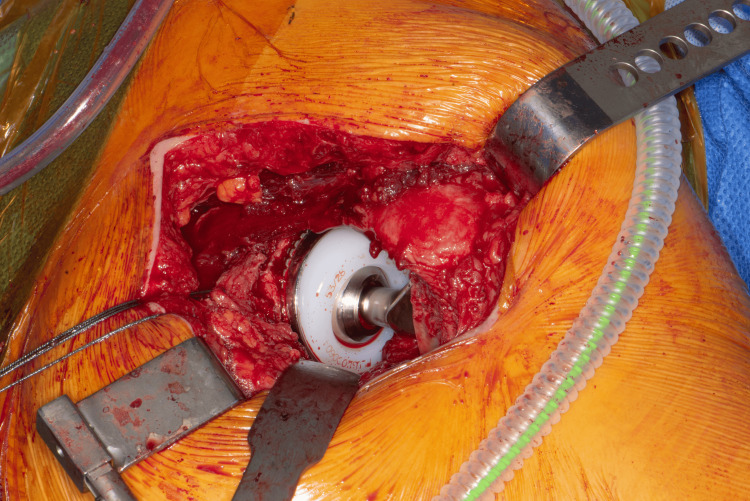
Hip arthroplasties are cost-effective procedures; however, instability and leg length discrepancy are common complications that can lead to higher revision rates and patient dissatisfaction. Preoperative planning aids surgeons in choosing the right offset and neck length before surgery. Nonetheless, intraoperative measures are still necessary due to the differences dictated by the surgical procedure. Several hip trials might be needed to reach the optimum choice of implants. We have introduced a technique that utilizes the trunnion as a reference point to the hip centre of rotation, matching it with the acetabulum centre of rotation after applying the necessary soft tissue tension. This serves as a proximal reference point. Using the trunnion, as opposed to the trial head, allows for a better assessment of tissue tension within the acetabular void, avoiding constraints imposed by the applied trial head. Additionally, determining the acetabulum's centre of rotation is challenging if obscured by the trial head. Matching the two tibial tuberosities indicates the correct leg length, serving as the distal reference point. Both reference points should be considered together to select the right neck length and offset for optimal tissue tension. This technique has been tested on hip arthroplasty patients over five years. All hip surgeons who used this technique agree that it gives a better representation of the tissue tension, easing the challenges when preparing the acetabulum as well as reducing the need for multiple trials.
髋关节置换术是具有成本效益的手术;然而,不稳定和肢体长度差异是常见的并发症,可能导致更高的翻修率和患者不满。术前规划有助于外科医生在手术前选择合适的偏心距和颈长。尽管如此,由于手术过程的差异,术中测量仍然是必要的。可能需要进行几次髋关节试验才能做出最佳的植入物选择。我们引入了一种技术,该技术利用耳轴作为髋关节旋转中心的参考点,在施加必要的软组织张力后将其与髋臼旋转中心匹配。这作为近端参考点。使用耳轴,而不是试验头,可以更好地评估髋臼间隙内的组织张力,避免试验头施加的限制。此外,如果被试验头遮挡,确定髋臼的旋转中心具有挑战性。匹配两个胫骨结节可指示正确的肢体长度,作为远端参考点。应同时考虑这两个参考点,以选择合适的颈长和偏心距,实现最佳的组织张力。这项技术已经在髋关节置换术患者身上进行了五年的测试。所有使用这项技术的髋关节外科医生都认为,它能更好地反映组织张力,减轻髋臼准备过程中的挑战,并减少多次试验的必要性。