AlHusnain Latifa, AlKahtani Muneera D F, Attia Kotb A, Sanaullah Tayyaba, Elsharnoby Dalia E
Department of Biology, College of Science, Princess Nourah bint Abdulrahman University, P.O. Box 84428, Riyadh, 11671, Saudi Arabia.
Center of Excellence in Biotechnology Research, King Saud University, P.O. Box2455, Riyadh, 11451, Saudi Arabia.
Bot Stud. 2024 Sep 3;65(1):27. doi: 10.1186/s40529-024-00432-0.
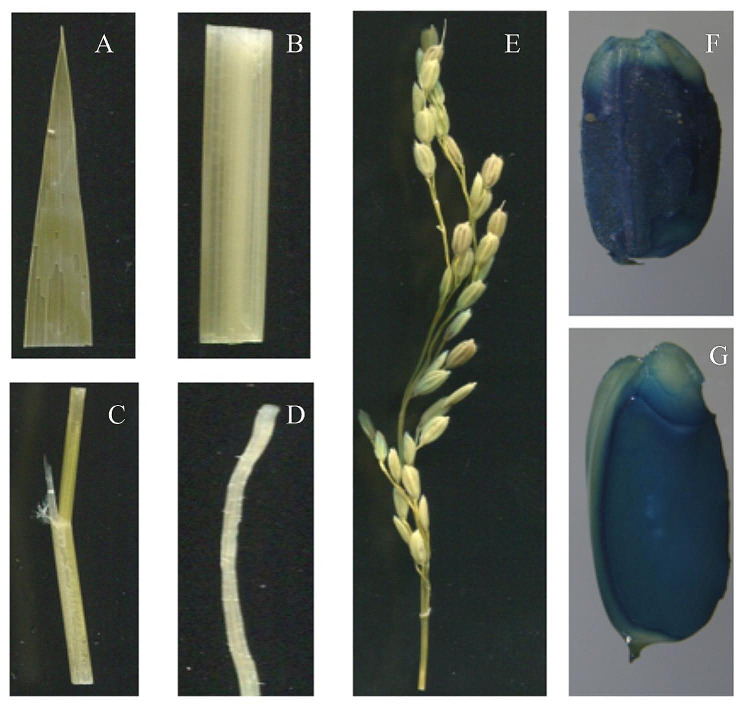
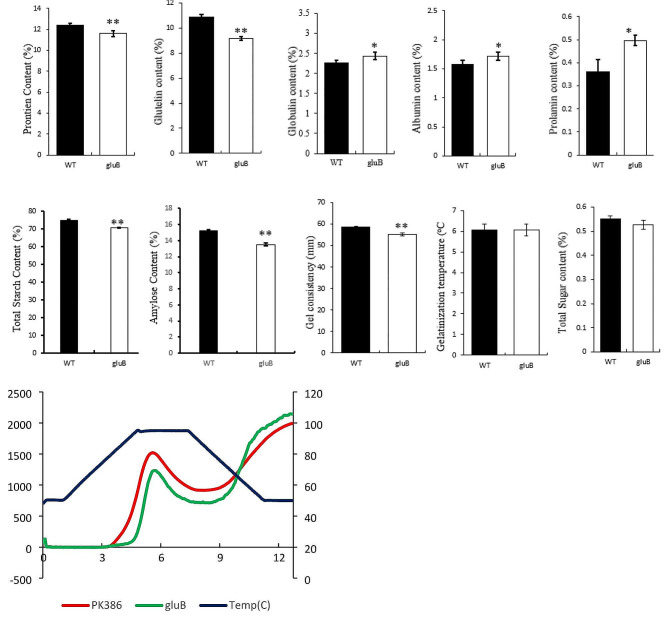
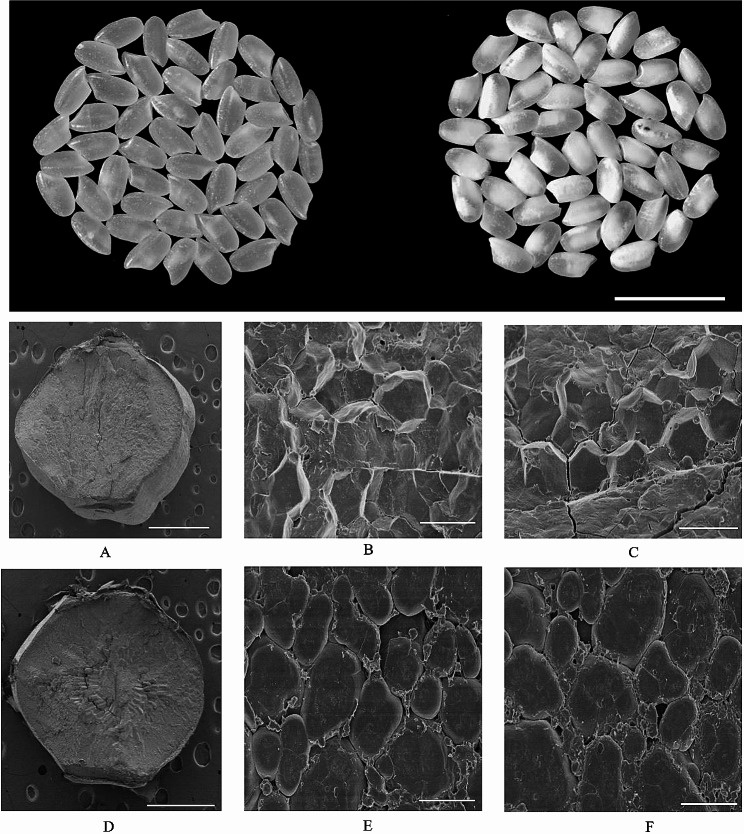
The nutritional quality improvement is among the most integral objective for any rice molecular breeding programs. The seed storage proteins (SSPs) have greater role to determine the nutritional quality of any cereal grains. Rice contains relatively balanced amino acid composition and the SSPs are fractioned into albumins (ALB), globulins (GLO), prolamins (PRO) and glutelins (GLU) according to differences in solubility. GLUs are further divided into subfamilies: GluA, GluB, GluC, and GluD depending on resemblance in amino acid. The GLU protein accounts for 60-80% of total protein contents, encoded by 15 genes located on different chromosomes of rice genome. The clustered regularly interspaced short palindromic repeats (CRISPR)/CRISPR-associated protein 9 (Cas9) system was employed to knockout Glu-B (LOC-Os02g15070) gene in non-basmati rice PK386 cultivar. The mutant displayed two base pair and three base pair mutation in the targeted regions. The homozygous mutant plant displayed reduction for both in total protein contents and GLU contents whereas, elevation in GLO, ALB and PRO. Moreover, the mutant plant also displayed reduction in physio-chemical properties e.g., total starch, amylose and gel consistency. The agronomic characteristics of both mutant and wild type displayed non-significant differences along with increase in higher percentage of chalkiness in mutant plants. The results obtained from scanning electron microscopy showed the loosely packed starch granules compared to wild type. The gene expression analysis displayed the lower expression of gene at 5 days after flowering (DAF), 10 DAF, 15 DAF and 20 DAF compared to wild type. GUS sub-cellular localization showed the staining in seed which further validated the results obtained from gene expression. Based on these findings it can be concluded Glu-B gene have significant role in controlling GLU contents and can be utilized in breeding programs to enhance the nutritional quality of rice, and may serve as healthy diet for patient allergic with high GLU contents.
营养品质改良是任何水稻分子育种计划中最核心的目标之一。种子贮藏蛋白(SSPs)在决定任何谷物的营养品质方面发挥着更大的作用。水稻含有相对平衡的氨基酸组成,根据溶解性差异,SSPs可分为清蛋白(ALB)、球蛋白(GLO)、醇溶蛋白(PRO)和谷蛋白(GLU)。GLUs根据氨基酸的相似性进一步分为亚家族:GluA、GluB、GluC和GluD。GLU蛋白占总蛋白含量的60-80%,由位于水稻基因组不同染色体上的15个基因编码。利用成簇规律间隔短回文重复序列(CRISPR)/CRISPR相关蛋白9(Cas9)系统敲除非巴斯马蒂水稻PK386品种中的Glu-B(LOC-Os02g15070)基因。突变体在靶向区域显示出两个碱基对和三个碱基对的突变。纯合突变体植株的总蛋白含量和GLU含量均降低,而GLO、ALB和PRO含量升高。此外,突变体植株的理化性质也有所降低,如总淀粉、直链淀粉和凝胶稠度。突变体和野生型的农艺性状没有显著差异,但突变体植株的垩白率较高。扫描电子显微镜观察结果表明,与野生型相比,突变体的淀粉颗粒堆积松散。基因表达分析显示,与野生型相比,该基因在开花后5天(DAF)、10 DAF、15 DAF和20 DAF时的表达较低。GUS亚细胞定位显示种子中有染色,进一步验证了基因表达的结果。基于这些发现,可以得出结论,Glu-B基因在控制GLU含量方面具有重要作用,可用于育种计划以提高水稻的营养品质,并可能作为对高GLU含量过敏患者的健康饮食。