Department of Physics and Astronomy, University of Sheffield, Sheffield, UK.
Department of Biology, University of Oxford, Oxford, UK.
Nat Microbiol. 2024 Sep;9(9):2308-2322. doi: 10.1038/s41564-024-01729-3. Epub 2024 Sep 2.
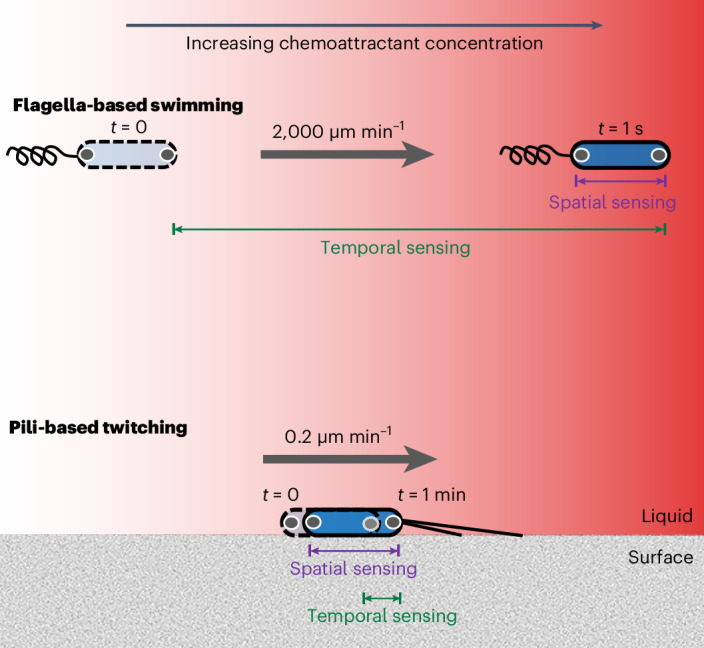
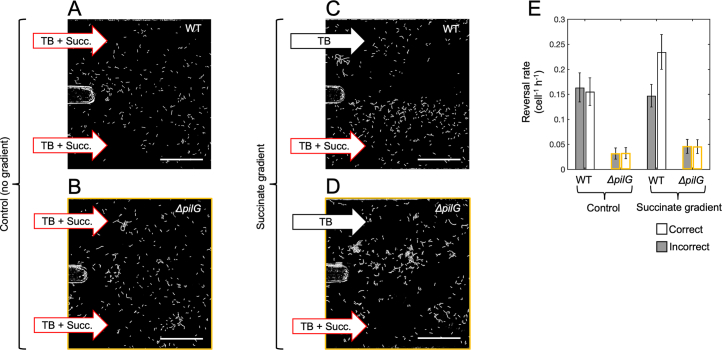
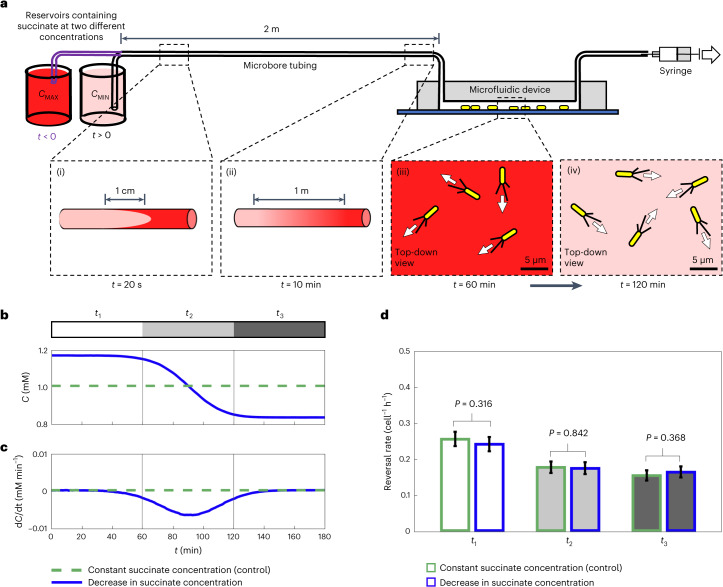
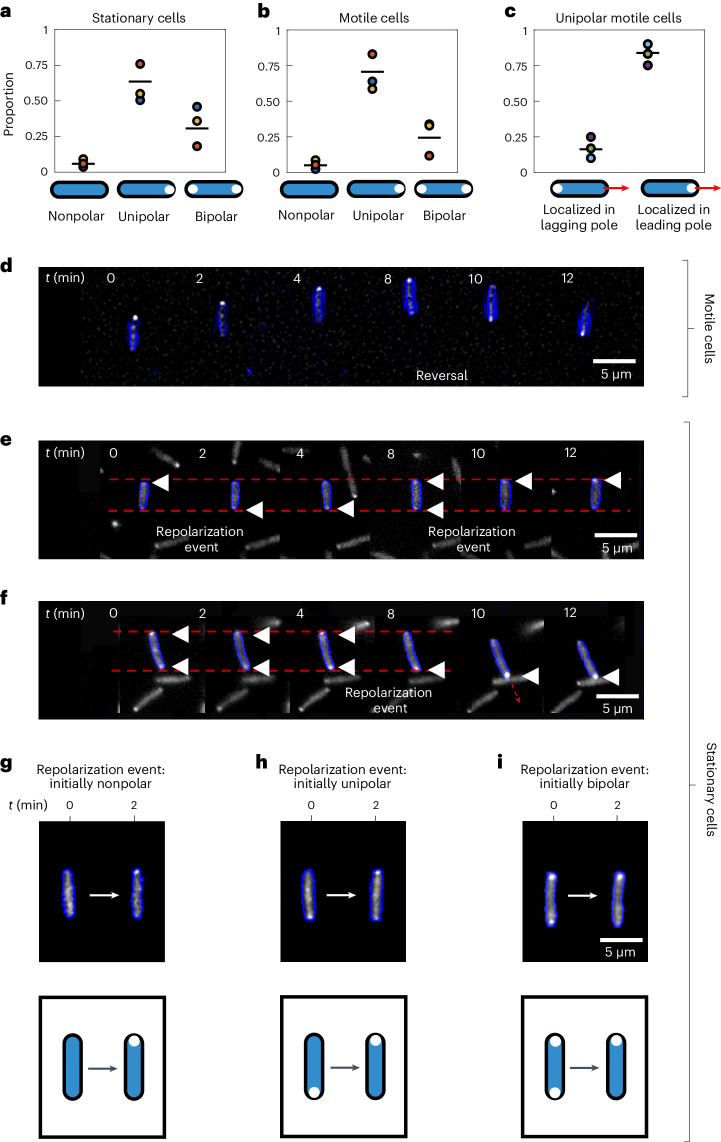
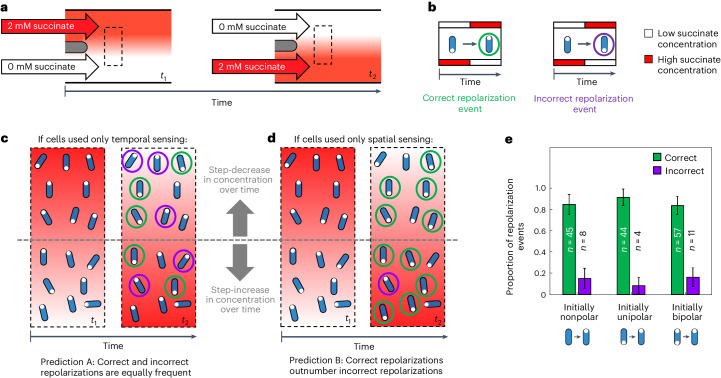
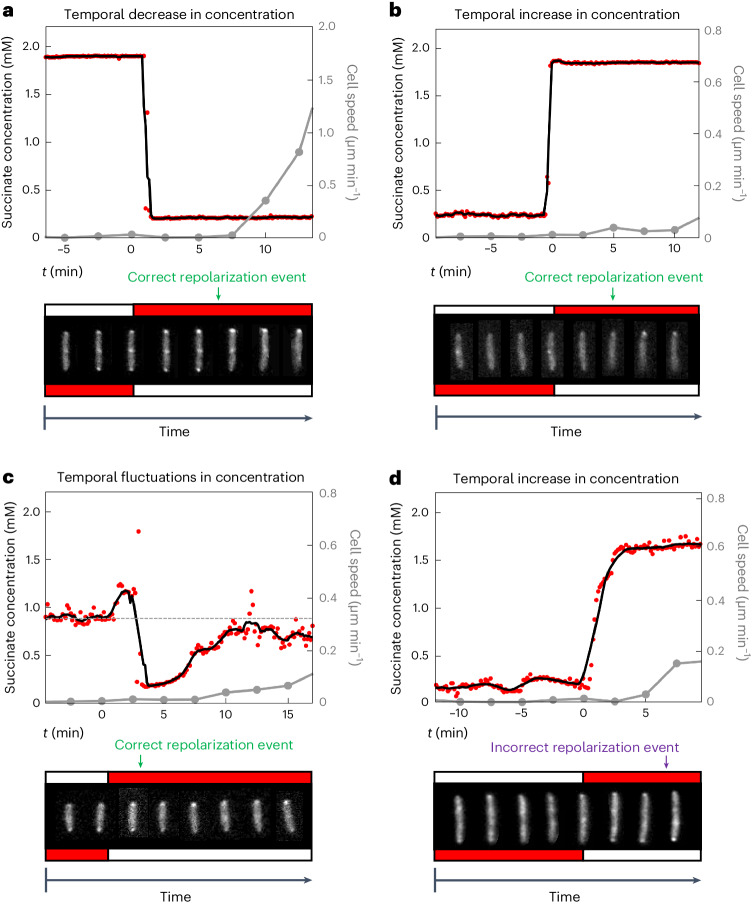
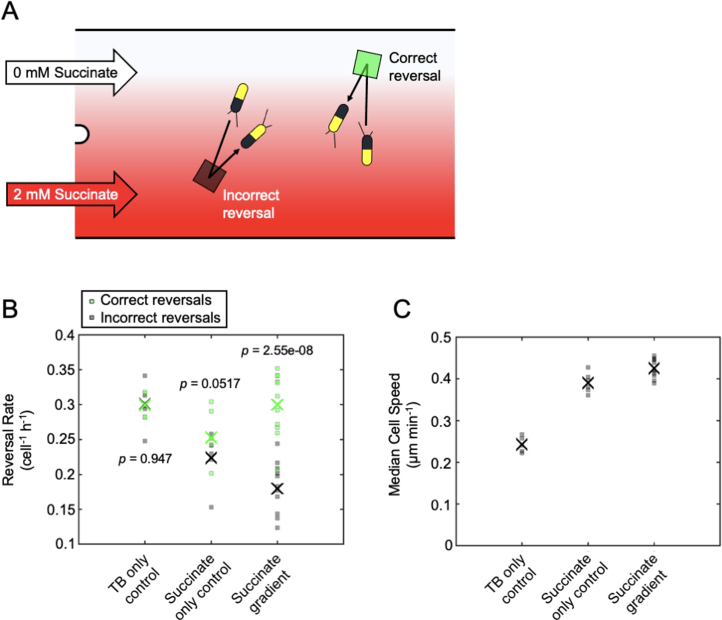
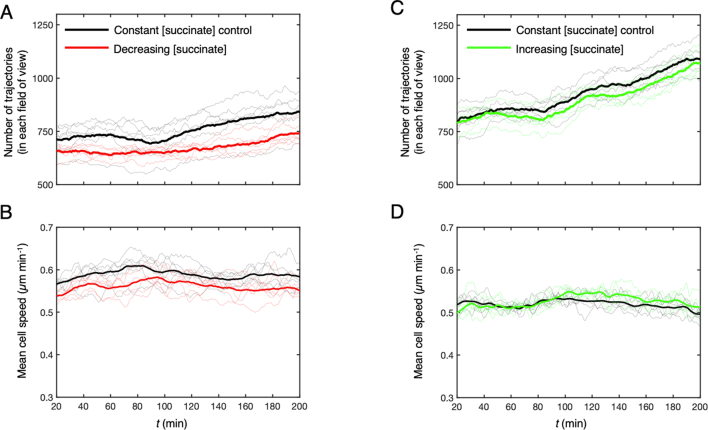
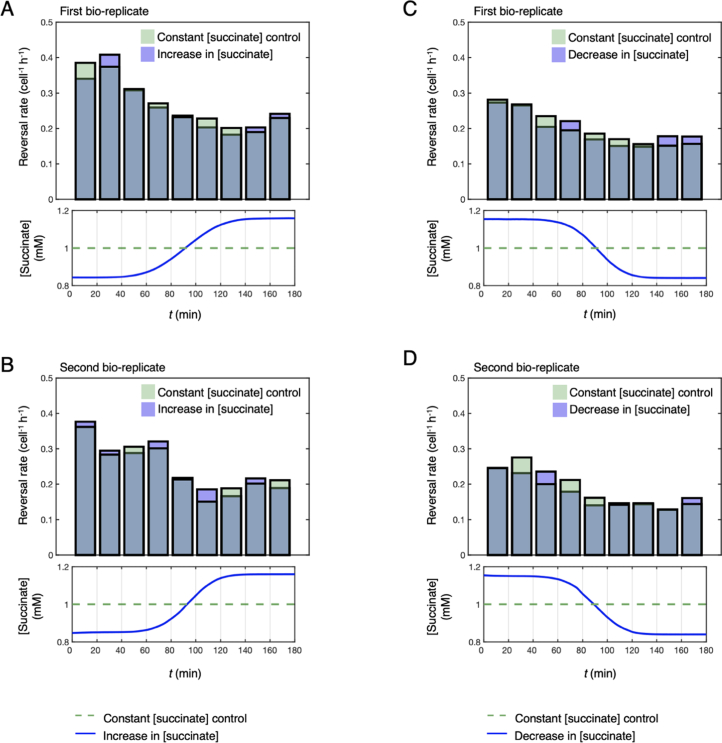
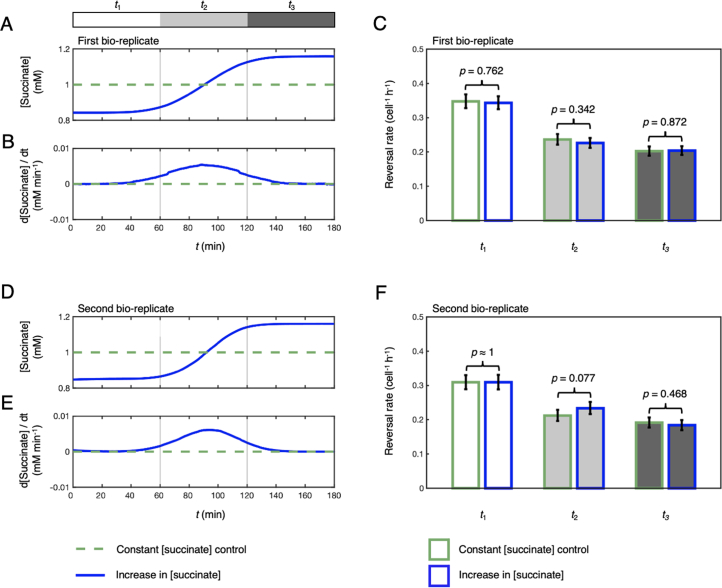
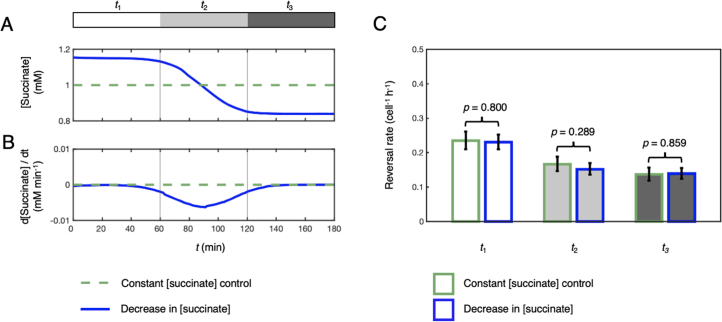
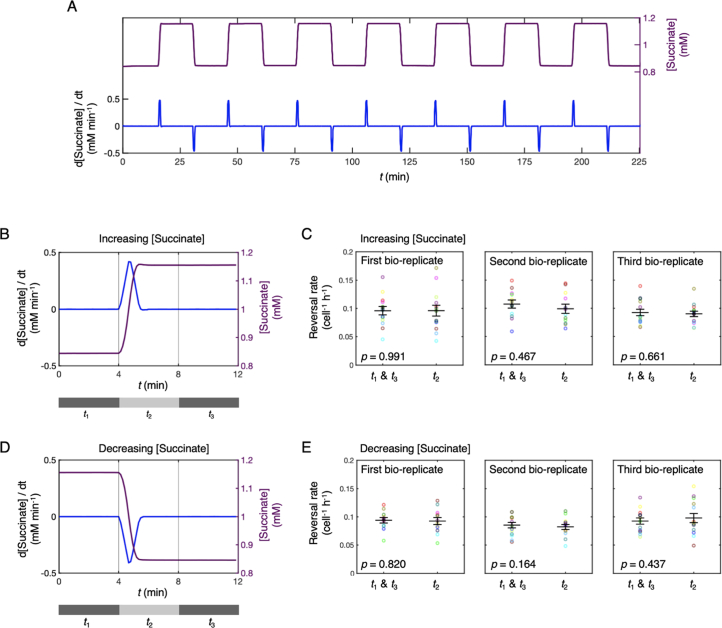
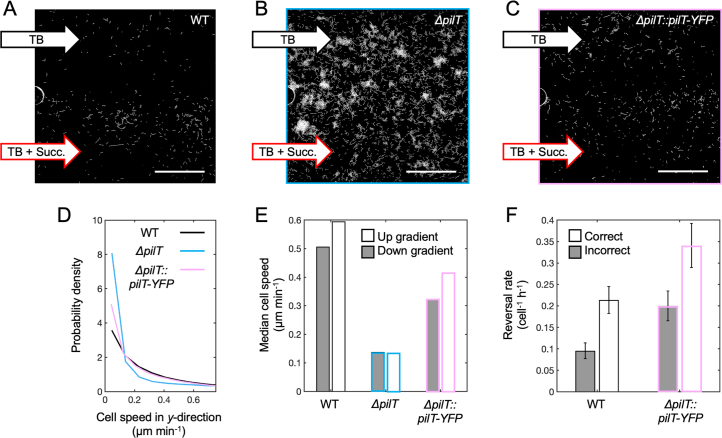
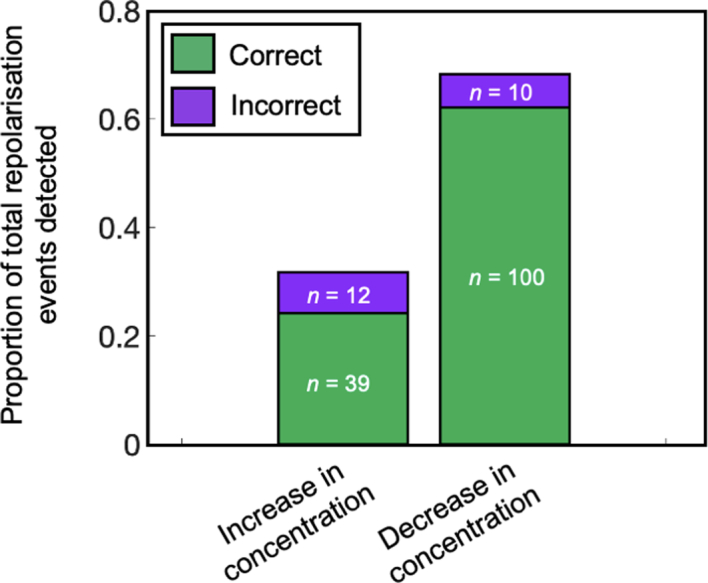
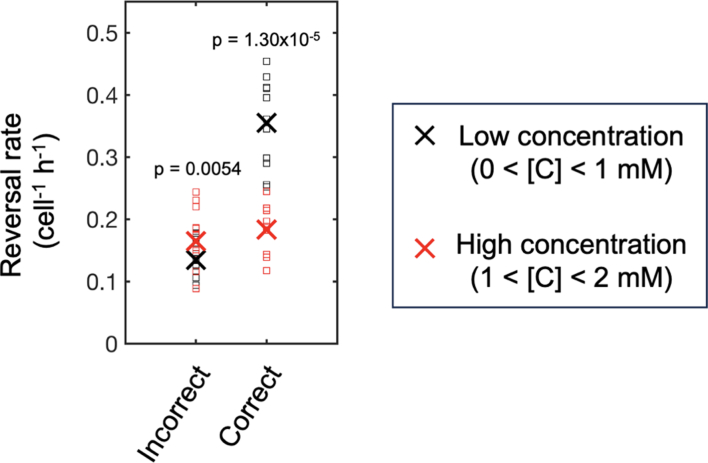
Swimming bacteria navigate chemical gradients using temporal sensing to detect changes in concentration over time. Here we show that surface-attached bacteria use a fundamentally different mode of sensing during chemotaxis. We combined microfluidic experiments, massively parallel cell tracking and fluorescent reporters to study how Pseudomonas aeruginosa senses chemical gradients during pili-based 'twitching' chemotaxis on surfaces. Unlike swimming cells, we found that temporal changes in concentration did not induce motility changes in twitching cells. We then quantified the chemotactic behaviour of stationary cells by following changes in the sub-cellular localization of fluorescent proteins as cells are exposed to a gradient that alternates direction. These experiments revealed that P. aeruginosa cells can directly sense differences in concentration across the lengths of their bodies, even in the presence of strong temporal fluctuations. Our work thus overturns the widely held notion that bacterial cells are too small to directly sense chemical gradients in space.
游动细菌利用时间感应来导航化学梯度,以检测随时间变化的浓度变化。在这里,我们表明,在表面附着的细菌在趋化作用中使用了一种根本不同的感应模式。我们结合了微流控实验、大规模并行细胞跟踪和荧光报告基因来研究铜绿假单胞菌如何在表面上基于菌毛的“抽搐”趋化作用中感知化学梯度。与游动细胞不同,我们发现浓度的时间变化不会诱导抽搐细胞的运动变化。然后,我们通过跟踪荧光蛋白的亚细胞定位变化来量化固定细胞的趋化行为,因为细胞会暴露在方向交替的梯度中。这些实验表明,即使在存在强烈的时间波动的情况下,铜绿假单胞菌细胞也可以直接感知其自身长度上的浓度差异。因此,我们的工作推翻了细菌细胞太小而无法直接感知空间中化学梯度的普遍观点。