University of Connecticut Health Center, Farmington, CT, USA.
Fatima Jinnah Medical University, Lahore, Pakistan.
J Prim Care Community Health. 2024 Jan-Dec;15:21501319241273242. doi: 10.1177/21501319241273242.
The medical profession faces a critical challenge with the mental health of its practitioners, leading to an alarming increase in suicide rates among healthcare workers (HCW). Factors such as the culture of perfectionism, excessive workloads, and stigma against seeking help exacerbate this issue. This umbrella review synthesizes the existing literature on HCW suicide, exploring the prevalence, causes, and potential preventive strategies.
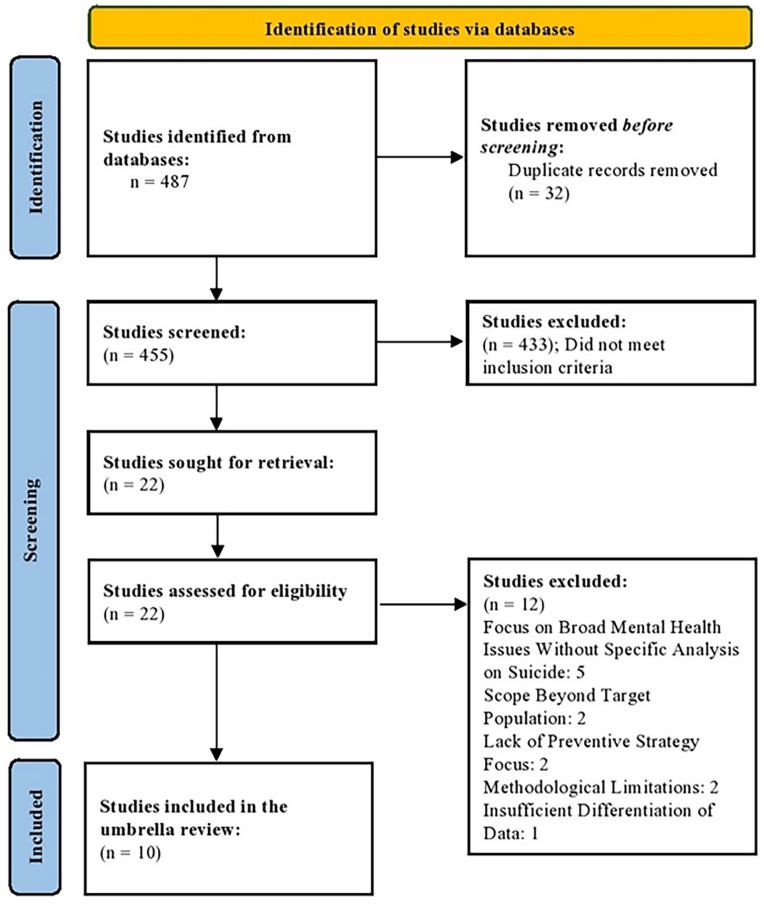
This study conducted a search of the literature from PubMed/Medline, Scopus, Web of Science, Cochrane Library, PsycINFO, and Google Scholar until April 2, 2024. The non-exhaustive search terms used were "doctor suicide," "physician suicide," "medical professional suicide," "suicide in healthcare," "healthcare worker suicide prevention," and "causes of healthcare worker suicide." Hand-searches were also conducted. Of the 487 studies initially identified, a total of 10 systematic reviews/meta-analyses were included.
This umbrella review collates findings from 400 primary clinical studies conducted between the years 2004 and 2023. With a focus on mental health factors contributing to suicide in HCW, there are regional and specialty-specific variations in stress prevalence in the populace. Further, anesthesiologists and psychiatrics depicted higher rates of burnout compared to other HCW; causative factors such as seeking perfection and challenging work-life balance were key when assessing suicidal behaviors in these groups. Job demand level was found to correlate directly with suicidal thoughts, specifically among psychiatric ward HCW, where access to drugs and sharp instruments is readily available. In specific contexts, female HCWs showed a standardized mortality ratio (SMR), indicating that the rate of suicide was higher among them as compared to the general female population. Interventions such as cognitive behavioral therapy (CBT) and mindfulness were effective in decreasing depression, psychological distress, and anxiety in several included studies. This umbrella review also identified major obstacles to seeking help, including stigma and the fear of professional consequences.
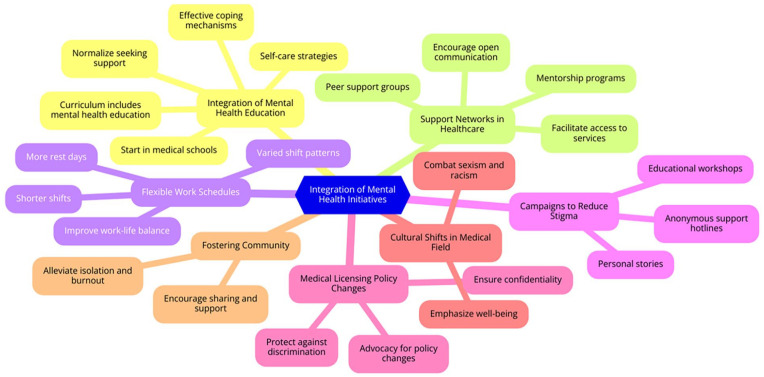
To reduce suicide rates among HCWs, it is the need of the hour to implement evidence-based interventions and create supportive work environments that encourage mutual care for each other's emotional health. Further research is necessary to determine the effectiveness of various measures in preventing suicide among HCW.
医疗行业正面临着一个严峻的挑战,其从业者的心理健康问题日益严重,导致医护人员(HCW)的自杀率惊人上升。完美主义文化、工作量过大和寻求帮助的耻辱感等因素使问题更加恶化。本综述综合了现有的关于 HCW 自杀的文献,探讨了 HCW 自杀的流行率、原因和潜在的预防策略。
本研究从 PubMed/Medline、Scopus、Web of Science、Cochrane Library、PsycINFO 和 Google Scholar 中进行了文献检索,检索时间截至 2024 年 4 月 2 日。使用的非穷尽性搜索词包括“医生自杀”、“医师自杀”、“医疗专业人员自杀”、“医疗保健人员自杀”、“医护人员自杀预防”和“医护人员自杀原因”。还进行了手工搜索。在最初确定的 487 项研究中,共有 10 项系统评价/荟萃分析被纳入。
本综述汇总了 2004 年至 2023 年期间进行的 400 项临床研究的结果。重点关注导致 HCW 自杀的心理健康因素,人群中压力的流行存在区域性和专科特异性差异。此外,与其他 HCW 相比,麻醉师和精神科医生的倦怠率更高;在评估这些群体的自杀行为时,寻求完美和具有挑战性的工作-生活平衡等因素是关键。研究发现,工作需求水平与自杀意念直接相关,特别是在精神科病房的 HCW 中,他们更容易获得药物和锐器。在特定情况下,女性 HCW 的标准化死亡率(SMR)表明,与一般女性人群相比,她们的自杀率更高。认知行为疗法(CBT)和正念等干预措施在几项纳入的研究中都有效降低了抑郁、心理困扰和焦虑。本综述还确定了寻求帮助的主要障碍,包括耻辱感和对职业后果的恐惧。
为了降低 HCW 的自杀率,现在需要实施基于证据的干预措施,并创造支持性的工作环境,鼓励彼此关心对方的情绪健康。需要进一步研究以确定各种措施在预防 HCW 自杀方面的有效性。