• 文献检索
  • 文档翻译
  • 深度研究
  • 学术资讯
  • Suppr Zotero 插件Zotero 插件
  • 邀请有礼
  • 套餐&价格
  • 历史记录
应用&插件
Suppr Zotero 插件Zotero 插件浏览器插件Mac 客户端Windows 客户端微信小程序
定价
高级版会员购买积分包购买API积分包
服务
文献检索文档翻译深度研究API 文档MCP 服务
关于我们
关于 Suppr公司介绍联系我们用户协议隐私条款
关注我们

Suppr 超能文献

核心技术专利:CN118964589B侵权必究
粤ICP备2023148730 号-1Suppr @ 2026

文献检索

告别复杂PubMed语法,用中文像聊天一样搜索,搜遍4000万医学文献。AI智能推荐,让科研检索更轻松。

立即免费搜索

文件翻译

保留排版,准确专业,支持PDF/Word/PPT等文件格式,支持 12+语言互译。

免费翻译文档

深度研究

AI帮你快速写综述,25分钟生成高质量综述,智能提取关键信息,辅助科研写作。

立即免费体验

CRISPR/dCas13(Rx) 衍生的 RNA N6-甲基腺苷 (m6A) 在植物中的动态修饰

CRISPR/dCas13(Rx) Derived RNA N-methyladenosine (mA) Dynamic Modification in Plant.

机构信息

National Key Laboratory of Crop Genetic Improvement, Huazhong Agricultural University, Wuhan, 430070, China.

Key Laboratory of Oasis Eco-agricultural, Xinjiang Production and Construction Corps/Agricultural College, Shihezi University, Shihezi, 832003, China.

出版信息

Adv Sci (Weinh). 2024 Oct;11(39):e2401118. doi: 10.1002/advs.202401118. Epub 2024 Sep 4.

DOI:10.1002/advs.202401118
PMID:39229923
原文链接:https://pmc.ncbi.nlm.nih.gov/articles/PMC11497087/
Abstract

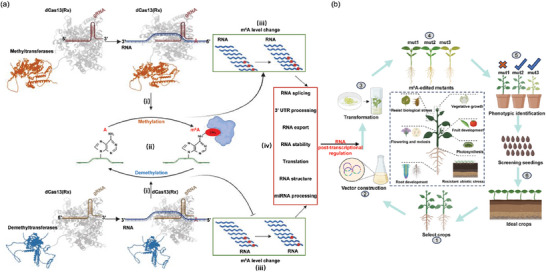
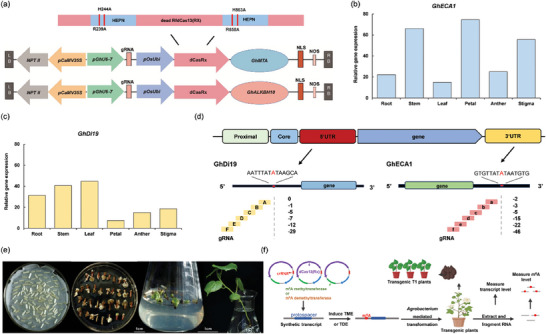
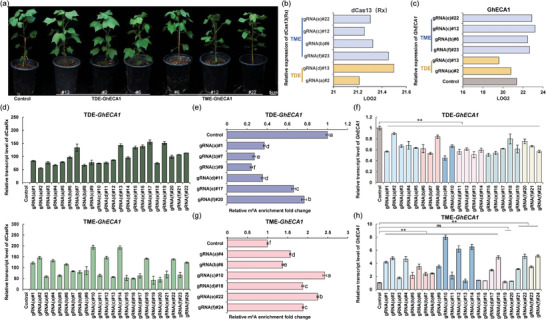
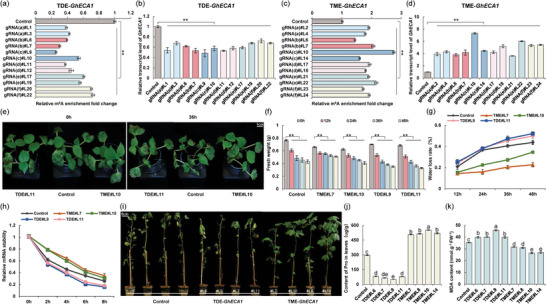
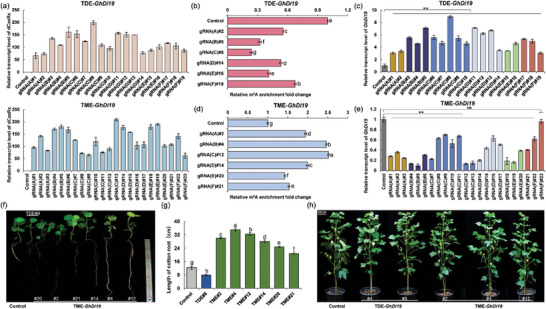
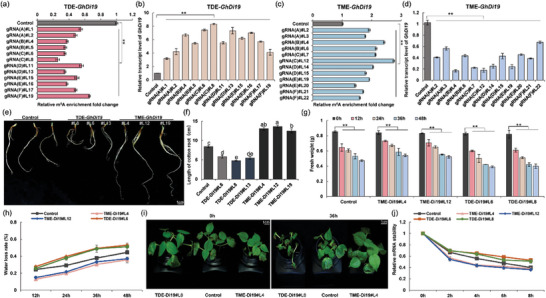
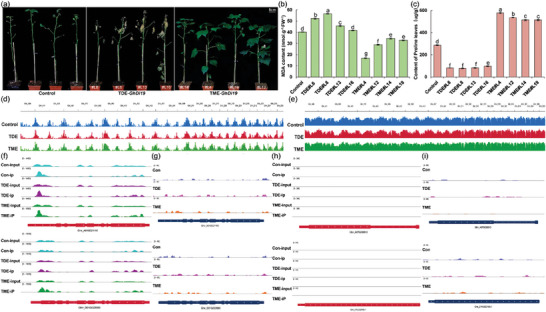
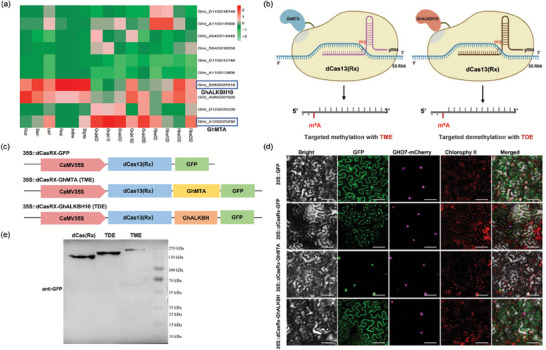
N-methyladenosine (mA) is the most prevalent internal modification of mRNA and plays an important role in regulating plant growth. However, there is still a lack of effective tools to precisely modify mA sites of individual transcripts in plants. Here, programmable mA editing tools are developed by combining CRISPR/dCas13(Rx) with the methyltransferase GhMTA (Targeted RNA Methylation Editor, TME) or the demethyltransferase GhALKBH10 (Targeted RNA Demethylation Editor, TDE). These editors enable efficient deposition or removal of mA modifications at targeted sites of endo-transcripts GhECA1 and GhDi19 within a broad editing window ranging from 0 to 46 nt. TDE editor significantly decreases mA levels by 24%-76%, while the TME editor increases mA enrichment, ranging from 1.37- to 2.51-fold. Furthermore, installation and removal of mA modifications play opposing roles in regulating GhECA1 and GhDi19 mRNA transcripts, which may be attributed to the fact that their mA sites are located in different regions of the genes. Most importantly, targeting the GhDi19 transcript with TME editor plants results in a significant increase in root length and enhanced drought resistance. Collectively, these mA editors can be applied to study the function of specific mA modifications and have the potential for future applications in crop improvement.

摘要

N6-甲基腺嘌呤(m6A)是 mRNA 中最普遍的内部修饰,在调控植物生长中发挥着重要作用。然而,目前仍然缺乏有效的工具来精确修饰植物中转录本的 m6A 位点。在这里,通过将 CRISPR/dCas13(Rx)与甲基转移酶 GhMTA(靶向 RNA 甲基化编辑器,TME)或脱甲基酶 GhALKBH10(靶向 RNA 去甲基化编辑器,TDE)相结合,开发了可编程的 m6A 编辑工具。这些编辑器能够在广泛的编辑窗口(0 至 46 个核苷酸)内有效地在内源性 GhECA1 和 GhDi19 转录本的靶位点上沉积或去除 m6A 修饰。TDE 编辑器可使 m6A 水平降低 24%-76%,而 TME 编辑器可使 m6A 富集增加 1.37 至 2.51 倍。此外,m6A 修饰的安装和去除在调控 GhECA1 和 GhDi19 mRNA 转录本方面发挥着相反的作用,这可能归因于它们的 m6A 位点位于基因的不同区域。最重要的是,用 TME 编辑器靶向 GhDi19 转录本可使根长显著增加,耐旱性增强。总之,这些 m6A 编辑器可用于研究特定 m6A 修饰的功能,并有可能在未来的作物改良中得到应用。
https://cdn.ncbi.nlm.nih.gov/pmc/blobs/7aac/11497087/eb3e9f5a23bb/ADVS-11-2401118-g007.jpg
https://cdn.ncbi.nlm.nih.gov/pmc/blobs/7aac/11497087/79f8f56c386e/ADVS-11-2401118-g004.jpg
https://cdn.ncbi.nlm.nih.gov/pmc/blobs/7aac/11497087/8080d94e846a/ADVS-11-2401118-g001.jpg
https://cdn.ncbi.nlm.nih.gov/pmc/blobs/7aac/11497087/91d18f5f0373/ADVS-11-2401118-g002.jpg
https://cdn.ncbi.nlm.nih.gov/pmc/blobs/7aac/11497087/67692e947e91/ADVS-11-2401118-g006.jpg
https://cdn.ncbi.nlm.nih.gov/pmc/blobs/7aac/11497087/7b409e67b506/ADVS-11-2401118-g003.jpg
https://cdn.ncbi.nlm.nih.gov/pmc/blobs/7aac/11497087/ea04de5e178e/ADVS-11-2401118-g008.jpg
https://cdn.ncbi.nlm.nih.gov/pmc/blobs/7aac/11497087/753907ce7af5/ADVS-11-2401118-g009.jpg
https://cdn.ncbi.nlm.nih.gov/pmc/blobs/7aac/11497087/eb3e9f5a23bb/ADVS-11-2401118-g007.jpg
https://cdn.ncbi.nlm.nih.gov/pmc/blobs/7aac/11497087/79f8f56c386e/ADVS-11-2401118-g004.jpg
https://cdn.ncbi.nlm.nih.gov/pmc/blobs/7aac/11497087/8080d94e846a/ADVS-11-2401118-g001.jpg
https://cdn.ncbi.nlm.nih.gov/pmc/blobs/7aac/11497087/91d18f5f0373/ADVS-11-2401118-g002.jpg
https://cdn.ncbi.nlm.nih.gov/pmc/blobs/7aac/11497087/67692e947e91/ADVS-11-2401118-g006.jpg
https://cdn.ncbi.nlm.nih.gov/pmc/blobs/7aac/11497087/7b409e67b506/ADVS-11-2401118-g003.jpg
https://cdn.ncbi.nlm.nih.gov/pmc/blobs/7aac/11497087/ea04de5e178e/ADVS-11-2401118-g008.jpg
https://cdn.ncbi.nlm.nih.gov/pmc/blobs/7aac/11497087/753907ce7af5/ADVS-11-2401118-g009.jpg
https://cdn.ncbi.nlm.nih.gov/pmc/blobs/7aac/11497087/eb3e9f5a23bb/ADVS-11-2401118-g007.jpg

相似文献

1
CRISPR/dCas13(Rx) Derived RNA N-methyladenosine (mA) Dynamic Modification in Plant.CRISPR/dCas13(Rx) 衍生的 RNA N6-甲基腺苷 (m6A) 在植物中的动态修饰
Adv Sci (Weinh). 2024 Oct;11(39):e2401118. doi: 10.1002/advs.202401118. Epub 2024 Sep 4.
2
Programmable RNA N-methyladenosine editing with CRISPR/dCas13a in plants.利用 CRISPR/dCas13a 在植物中进行可编程的 RNA N-甲基腺苷编辑。
Plant Biotechnol J. 2024 Jul;22(7):1867-1880. doi: 10.1111/pbi.14307. Epub 2024 Feb 16.
3
Targeted RNA mA Editing Using Engineered CRISPR-Cas9 Conjugates.靶向 RNA mA 编辑的工程化 CRISPR-Cas9 缀合物。
Methods Mol Biol. 2021;2298:399-414. doi: 10.1007/978-1-0716-1374-0_23.
4
Programmable RNA N-methyladenosine editing by CRISPR-Cas9 conjugates.CRISPR-Cas9 偶联物对可编程 RNA N6-甲基腺苷编辑。
Nat Chem Biol. 2019 Sep;15(9):865-871. doi: 10.1038/s41589-019-0327-1. Epub 2019 Aug 5.
5
Site-Specific m A Erasing via Conditionally Stabilized CRISPR-Cas13b Editor.通过条件稳定的 CRISPR-Cas13b 编辑器进行位点特异性 mA 擦除。
Angew Chem Int Ed Engl. 2023 Oct 23;62(43):e202309291. doi: 10.1002/anie.202309291. Epub 2023 Sep 15.
6
Programmable mA modification of cellular RNAs with a Cas13-directed methyltransferase.利用 Cas13 指导的甲基转移酶对细胞 RNA 进行可编程的 mA 修饰。
Nat Biotechnol. 2020 Dec;38(12):1431-1440. doi: 10.1038/s41587-020-0572-6. Epub 2020 Jun 29.
7
CRISPR/Cas: A powerful tool for gene function study and crop improvement.CRISPR/Cas:基因功能研究和作物改良的有力工具。
J Adv Res. 2020 Oct 21;29:207-221. doi: 10.1016/j.jare.2020.10.003. eCollection 2021 Mar.
8
Targeted manipulation of mA RNA modification through CRISPR-Cas-based strategies.通过基于 CRISPR-Cas 的策略靶向操纵 mA RNA 修饰。
Methods. 2022 Jul;203:56-61. doi: 10.1016/j.ymeth.2022.03.006. Epub 2022 Mar 17.
9
CRISPR/Cas system-mediated base editing in crops: recent developments and future prospects.CRISPR/Cas 系统介导的作物碱基编辑:最新进展与未来展望。
Plant Cell Rep. 2024 Oct 25;43(11):271. doi: 10.1007/s00299-024-03346-0.
10
Programmable RNA N -Methyladenosine Demethylation by a Cas13d-Directed Demethylase.可编程 RNA N -甲基腺苷去甲基化由 Cas13d 指导的去甲基酶实现。
Angew Chem Int Ed Engl. 2021 Sep 1;60(36):19592-19597. doi: 10.1002/anie.202105253. Epub 2021 Jun 27.

引用本文的文献

1
Epitranscriptomic alterations induced by environmental toxins: implications for RNA modifications and disease.环境毒素诱导的表观转录组改变:对RNA修饰和疾病的影响。
Genes Environ. 2025 Aug 4;47(1):14. doi: 10.1186/s41021-025-00337-9.
2
Enhancing Specificity, Precision, Accessibility, Flexibility, and Safety to Overcome Traditional CRISPR/Cas Editing Challenges and Shape Future Innovations.增强特异性、精准性、可及性、灵活性和安全性,以克服传统CRISPR/Cas编辑挑战并塑造未来创新。
Adv Sci (Weinh). 2025 Jul;12(28):e2416331. doi: 10.1002/advs.202416331. Epub 2025 Jun 23.
3
Biological roles of enhancer RNA m6A modification and its implications in cancer.

本文引用的文献

1
Expressing a human RNA demethylase as an assister improves gene-editing efficiency in plants.表达一种人类RNA去甲基化酶作为辅助因子可提高植物中的基因编辑效率。
Mol Plant. 2024 Mar 4;17(3):363-366. doi: 10.1016/j.molp.2024.02.010. Epub 2024 Feb 17.
2
Programmable RNA N-methyladenosine editing with CRISPR/dCas13a in plants.利用 CRISPR/dCas13a 在植物中进行可编程的 RNA N-甲基腺苷编辑。
Plant Biotechnol J. 2024 Jul;22(7):1867-1880. doi: 10.1111/pbi.14307. Epub 2024 Feb 16.
3
Single-cell resolution analysis reveals the preparation for reprogramming the fate of stem cell niche in cotton lateral meristem.
增强子RNA的m6A修饰的生物学作用及其在癌症中的意义。
Cell Commun Signal. 2025 May 30;23(1):254. doi: 10.1186/s12964-025-02254-4.
4
RNA modifications in plant biotic interactions.植物生物互作中的RNA修饰
Plant Commun. 2025 Feb 10;6(2):101232. doi: 10.1016/j.xplc.2024.101232. Epub 2024 Dec 25.
5
RNA modifications in plant adaptation to abiotic stresses.植物适应非生物胁迫中的RNA修饰
Plant Commun. 2025 Feb 10;6(2):101229. doi: 10.1016/j.xplc.2024.101229. Epub 2024 Dec 21.
6
Systemic evaluation of various CRISPR/Cas13 orthologs for knockdown of targeted transcripts in plants.对多种CRISPR/Cas13直系同源物在植物中敲低靶向转录本的系统评估。
Genome Biol. 2024 Dec 5;25(1):307. doi: 10.1186/s13059-024-03448-8.
7
Strategies for RNA mA modification application in crop improvement.RNA mA修饰在作物改良中的应用策略。
Front Plant Sci. 2024 Oct 15;15:1477240. doi: 10.3389/fpls.2024.1477240. eCollection 2024.
单细胞分辨率分析揭示了棉花侧生分生组织中干细胞命运重编程的准备。
Genome Biol. 2023 Aug 25;24(1):194. doi: 10.1186/s13059-023-03032-6.
4
Targeted mRNA demethylation in Arabidopsis using plant m6A editor.利用植物m6A编辑器对拟南芥进行靶向mRNA去甲基化
Plant Methods. 2023 Aug 9;19(1):81. doi: 10.1186/s13007-023-01053-7.
5
Uncovering the transcriptional regulatory network involved in boosting wheat regeneration and transformation.揭示促进小麦再生和转化的转录调控网络。
Nat Plants. 2023 Jun;9(6):908-925. doi: 10.1038/s41477-023-01406-z. Epub 2023 May 4.
6
Developing an efficient CRISPR-dCas9-TV-derived transcriptional activation system to create three novel cotton germplasm materials.开发一种高效的源自CRISPR-dCas9-TV的转录激活系统,以创建三种新型棉花种质材料。
Plant Commun. 2023 Jul 10;4(4):100600. doi: 10.1016/j.xplc.2023.100600. Epub 2023 Apr 13.
7
N6-methyladenosine RNA modification regulates cotton drought response in a Ca and ABA-dependent manner.N6-甲基腺苷 RNA 修饰以 Ca 和 ABA 依赖的方式调控棉花的抗旱反应。
Plant Biotechnol J. 2023 Jun;21(6):1270-1285. doi: 10.1111/pbi.14036. Epub 2023 Mar 22.
8
Integration of chromatin accessibility and gene expression reveals new regulators of cold hardening to enhance freezing tolerance in Prunus mume.染色质可及性与基因表达的整合揭示了梅花抗寒锻炼以增强抗冻性的新调控因子。
J Exp Bot. 2023 Mar 28;74(6):2173-2187. doi: 10.1093/jxb/erad027.
9
Detection, regulation, and functions of RNA N-methyladenosine modification in plants.RNA N6-甲基腺苷修饰的检测、调控及功能研究在植物中。
Plant Commun. 2023 May 8;4(3):100546. doi: 10.1016/j.xplc.2023.100546. Epub 2023 Jan 10.
10
Arabidopsis N6-methyladenosine methyltransferase FIONA1 regulates floral transition by affecting the splicing of FLC and the stability of floral activators SPL3 and SEP3.拟南芥N6-甲基腺苷甲基转移酶FIONA1通过影响FLC的剪接以及花激活因子SPL3和SEP3的稳定性来调控开花转变。
J Exp Bot. 2023 Feb 5;74(3):864-877. doi: 10.1093/jxb/erac461.