Instituto René Rachou, Núcleo de Estudos em Saúde Pública e Envelhecimento, Belo Horizonte, MG, Brasil.
Universidade Federal de Minas Gerais, Faculdade de Medicina, Belo Horizonte, MG, Brasil.
Epidemiol Serv Saude. 2024 Aug 23;33(spe2):e20231188. doi: 10.1590/S2237-96222024v33e20231188.especial2.en. eCollection 2024.
To describe vaccination coverage and hesitation for the basic children's schedule in Belo Horizonte and Sete Lagoas, Minas Gerais state, Brazil.
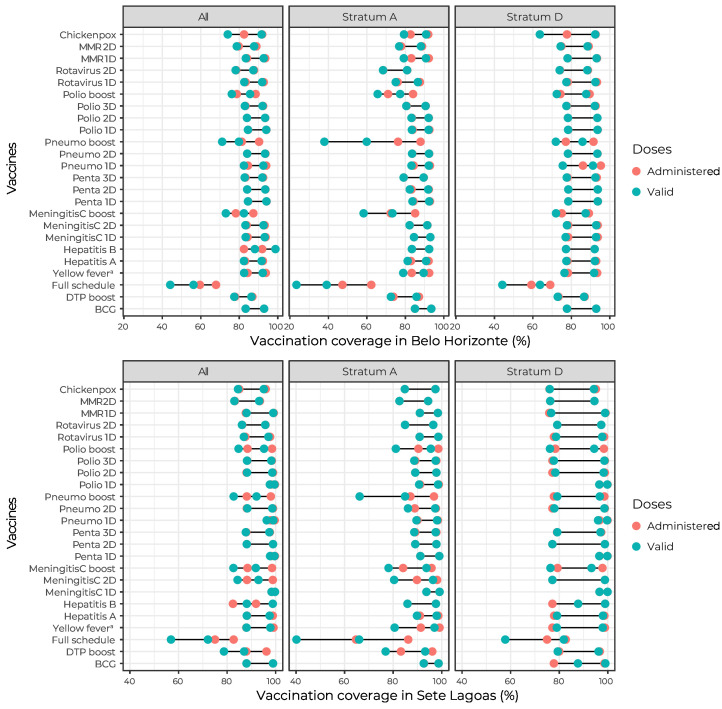
Population-based epidemiological surveys performed from 2020 to 2022, which estimated vaccine coverage by type of immunobiological product and full schedule (valid and ministered doses), according to socioeconomic strata; and reasons for vaccination hesitancy.
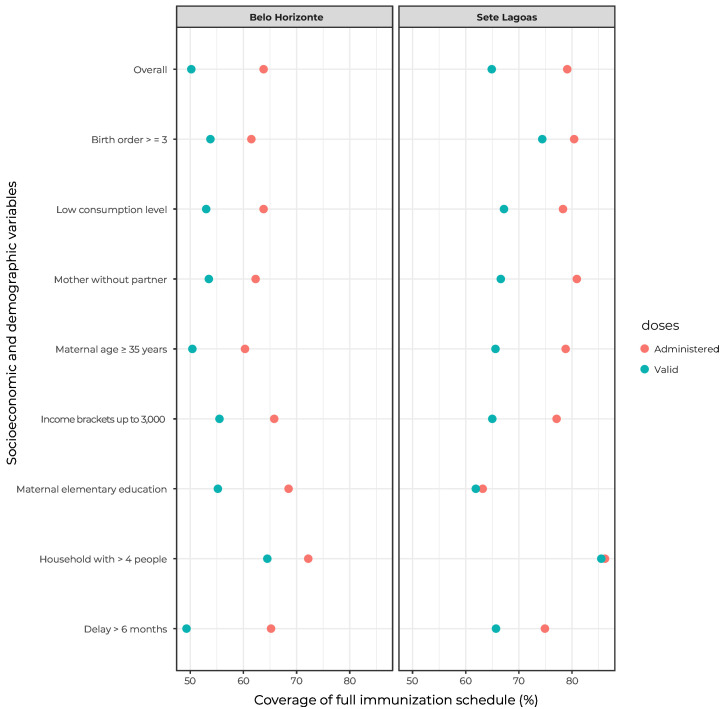
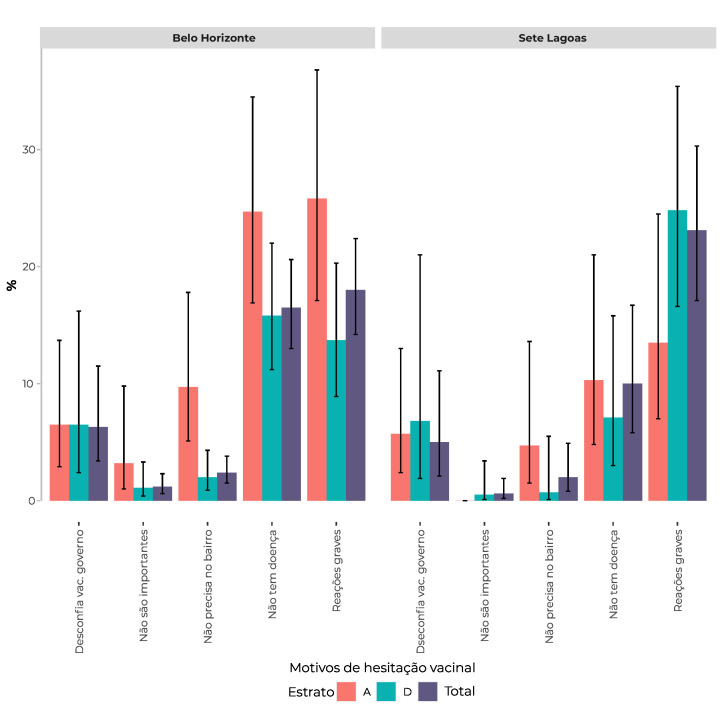
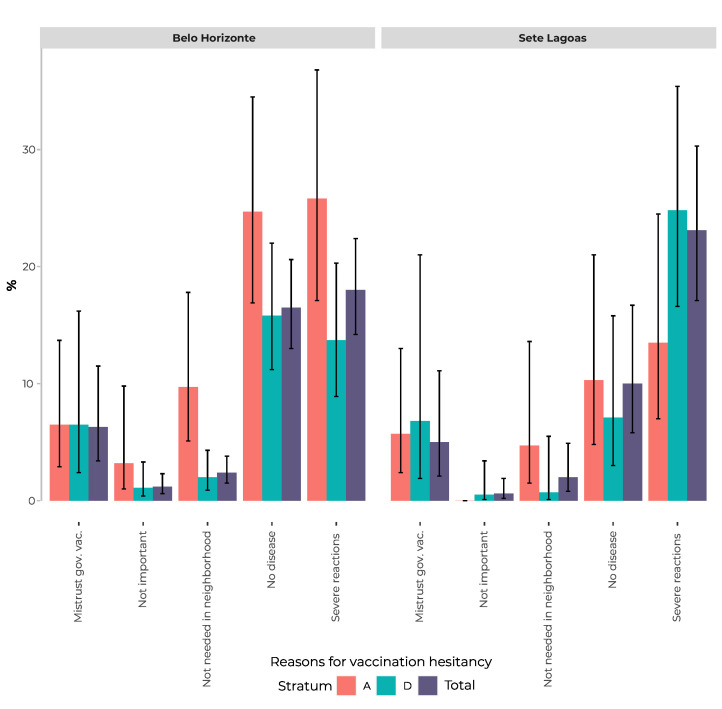
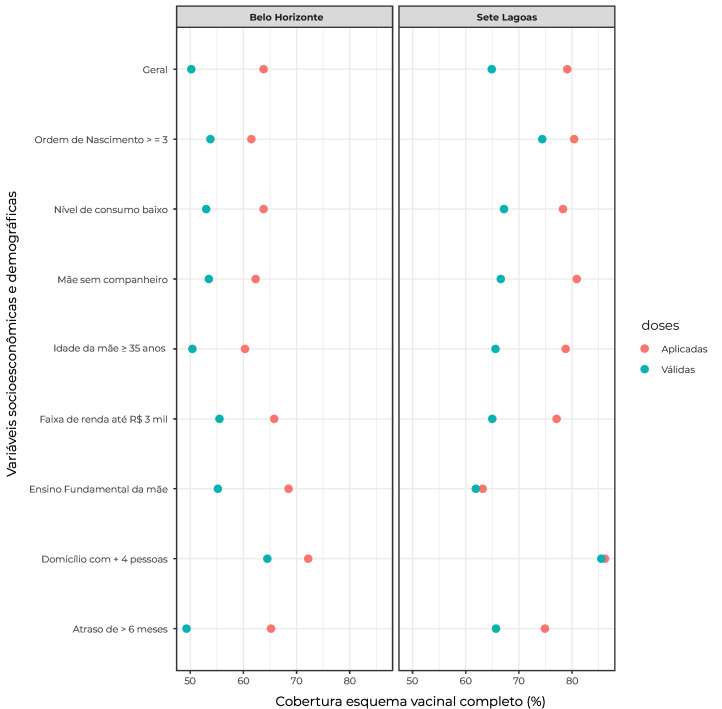
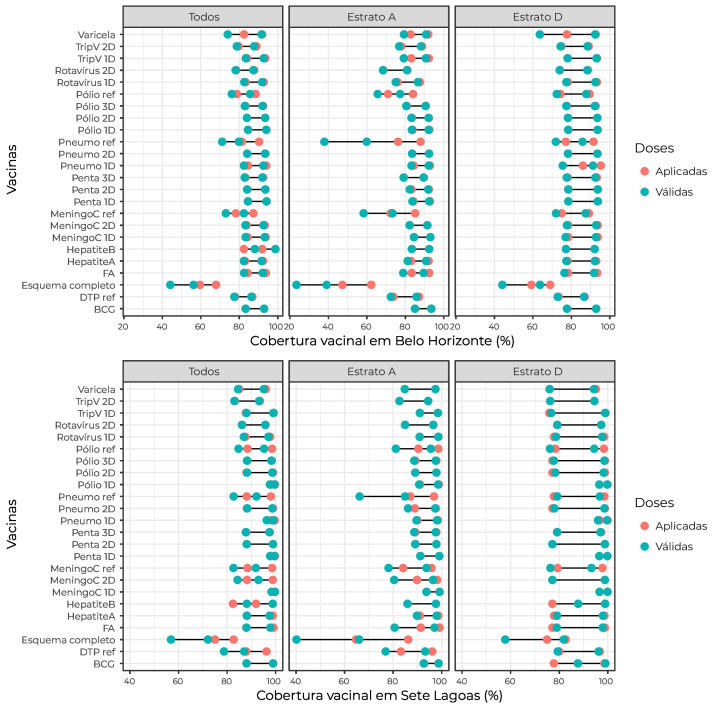
Overall coverage with valid doses and vaccination hesitancy for at least one vaccine were, respectively, 50.2% (95%CI 44.1;56.2) and 1.6% (95%CI 0.9;2.7), in Belo Horizonte (n = 1,866), and 64.9% (95%CI 56.9;72.1) and 1.0% (95%CI 0.3;2.8), in Sete Lagoas (n = 451), with differences between socioeconomic strata. Fear of severe reactions was the main reason for vaccination hesitancy.
Coverage was identified as being below recommended levels for most vaccines. Disinformation should be combated in order to avoid vaccination hesitancy. There is a pressing need to recover coverages, considering public health service access and socioeconomic disparities.
Vaccination coverage of children up to 4 years old was 50.2% in Belo Horizonte, and 64.9% in Sete Lagoas. Fear of severe reactions and believing that vaccination against eradicated diseases is unnecessary were the main reasons for vaccination hesitancy.
Recovery of high vaccination coverage among children, considering public health service access conditions and socioeconomic inequities. Acting on reasons for hesitancy that can assist in targeting actions.
The multifactorial context of vaccination hesitancy demands the development of health education strategies to raise awareness about child immunization.
描述巴西米纳斯吉拉斯州贝洛奥里藏特和塞特莱戈阿斯基本儿童常规疫苗接种的覆盖率和犹豫情况。
2020 年至 2022 年进行了基于人群的流行病学调查,根据社会经济阶层估计了不同类型免疫生物制品和完整疫苗接种计划(有效和接种剂量)的疫苗覆盖率;以及疫苗犹豫的原因。
在贝洛奥里藏特(n = 1866),有效剂量的总覆盖率和至少一种疫苗的接种犹豫率分别为 50.2%(95%CI 44.1;56.2)和 1.6%(95%CI 0.9;2.7),在塞特莱戈阿斯(n = 451),有效剂量的总覆盖率和至少一种疫苗的接种犹豫率分别为 64.9%(95%CI 56.9;72.1)和 1.0%(95%CI 0.3;2.8),在不同的社会经济阶层之间存在差异。对严重反应的恐惧是接种犹豫的主要原因。
大多数疫苗的覆盖率被确定为低于建议水平。为了避免接种犹豫,应打击虚假信息。考虑到公共卫生服务的可及性和社会经济差异,迫切需要恢复覆盖率。
在贝洛奥里藏特,4 岁以下儿童的疫苗接种覆盖率为 50.2%,在塞特莱戈阿斯,64.9%。对严重反应的恐惧和认为针对已根除疾病的疫苗接种是不必要的是接种犹豫的主要原因。
考虑到公共卫生服务的可及性条件和社会经济不平等,恢复儿童的高疫苗接种率。针对犹豫的原因采取行动,以帮助确定行动方向。
接种犹豫的多因素背景要求制定健康教育策略,提高儿童免疫接种意识。