Faculdade de Ciências Agronômicas, Departamento de Proteção Vegetal, Universidade Estadual Paulista "Júlio de Mesquita Filho" (UNESP), Botucatu, SP, 18610-307, Brazil.
Universidade de São Paulo, Escola Superior de Agricultura "Luiz de Queiroz", (USP/ESALQ), Piracicaba, SP, 13418-900, Brazil.
Appl Microbiol Biotechnol. 2024 Sep 4;108(1):458. doi: 10.1007/s00253-024-13261-9.
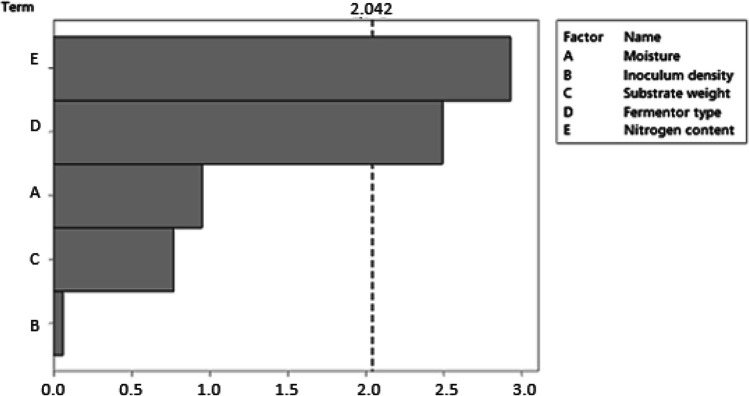
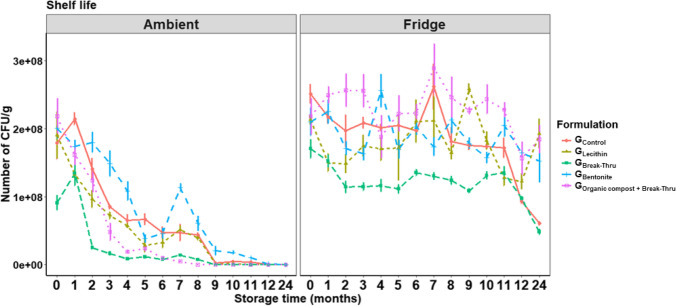
The advancement of fungal biocontrol agents depends on replacing cereal grains with low-cost agro-industrial byproducts for their economical mass production and development of stable formulations. We propose an innovative approach to develop a rice flour-based formulation of the beneficial biocontrol agent Trichoderma asperelloides CMAA1584 designed to simulate a micro-bioreactor within the concept of full biorefinery process, affording in situ conidiation, extended shelf-life, and effective control of Sclerotinia sclerotiorum, a devastating pathogen of several dicot agricultural crops worldwide. Rice flour is an inexpensive and underexplored byproduct derived from broken rice after milling, capable of sustaining high yields of conidial production through our optimized fermentation-formulation route. Conidial yield was mainly influenced by nitrogen content (0.1% w/w) added to the rice meal coupled with the fermentor type. Hydrolyzed yeast was the best nitrogen source yielding 2.6 × 10 colony-forming units (CFU)/g within 14 days. Subsequently, G, G, G, G and G formulations were obtained by extrusion followed by air-drying and further assessed for their potential to induce secondary sporulation in situ, storage stability, and efficacy against Sclerotinia. G, G, G, and G stood out with the highest number of CFU after sporulation upon re-hydration on water-agar medium. Shelf-life of formulations G and G remained consistent for > 3 months at ambient temperature, while in G and G formulations remained viable for 24 months during refrigerated storage. Formulations exhibited similar efficacy in suppressing the myceliogenic germination of Sclerotinia irrespective of their concentration tested (5 × 10 to 5 × 10 CFU/g of soil), resulting in 79.2 to 93.7% relative inhibition. Noteworthily, all 24-month-old formulations kept under cold storage successfully suppressed sclerotia. This work provides an environmentally friendly bioprocess method using rice flour as the main feedstock to develop waste-free granular formulations of Trichoderma conidia that are effective in suppressing Sclerotinia while also improving biopesticide shelf-life. KEY POINTS: • Innovative "bioreactor-in-a-granule" system for T. asperelloides is devised. • Dry granules of aerial conidia remain highly viable for 24 months at 4 °C. • Effective control of white-mold sclerotia via soil application of Trichoderma-based granules.
真菌生物防治剂的发展依赖于用低成本的农业工业副产品替代谷物,以实现其经济批量生产,并开发稳定的制剂。我们提出了一种创新的方法,即用米粉来开发有益的生物防治剂拟康氏木霉 CMAA1584,旨在模仿全生物炼制过程概念中的微生物反应器,实现在原位产孢、延长保质期和有效控制世界性毁灭性的双子叶农业作物病原菌——核盘菌。米粉是一种廉价的、未被充分开发的副产品,来自碾米后的碎米,可以通过我们优化的发酵-制剂路线维持高产孢量。产孢量主要受添加到米粉中的氮含量(0.1% w/w)和发酵罐类型的影响。水解酵母是最好的氮源,在 14 天内产生 2.6×10 个菌落形成单位(CFU)/g。随后,通过挤出、风干,进一步通过评估其在原位诱导次生产孢、储存稳定性和防治核盘菌的能力,得到 G、G、G、G 和 G 等制剂。在水琼脂培养基上重新水合后,G、G、G、G 和 G 等制剂的产孢量最高。在室温下,G 和 G 等制剂的保质期保持一致超过 3 个月,而在冷藏储存期间,G 和 G 等制剂在 24 个月内保持存活。制剂在抑制核盘菌的菌丝体萌发方面表现出相似的效果,无论测试的浓度如何(5×10 到 5×10 CFU/g 土壤),相对抑制率为 79.2%至 93.7%。值得注意的是,所有在冷藏条件下保存 24 个月的制剂都成功地抑制了菌核。这项工作提供了一种环保的生物过程方法,使用米粉作为主要原料,开发无废物的 Trichoderma 分生孢子颗粒制剂,在抑制核盘菌的同时延长生物农药的保质期。关键点:•设计了一种新颖的拟康氏木霉“生物反应器-颗粒”系统。•4°C 下,干颗粒状气生分生孢子可保持高存活率达 24 个月。•通过土壤施用 Trichoderma 基颗粒有效控制白霉菌核。