Yang Huan, Kong Panpan, Hou Songyu, Dong Xiaogang, Abula Imamumaimaitijiang, Yan Dong
The Department of Hepatopancreatobiliary Surgery, The Affiliated Tumor Hospital of Xinjiang Medical University, Urumqi, 830011, Xinjiang, China.
The Department of Daily Surgery, The Affiliated Tumor Hospital of Xinjiang Medical University, UrumqiXinjiang, 830011, China.
Clin Transl Oncol. 2025 Apr;27(4):1597-1611. doi: 10.1007/s12094-024-03689-w. Epub 2024 Sep 5.
Hepatocellular carcinoma (HCC) remains one of the most prevalent malignant tumors, exhibiting a high morbidity and mortality rate. The mechanism of its occurrence and development requires further study. The objective of this study was to investigate the role of SERPINA12 in the diagnosis, prognosis prediction and biological function within HCC.
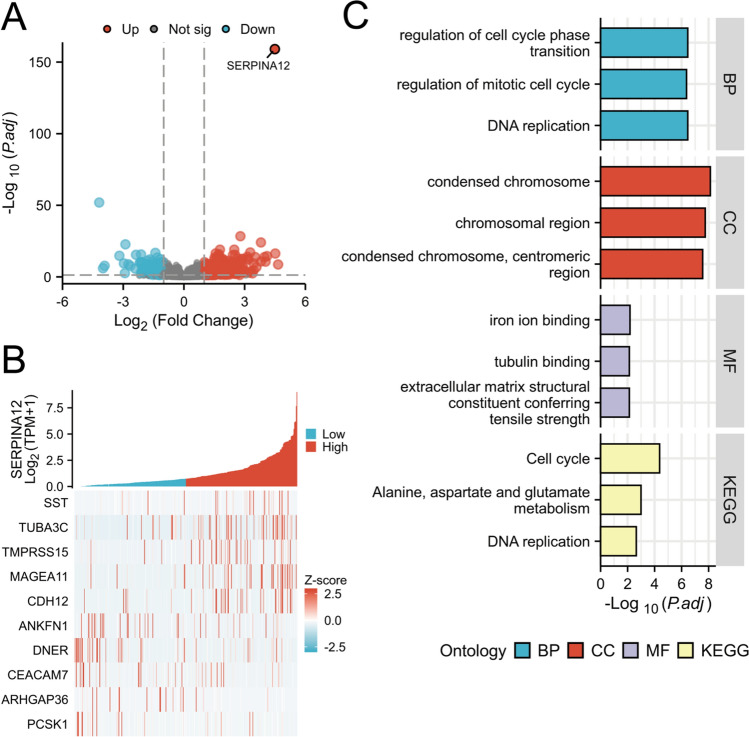
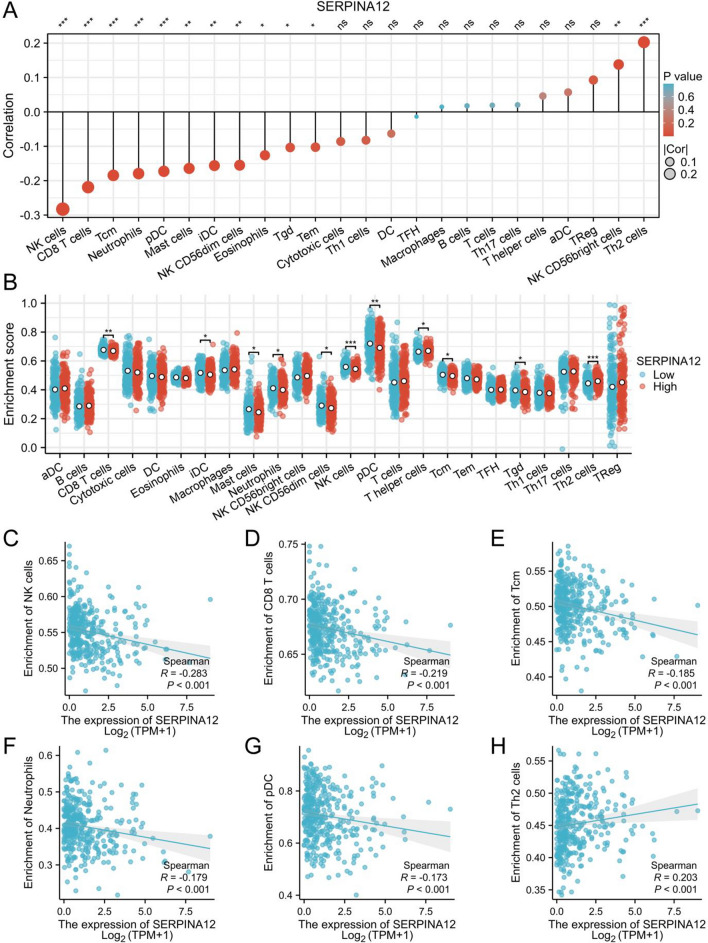
The Cancer Genome Atlas (TCGA) data were employed to analyze the relationship between clinical features and SERPINA12 expression in HCC. Kaplan-Meier curves were utilized to analyze the correlation between SERPINA12 expression and prognosis in HCC. The function of SERPINA12 was determined by enrichment analysis, and the relationship between SERPINA12 expression and immune cell infiltration was investigated. The expression of SERPINA12 was examined in 75 patients with HCC using RT-qPCR and immunohistochemistry, and survival analysis was performed.
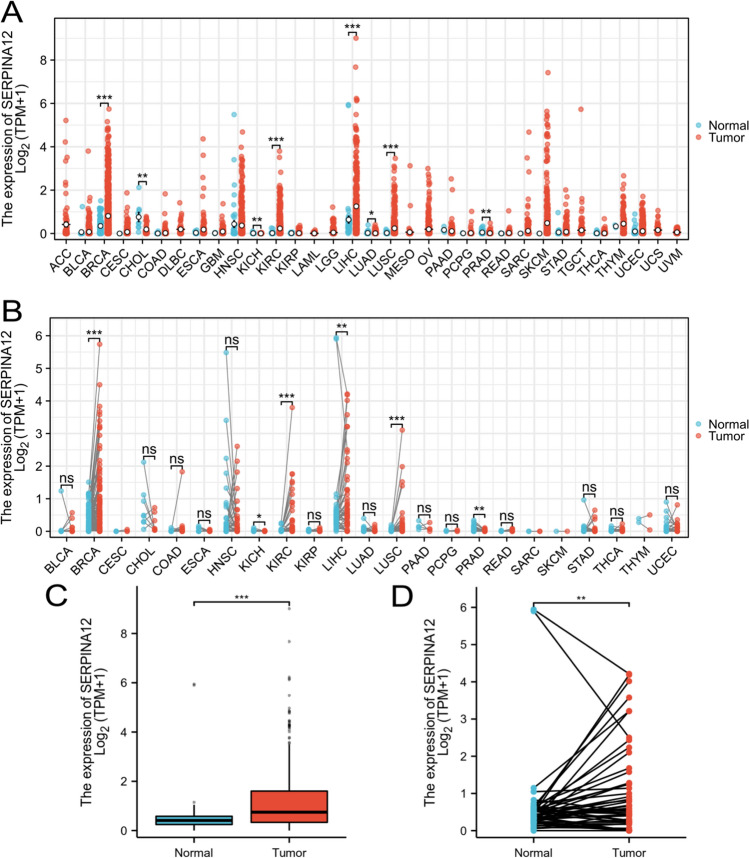
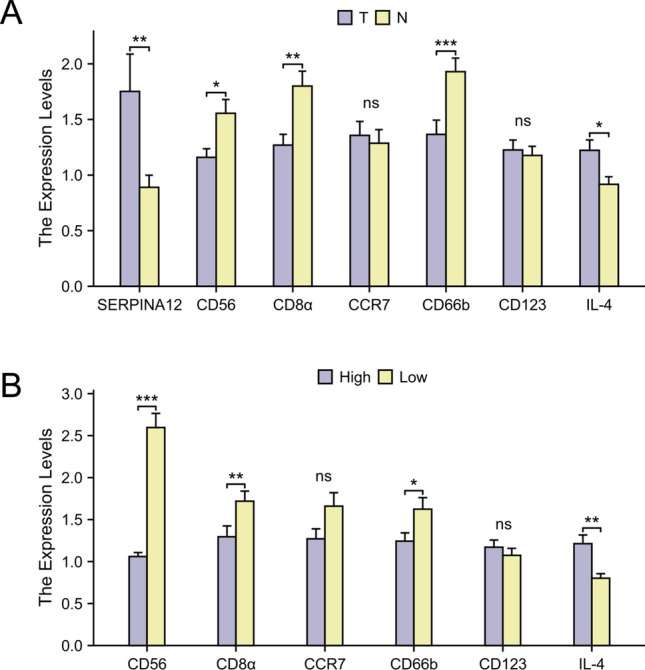
The expression of SERPINA12 from TCGA database was found to be significantly higher in HCC tissues than in normal tissues and carried a poor prognosis. ROC curve demonstrated the diagnostic potential of SERPINA12 for HCC. The multivariate Cox regression analysis showed that pathologic T stage, tumor status, and SERPINA12 expression were independently associated with patient survival. The SERPINA12 expression was found to correlate with immune cell infiltration. Our RT-qPCR and immunohistochemical analysis revealed high expression of SERPINA12 in tumor tissues. Survival analysis indicated its association with poor prognosis.
SERPINA12 is a promising biomarker for diagnosis and prognosis, and it is associated with immune cell infiltration.
肝细胞癌(HCC)仍然是最常见的恶性肿瘤之一,发病率和死亡率都很高。其发生和发展机制仍需进一步研究。本研究的目的是探讨丝氨酸蛋白酶抑制剂A12(SERPINA12)在HCC诊断、预后预测及生物学功能方面的作用。
利用癌症基因组图谱(TCGA)数据,分析HCC临床特征与SERPINA12表达之间的关系。采用Kaplan-Meier曲线分析SERPINA12表达与HCC预后的相关性。通过富集分析确定SERPINA12的功能,并研究SERPINA12表达与免疫细胞浸润之间的关系。采用逆转录定量聚合酶链反应(RT-qPCR)和免疫组织化学方法检测75例HCC患者中SERPINA12的表达,并进行生存分析。
发现TCGA数据库中HCC组织中SERPINA12的表达明显高于正常组织,且预后较差。ROC曲线显示SERPINA12对HCC具有诊断潜力。多因素Cox回归分析表明,病理T分期、肿瘤状态和SERPINA12表达与患者生存独立相关。发现SERPINA12表达与免疫细胞浸润相关。我们的RT-qPCR和免疫组织化学分析显示肿瘤组织中SERPINA12高表达。生存分析表明其与预后不良有关。
SERPINA12是一种有前景的诊断和预后生物标志物,且与免疫细胞浸润有关。