Chopra Harman, Jackels Melissa, Suarez Michael, Vu Peter D, Broachwala Mustafa, AlFarra Tariq, Sivanesan Eellan
Johns Hopkins University School of Medicine, USA.
Nazareth Hospital, USA.
Interv Pain Med. 2024 Feb 2;3(1):100389. doi: 10.1016/j.inpm.2024.100389. eCollection 2024 Mar.
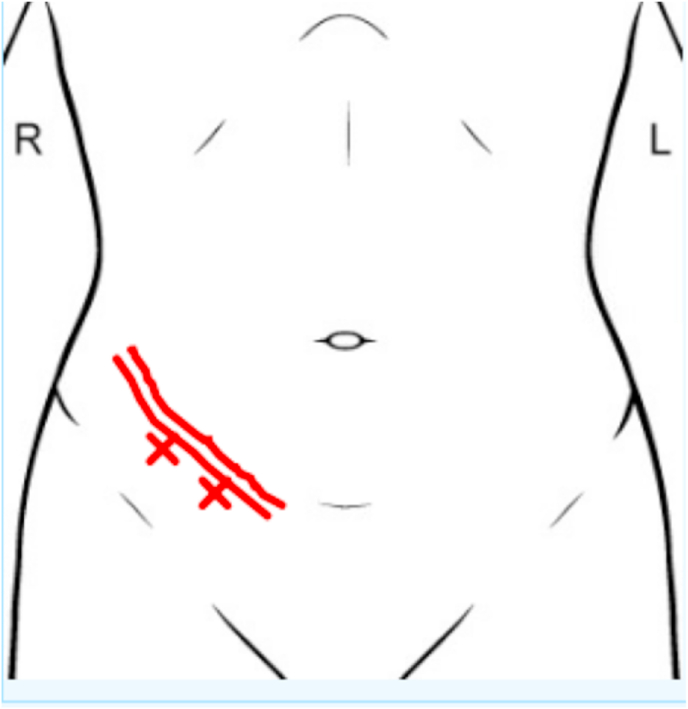
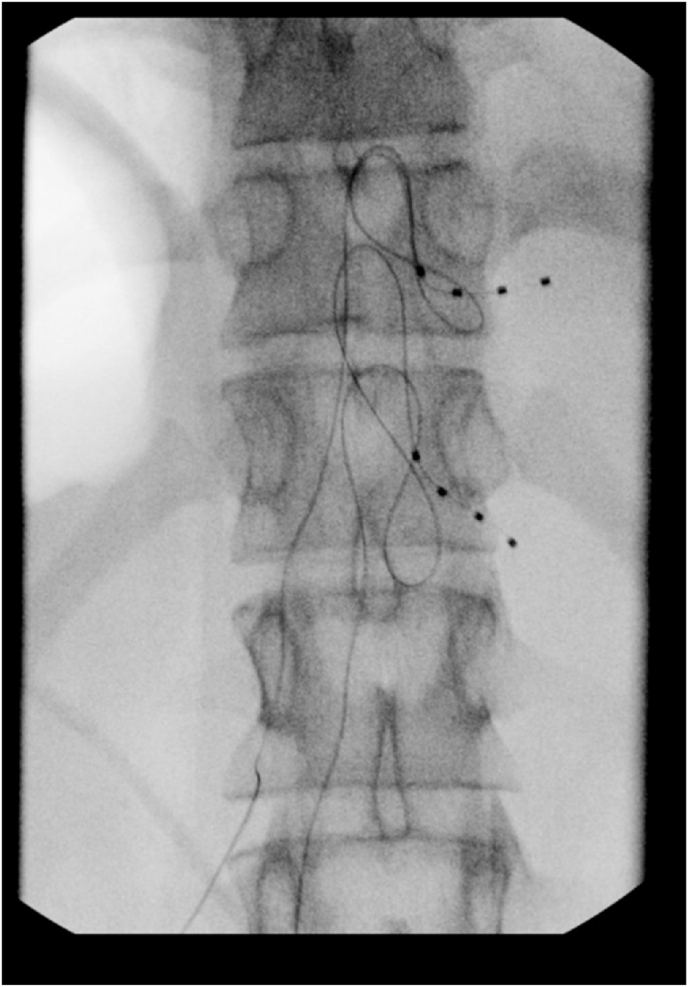
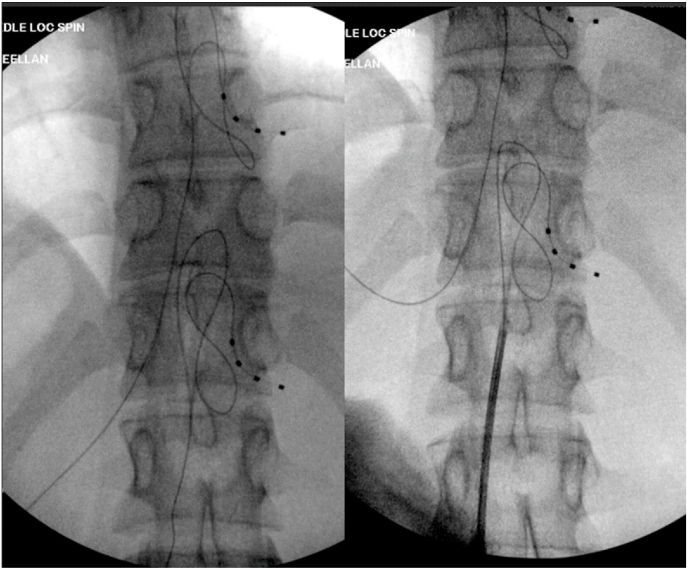
Crohn's disease is a chronic inflammatory bowel condition causing symptoms, notably pain, due to ongoing intestinal inflammation or complications like abscesses, strictures, and fistulas, which are common in IBD patients. Abdominal pain affects up to 60 % of IBD patients, irrespective of disease severity, prompting medical attention. Various medications like NSAIDs, antidepressants, antispasmodics, anticonvulsants, and opioids are used to manage pain, but they have limited effectiveness and potential side effects, even during remission. In this case, a 20-year-old Caucasian female college student [height 5'4″, weight 120lbs (54.4 kg)] with juvenile idiopathic arthritis and Crohn's disease experienced severe daily abdominal pain, negatively impacting her life. Despite a multimodal regimen, including gabapentin, nortriptyline, duloxetine, and acetaminophen, her pain persisted, significantly affecting her appetite, sleep, mood, activity level, and overall quality of life (QOL). To address this, dorsal root ganglion (DRG) stimulation was considered. The patient aimed for a 20 % pain reduction and improved QOL. Trial leads were placed along the T10 and T12 DRG, resulting in a 25 % pain reduction (8-6 out of 10) and substantial QOL improvement. She could eat, sleep without interruptions, walk longer distances, and be more active. The T12 lead was more effective than the T10, targeting upper abdomen stimulation. The patient and her mother were highly satisfied and opted for permanent implantation for the T11 and T12 DRG. While DRG stimulation was approved in 2016 for chronic pain, to our knowledge, this is the first reported case of its use in a patient with debilitating Crohn's disease.
克罗恩病是一种慢性炎症性肠病,由于持续的肠道炎症或诸如脓肿、狭窄和瘘管等并发症(这些在炎症性肠病患者中很常见)而引发症状,尤其是疼痛。腹痛影响高达60%的炎症性肠病患者,无论疾病严重程度如何,都需要医疗关注。非甾体抗炎药、抗抑郁药、抗痉挛药、抗惊厥药和阿片类药物等各种药物被用于管理疼痛,但它们的效果有限且有潜在副作用,即使在缓解期也是如此。在这个病例中,一名20岁的患有幼年特发性关节炎和克罗恩病的白人女大学生[身高5英尺4英寸,体重120磅(54.4千克)]每天经历严重的腹痛,对她的生活产生了负面影响。尽管采用了包括加巴喷丁、去甲替林、度洛西汀和对乙酰氨基酚在内的多模式治疗方案,她的疼痛仍然持续,严重影响了她的食欲、睡眠、情绪、活动水平和总体生活质量(QOL)。为了解决这个问题,考虑了背根神经节(DRG)刺激。患者的目标是疼痛减轻20%并改善生活质量。试验电极沿着T10和T12背根神经节放置,结果疼痛减轻了
25%(从10分中的8分降至6分),生活质量有了显著改善。她能够正常饮食、不受干扰地睡眠、行走更长距离并且更加活跃。T12电极比T10电极更有效,它针对上腹部刺激。患者和她的母亲非常满意,并选择对T11和T12背根神经节进行永久性植入。虽然背根神经节刺激在2016年被批准用于慢性疼痛,但据我们所知,这是首次报道其用于患有使人衰弱的克罗恩病患者的病例。