Schmid Philipp, Werner Benedikt
Institute for Planetary Health Behaviour, University of Erfurt, Erfurt, Germany.
Centre for Language Studies, Radboud University, Nijmegen, The Netherlands.
Commun Psychol. 2023 Dec 11;1(1):39. doi: 10.1038/s44271-023-00041-w.
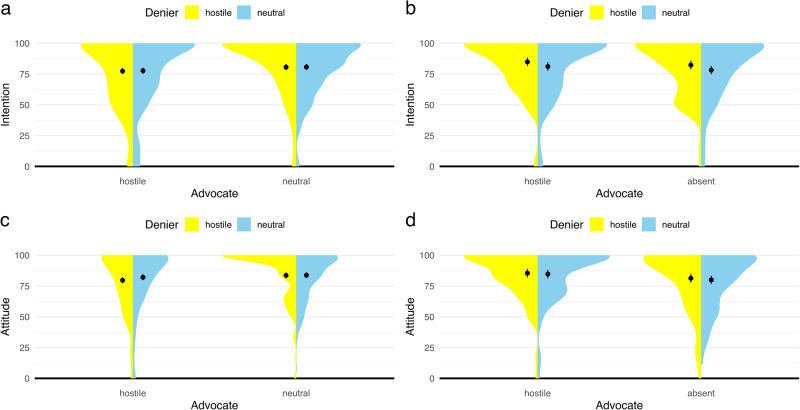
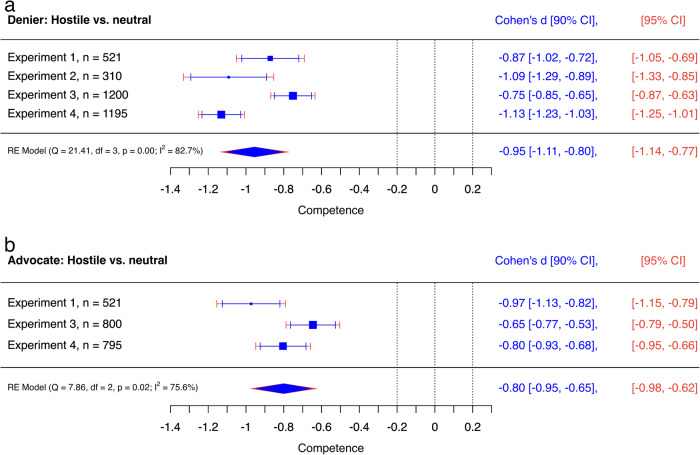
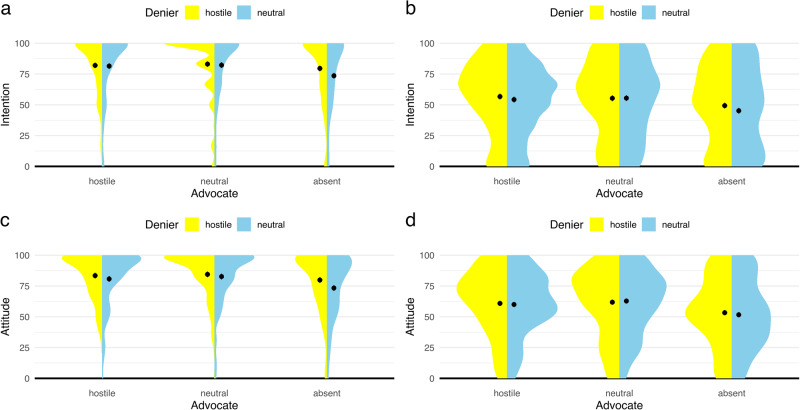
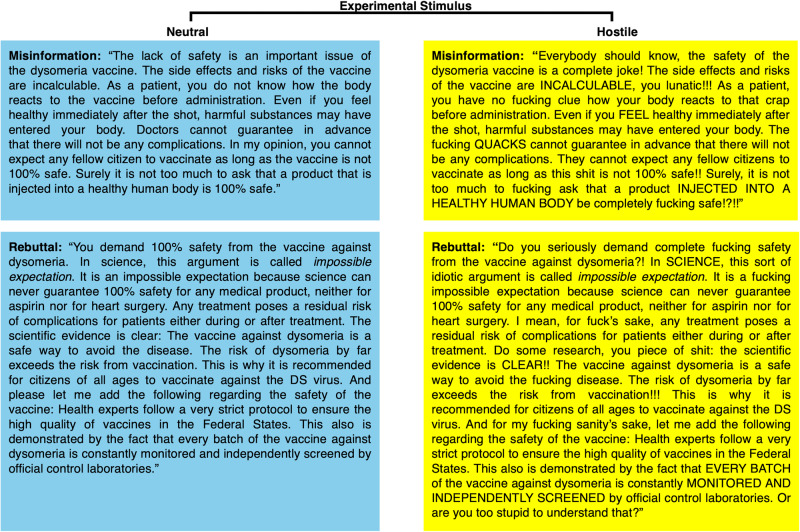
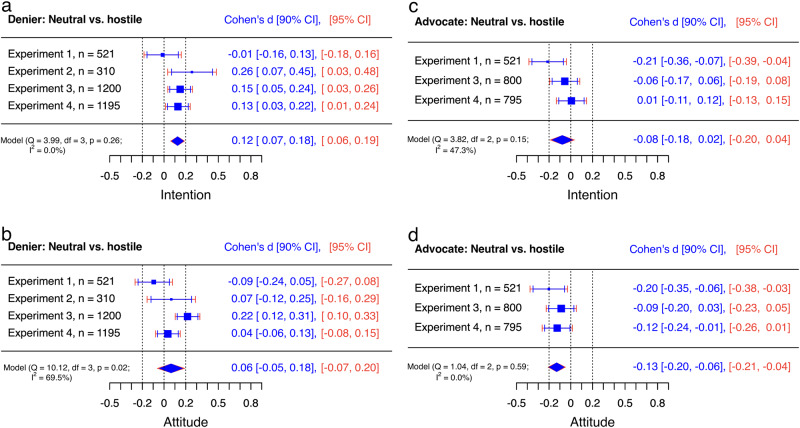
Polarised social media debates between science deniers and advocates for science frequently devolve into hostilities. We conducted four preregistered experiments (N = 3226; U.S. Americans) to assess how hostility influences the impact of misinformation from science deniers and rebuttals from advocates in social media discussions about vaccination (Experiment 1-3) and genetically modified food (Experiment 4). Results revealed only trivial to small effects of hostility on the persuasiveness of discussants: most internal meta-analyses revealed that the effects of hostility were smaller than the smallest effect size of interest (SESOI: d = 0.2). Thus, rebuttal is effective in mitigating the impact of misinformation on attitudes towards behaviours dismissed by deniers (for example, vaccination) and intentions to perform these behaviours, even if advocates for science lose their temper. Not responding had negative effects. Likewise, misinformation was impactful even if presented in a hostile tone. Hostility, however, consistently reduced the perceived competence of messages.
科学否认者和科学倡导者在社交媒体上的两极分化辩论经常演变为敌意。我们进行了四项预先注册的实验(N = 3226;美国民众),以评估敌意如何影响社交媒体关于疫苗接种(实验1 - 3)和转基因食品(实验4)讨论中科学否认者的错误信息以及倡导者的反驳的影响。结果显示,敌意对讨论者说服力的影响仅为微不足道到较小的程度:大多数内部元分析表明,敌意的影响小于最小有意义效应量(SESOI:d = 0.2)。因此,反驳对于减轻错误信息对否认者所摒弃行为(例如疫苗接种)态度以及实施这些行为意图的影响是有效的,即使科学倡导者发脾气也是如此。不回应会产生负面影响。同样,即使以敌意的语气呈现,错误信息也有影响力。然而,敌意始终会降低信息的感知能力。