Sng Benny Jian Rong, Jeong Yu Jeong, Leong Sing Hui, Jeong Jae Cheol, Lee Jiyoung, Rajani Sarojam, Kim Cha Young, Jang In-Cheol
Temasek Life Sciences Laboratory, 1 Research Link, National University of Singapore, Singapore, 117604, Singapore.
Department of Biological Sciences, National University of Singapore, Singapore, 117543, Singapore.
J Cannabis Res. 2024 Sep 7;6(1):35. doi: 10.1186/s42238-024-00246-8.
Cannabis sativa cultivars can be classified as marijuana or hemp, depending on its amount of the psychoactive cannabinoid Δ-tetrahydrocannabinolic acid (THCA). Hemp Cheungsam is a non-drug type Cannabis sativa that is characterized by low THCA content. However, the transcripts and expression profile of cannabinoid biosynthesis pathway genes of hemp Cheungsam have not been investigated.
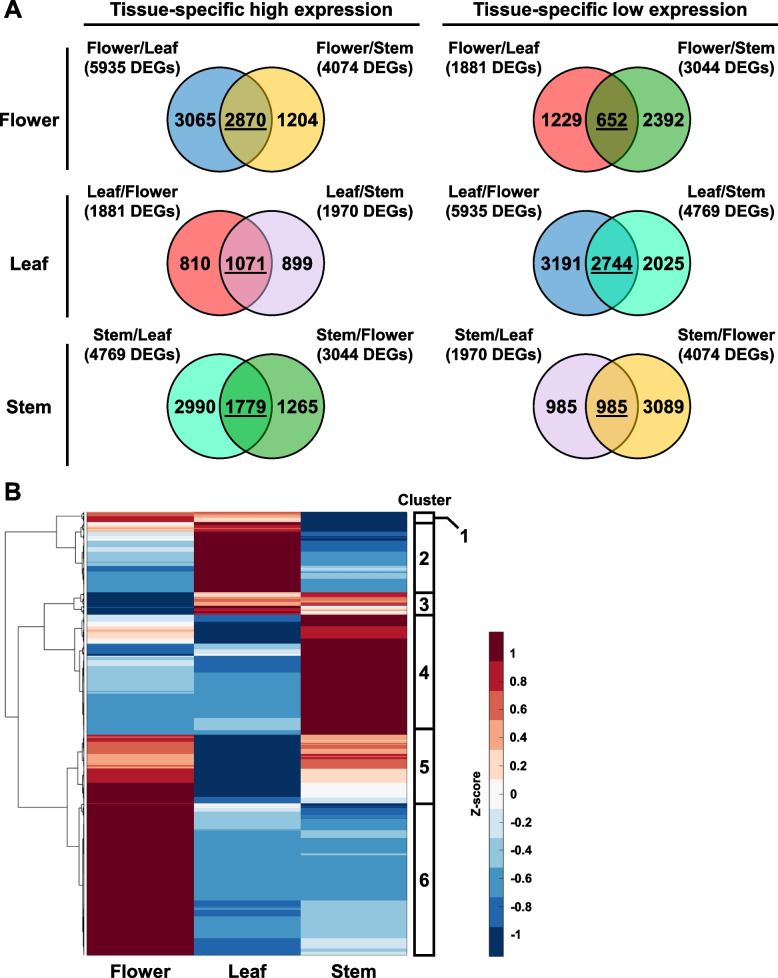
RNA-sequencing (RNA-seq) was performed on three different tissue types (flower, leaf, and stem) of hemp Cheungsam to understand their transcriptomes. The expression of cannabinoid biosynthesis pathway genes was further analyzed in each tissue type. Multiple sequence alignment and conserved domain analyses were used to investigate the homologs of cannbinoid biosynthesis genes.
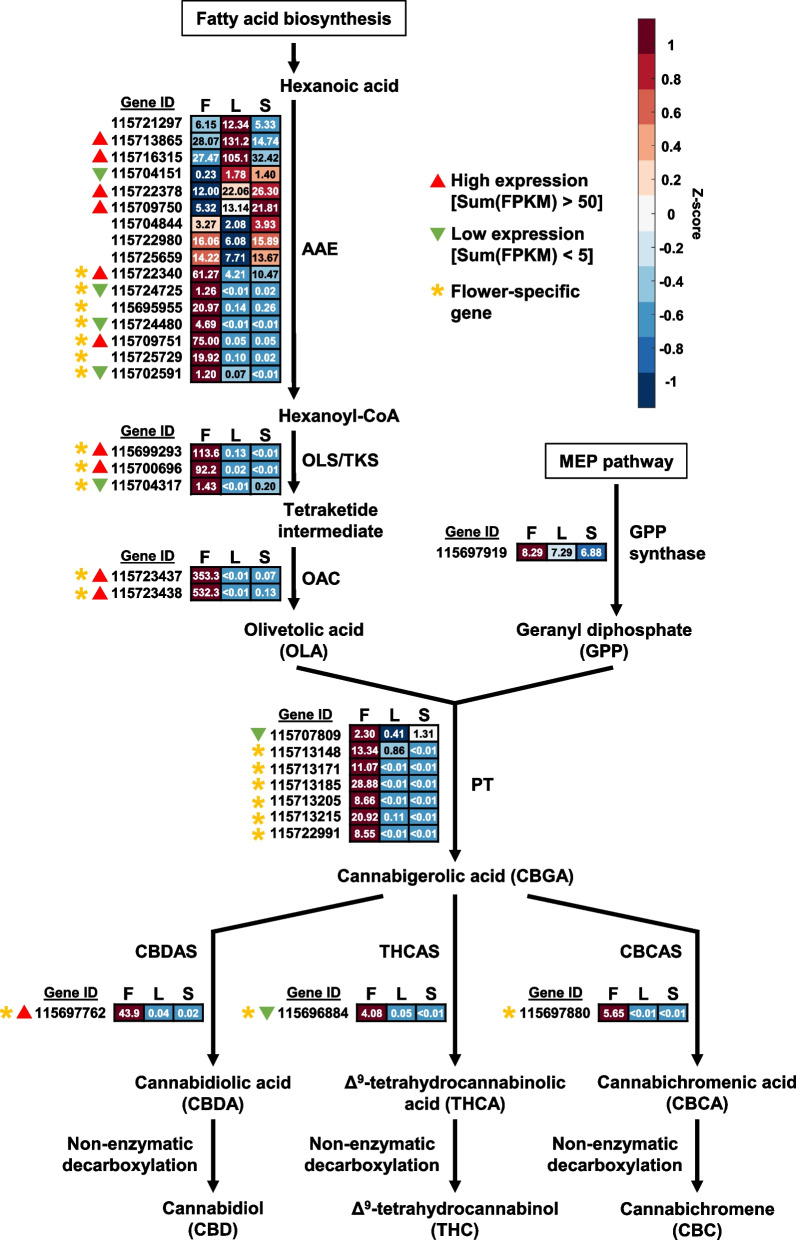
We found that the cannabinoid biosynthesis pathway was mainly expressed in the flowers of hemp Cheungsam, similar to other Cannabis cultivars. However, expression of cannabidiolic acid (CBDA) synthase was much higher than THCA synthase and cannabichromenic acid (CBCA) synthase, suggesting that the transcription profile favors CBDA biosynthesis. Sequence analysis of cannabinoid biosynthesis pathway genes suggested the identity of orthologs in hemp Cheungsam.
Cannabinoid biosynthesis in hemp Cheungsam mostly occurs in the flowers, compared to other plant organs. While CBDA synthase expression is high, THCA and CBCA synthase expression is considerably low, indicating lesser THCA biosynthesis and thus low THCA content. Sequence analysis of key genes (CBDA, THCA, and CBCA synthases) of the cannabinoid biosynthetic pathway indicates that orthologs are present in hemp Cheungsam.
根据其精神活性大麻素Δ-四氢大麻酚酸(THCA)的含量,大麻品种可分为大麻或工业大麻。汉麻旗袍是一种非毒品型大麻,其特点是THCA含量低。然而,汉麻旗袍中大麻素生物合成途径基因的转录本和表达谱尚未得到研究。
对汉麻旗袍的三种不同组织类型(花、叶和茎)进行RNA测序(RNA-seq),以了解它们的转录组。进一步分析了每种组织类型中大麻素生物合成途径基因的表达。使用多序列比对和保守结构域分析来研究大麻素生物合成基因的同源物。
我们发现,与其他大麻品种类似,大麻素生物合成途径主要在汉麻旗袍的花中表达。然而,大麻二酚酸(CBDA)合酶的表达远高于THCA合酶和大麻色原酸(CBCA)合酶,这表明转录谱有利于CBDA的生物合成。大麻素生物合成途径基因的序列分析表明了汉麻旗袍中直系同源物的身份。
与其他植物器官相比,汉麻旗袍中的大麻素生物合成主要发生在花中。虽然CBDA合酶表达较高,但THCA和CBCA合酶表达相当低,这表明THCA生物合成较少,因此THCA含量较低。大麻素生物合成途径关键基因(CBDA、THCA和CBCA合酶)的序列分析表明汉麻旗袍中存在直系同源物。