Synthetic Biology for Clinical and Technological Innovation, National University of Singapore, 28 Medical Drive, Singapore 117456, Singapore.
Synthetic Biology Translational Research Programme, Yong Loo Lin School of Medicine, National University of Singapore, 14 Medical Drive, Singapore 117599, Singapore.
Molecules. 2021 May 14;26(10):2914. doi: 10.3390/molecules26102914.
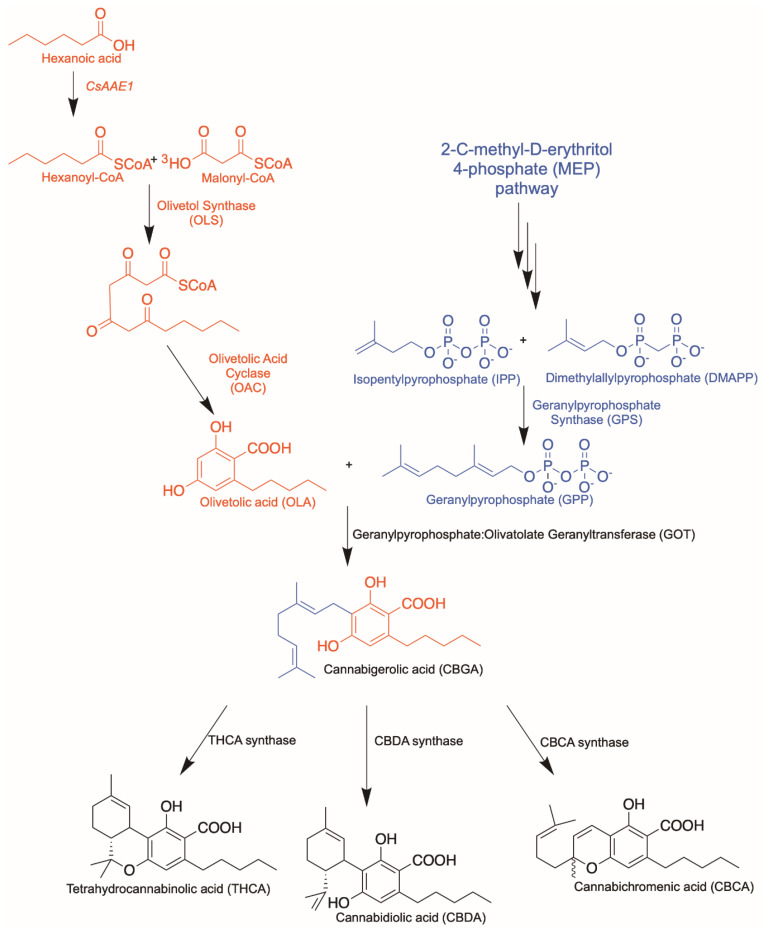
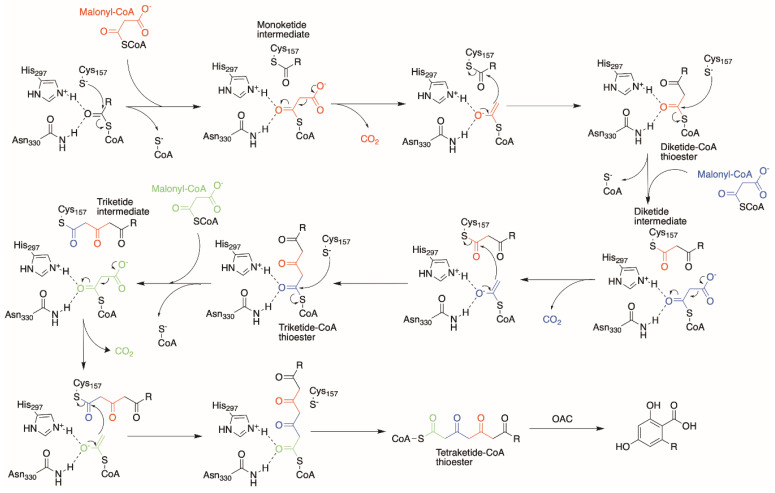
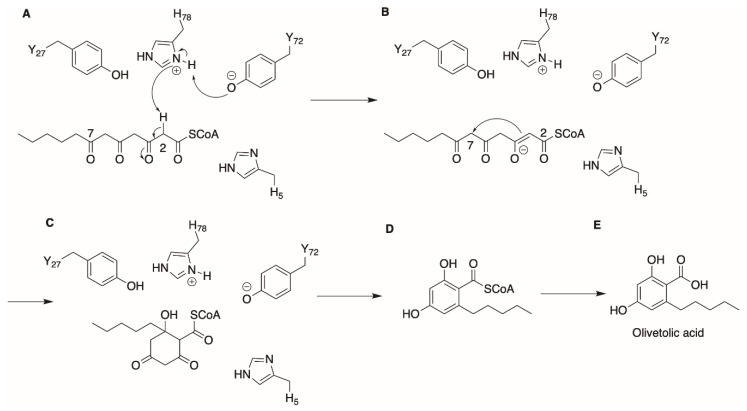
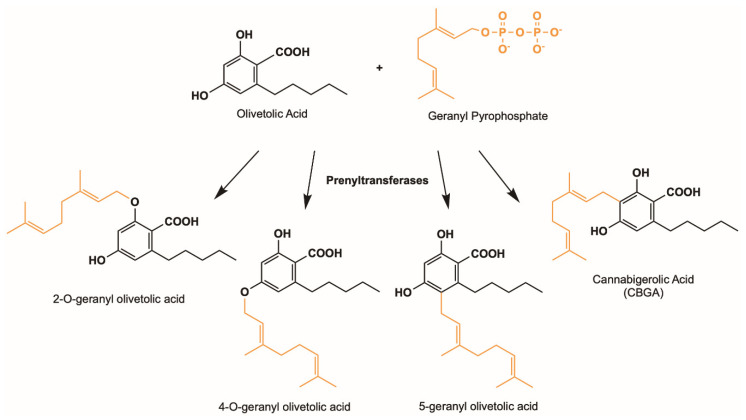
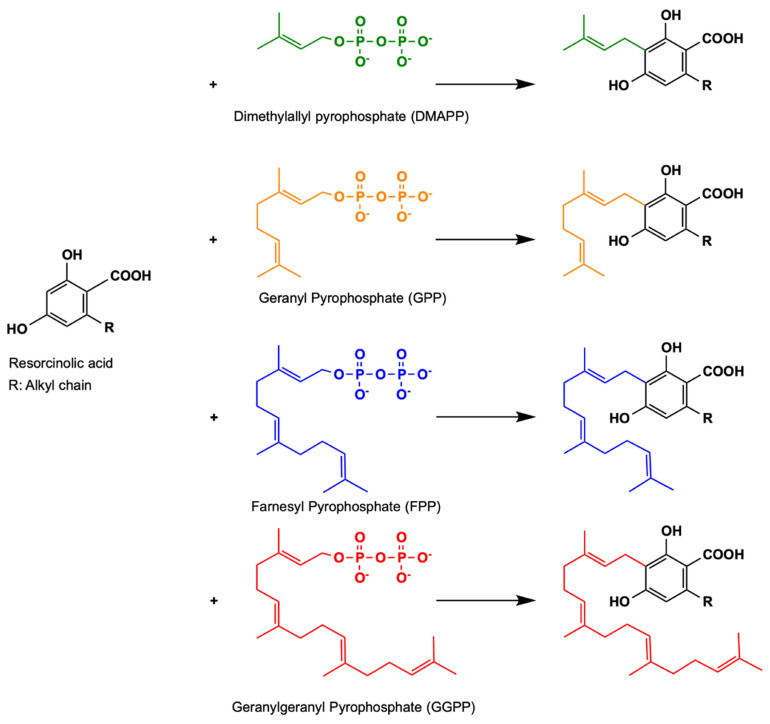
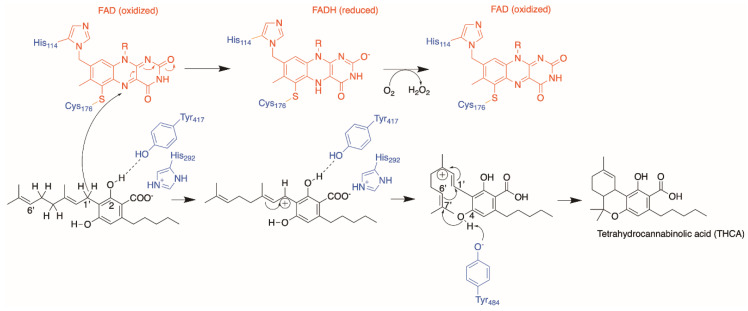
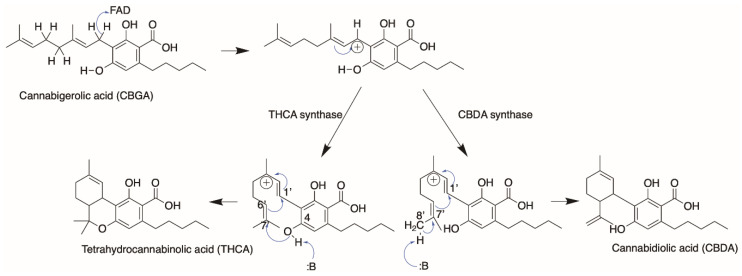
Natural products make up a large proportion of medicine available today. Cannabinoids from the plant is one unique class of meroterpenoids that have shown a wide range of bioactivities and recently seen significant developments in their status as therapeutic agents for various indications. Their complex chemical structures make it difficult to chemically synthesize them in efficient yields. Synthetic biology has presented a solution to this through metabolic engineering in heterologous hosts. Through genetic manipulation, rare phytocannabinoids that are produced in low yields in the plant can now be synthesized in larger quantities for therapeutic and commercial use. Additionally, an exciting avenue of exploring new chemical spaces is made available as novel derivatized compounds can be produced and investigated for their bioactivities. In this review, we summarized the biosynthetic pathways of phytocannabinoids and synthetic biology efforts in producing them in heterologous hosts. Detailed mechanistic insights are discussed in each part of the pathway in order to explore strategies for creating novel cannabinoids. Lastly, we discussed studies conducted on biological targets such as CB1, CB2 and orphan receptors along with their affinities to these cannabinoid ligands with a view to inform upstream diversification efforts.
天然产物构成了当今可用药物的很大一部分。植物来源的大麻素是独特的倍半萜类化合物之一,具有广泛的生物活性,最近在作为各种适应症的治疗剂方面取得了显著进展。它们复杂的化学结构使得它们难以在高效产率下进行化学合成。合成生物学通过异源宿主中的代谢工程为解决这个问题提供了一种方法。通过基因操作,可以在植物中低产量产生的稀有植物大麻素现在可以大量合成,用于治疗和商业用途。此外,还开辟了探索新化学空间的令人兴奋的途径,因为可以生产新型衍生化合物并研究其生物活性。在这篇综述中,我们总结了植物大麻素的生物合成途径以及在异源宿主中生产它们的合成生物学努力。在该途径的每个部分都讨论了详细的机制见解,以探索创造新型大麻素的策略。最后,我们讨论了对 CB1、CB2 和孤儿受体等生物靶点的研究,以及它们与这些大麻素配体的亲和力,以期为上游多样化努力提供信息。