Greenberg Edward F, Voorbach Martin J, Smith Alexandra, Reuter David R, Zhuang Yuchuan, Wang Ji-Quan, Wooten Dustin W, Asque Elizabeth, Hu Min, Hoft Carolin, Duggan Ryan, Townsend Matthew, Orsi Karin, Dalecki Karen, Amberg Willi, Duggan Lori, Knight Heather, Spina Joseph S, He Yupeng, Marsh Kennan, Zhao Vivian, Ybarra Suzanne, Mollon Jennifer, Fang Yuni, Vasanthakumar Aparna, Westmoreland Susan, Droescher Mathias, Finnema Sjoerd J, Florian Hana
AbbVie Inc., North Chicago, IL, United States.
AbbVie Deutschland GmbH & Co. KG, Neuroscience Research, Knollstrasse, 67061, Ludwigshafen, Germany.
Heliyon. 2024 Aug 17;10(16):e36483. doi: 10.1016/j.heliyon.2024.e36483. eCollection 2024 Aug 30.
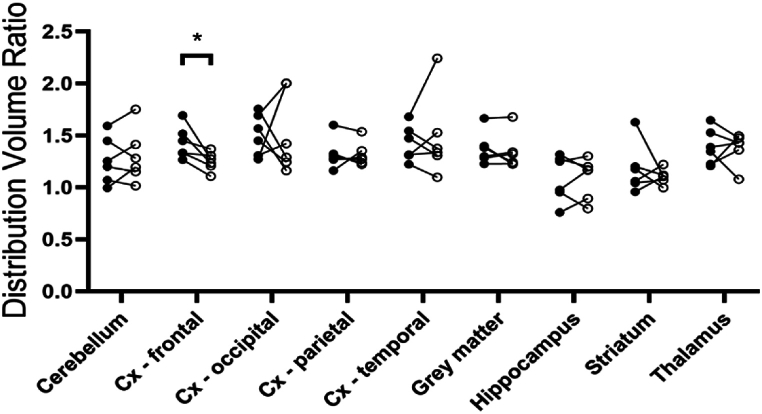
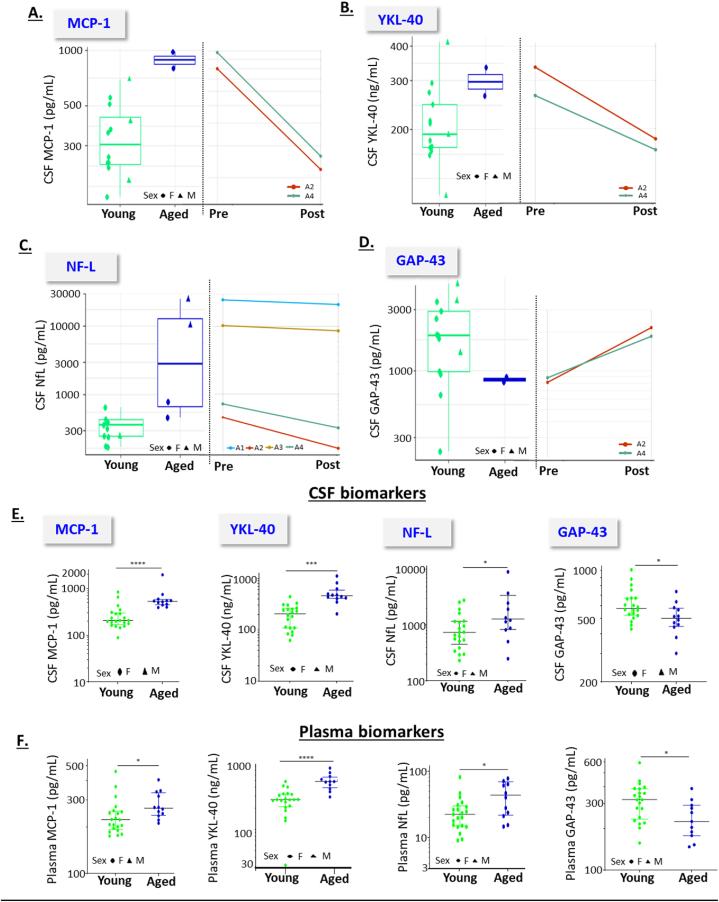
Alzheimer's disease (AD) is the most common global dementia and is universally fatal. Most late-stage AD disease-modifying therapies are intravenous and target amyloid beta (Aβ), with only modest effects on disease progression: there remains a high unmet need for convenient, safe, and effective therapeutics. Senescent cells (SC) and the senescence-associated secretory phenotype (SASP) drive AD pathology and increase with AD severity. Preclinical senolytic studies have shown improvements in neuroinflammation, tau, Aβ, and CNS damage; most were conducted in transgenic rodent models with uncertain human translational relevance. In this study, aged cynomolgus monkeys had significant elevation of biomarkers of senescence, SASP, and neurological damage. Intermittent treatment with the senolytic navitoclax induced modest reversible thrombocytopenia; no serious drug-related toxicity was noted. Navitoclax reduced several senescence and SASP biomarkers, with CSF concentrations sufficient for senolysis. Finally, navitoclax reduced TSPO-PET frontal cortex binding and showed trends of improvement in CSF biomarkers of neuroinflammation, neuronal damage, and synaptic dysfunction. Overall, navitoclax administration was safe and well tolerated in aged monkeys, inducing trends of biomarker changes relevant to human neurodegenerative disease.
阿尔茨海默病(AD)是全球最常见的痴呆症,且无一例外会导致死亡。大多数晚期AD疾病修饰疗法是静脉注射的,靶向β淀粉样蛋白(Aβ),对疾病进展的影响有限:对于方便、安全且有效的治疗方法仍有很大需求未得到满足。衰老细胞(SC)和衰老相关分泌表型(SASP)驱动AD病理过程,并随AD严重程度增加。临床前衰老细胞溶解研究表明,神经炎症、tau蛋白、Aβ和中枢神经系统损伤有所改善;大多数研究是在转基因啮齿动物模型中进行的,其与人类的转化相关性尚不确定。在本研究中,老年食蟹猴的衰老、SASP和神经损伤生物标志物显著升高。用衰老细胞溶解剂navitoclax进行间歇性治疗会引起适度的可逆性血小板减少;未发现严重的药物相关毒性。Navitoclax降低了几种衰老和SASP生物标志物,脑脊液浓度足以实现衰老细胞溶解。最后,navitoclax降低了TSPO-PET额叶皮质结合,并显示出神经炎症、神经元损伤和突触功能障碍的脑脊液生物标志物有改善趋势。总体而言,在老年猴子中给予navitoclax是安全且耐受性良好的,可诱导与人类神经退行性疾病相关的生物标志物变化趋势。