Anyogu Amarachukwu, Somorin Yinka M, Oladipo Abigail Oluseye, Raheem Saki
Food Safety and Security, School of Biomedical Sciences, University of West London, London, W5 5RF, United Kingdom.
University of Glasgow, Glasgow, G12 8QQ, United Kingdom.
Heliyon. 2024 Aug 14;10(16):e36347. doi: 10.1016/j.heliyon.2024.e36347. eCollection 2024 Aug 30.
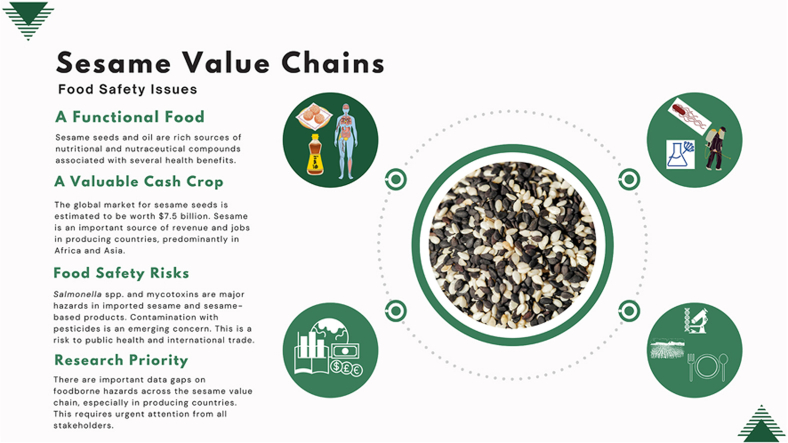
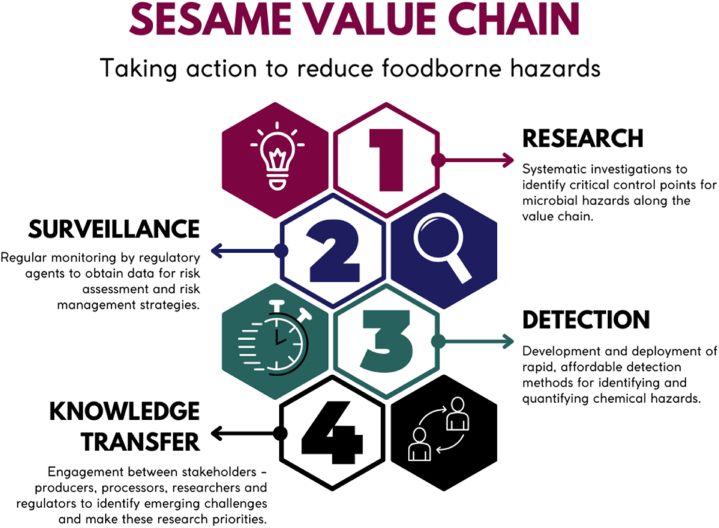
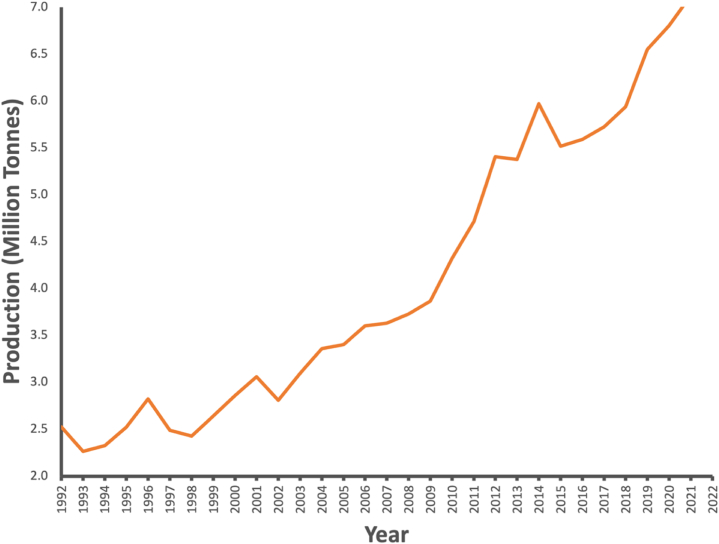
Sesame () is an oilseed crop which is increasingly recognised as a functional food by consumers due to its nutritional and nutraceutical components. Consequently, global demand for sesame has increased significantly over the last three decades. Sesame is an important export crop in producing countries, contributing to their socio-economic development. However, in recent years, major foodborne incidents have been associated with imported sesame seeds and products made with these seeds. Foodborne hazards are a potential risk to consumer health and hinder international trade due to border rejections and increased import controls. An insight into the routes of contamination of these hazards across the value chain and factors affecting persistence may lead to more focused intervention and prevention strategies. It was observed that is a significant microbial hazard in imported sesame seeds and has been associated with several global outbreaks. Sesame is mainly cultivated in the tropical and subtropical regions of Africa and Asia by smallholder farmers. Agricultural and manufacturing practices during harvesting, storage, and processing before export may allow for the contamination of sesame seeds with . However, only a few studies collect data on the microbiological quality of sesame across the value chain in producing countries. In addition, the presence of mycotoxins and pesticides above regulatory limits in sesame seeds is a growing concern. Eliminating foodborne hazards in the sesame value chain requires urgent attention from researchers, producers, processors, and regulators and suggestions for improving the safety of these foods are discussed.
芝麻是一种油料作物,由于其营养和营养保健成分,越来越被消费者视为功能性食品。因此,在过去三十年中,全球对芝麻的需求显著增加。芝麻是生产国的重要出口作物,对其社会经济发展做出了贡献。然而,近年来,一些重大食源性事件与进口芝麻种子以及用这些种子制成的产品有关。食源性危害对消费者健康构成潜在风险,并由于边境拒收和加强进口管制而阻碍国际贸易。深入了解这些危害在整个价值链中的污染途径以及影响其持久性的因素,可能会带来更有针对性的干预和预防策略。据观察,[具体微生物名称未给出]是进口芝麻种子中的一种重大微生物危害,并与几起全球疫情爆发有关。芝麻主要由非洲和亚洲的小农户种植在热带和亚热带地区。收获、储存和出口前加工过程中的农业和制造做法可能会使芝麻种子受到[具体微生物名称未给出]的污染。然而,只有少数研究收集了生产国整个价值链中芝麻微生物质量的数据。此外,芝麻种子中霉菌毒素和农药含量超过监管限值的情况也日益受到关注。消除芝麻价值链中的食源性危害需要研究人员、生产者、加工者和监管者的紧急关注,并讨论了提高这些食品安全性的建议。