Experimental and Clinical Research Center, Cooperation of Charité-Universitätsmedizin Berlin and Max-Delbrück-Center for Molecular Medicine, Berlin, Germany.
Department of Nephrology and Internal Intensive Care Medicine, Charité - Universitätsmedizin Berlin, corporate member of Freie Universität Berlin and Humboldt-Universität zu Berlin, Berlin, Germany.
Gut Microbes. 2024 Jan-Dec;16(1):2398126. doi: 10.1080/19490976.2024.2398126. Epub 2024 Sep 10.
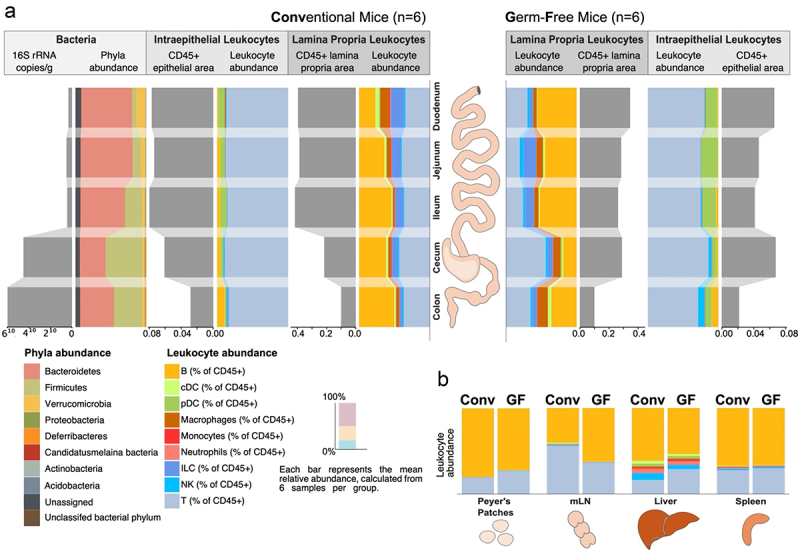
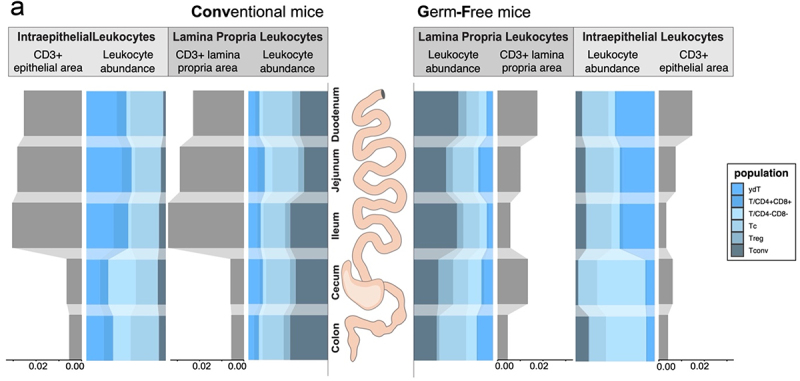
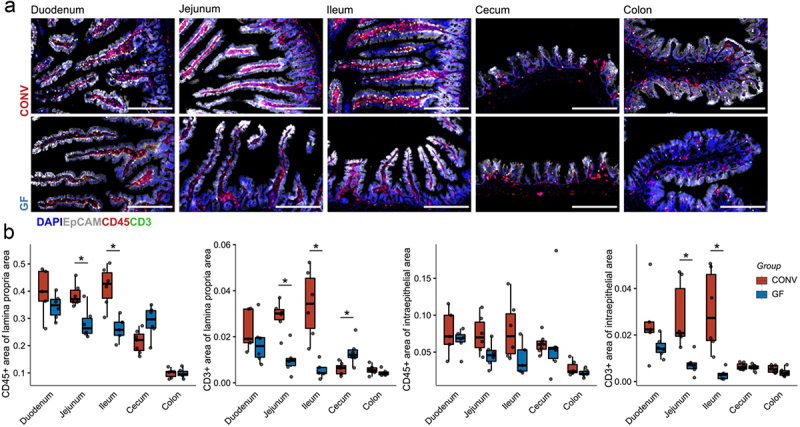
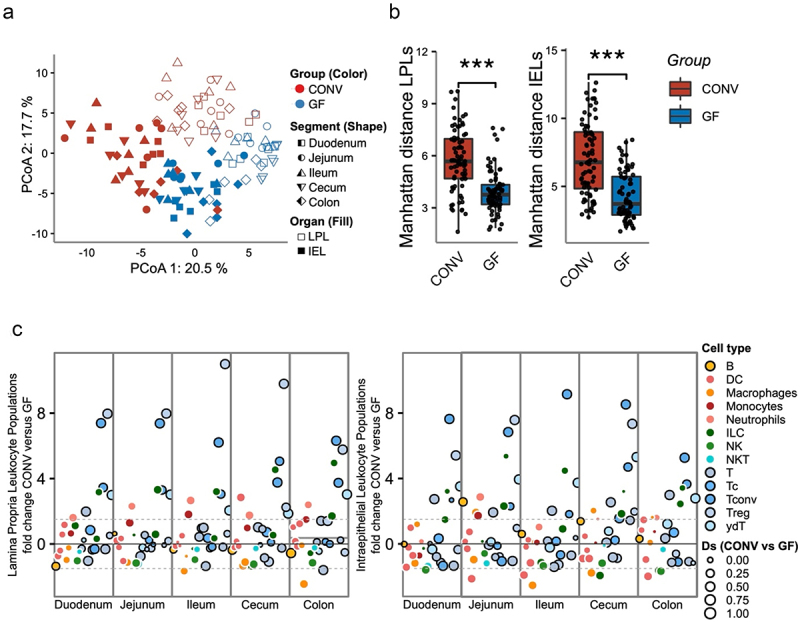
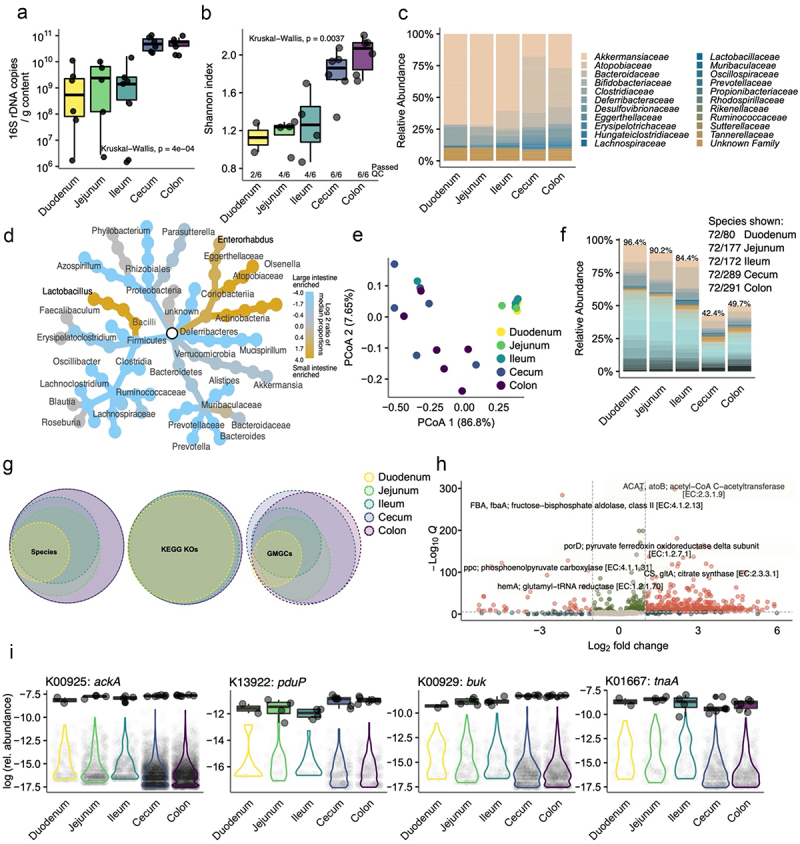
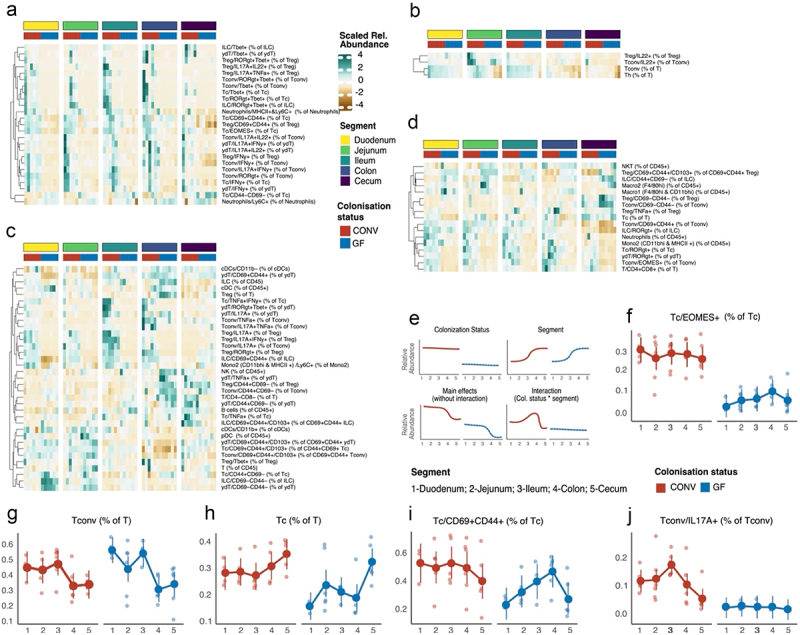
The intestine exhibits distinct characteristics along its length, with a substantial immune cell reservoir and diverse microbiota crucial for maintaining health. This study investigates how anatomical location and regional microbiota influence intestinal immune cell abundance. Using conventionally colonized and germ-free mice, segment-specific immune cell composition and microbial communities were assessed. Metagenomic sequencing analyzed microbiome variations, while flow cytometry and immunofluorescence examined immune cell composition. Microbiome composition varied significantly along the intestine, with diversity and abundance increasing from upper to lower segments. Immune cells showed distinct segment-specific patterning influenced by microbial colonization and localization. T cell subsets displayed varied dependence on microbiome presence and anatomical location. This study highlights locoregional differences in intestinal immune cell and microbiome composition, identifying immune subsets susceptible to microbiota presence. The findings provide context for understanding immune cell alterations in disease models.
肠道在其长度上表现出明显的特征,拥有大量的免疫细胞库和多样化的微生物群,这些对于维持健康至关重要。本研究调查了解剖位置和区域微生物群如何影响肠道免疫细胞的丰度。使用常规定植和无菌小鼠,评估了分段特异性免疫细胞组成和微生物群落。宏基因组测序分析了微生物组的变化,而流式细胞术和免疫荧光检查了免疫细胞组成。微生物组组成沿肠道显著变化,多样性和丰度从上到下增加。免疫细胞表现出明显的分段特异性模式,受微生物定植和定位的影响。T 细胞亚群显示出对微生物存在和解剖位置的不同依赖性。本研究强调了肠道免疫细胞和微生物组组成的局部分化,确定了对微生物存在敏感的免疫亚群。这些发现为理解疾病模型中的免疫细胞改变提供了背景。