Xu Lin, Fang Jie, Pan Jiezhou, Qi Hexu, Yin Yun, He Yunxiang, Gan Xueqi, Li Yifei, Li Yu, Guo Junling
State Key Laboratory of Oral Diseases, National Center for Stomatology, National Clinical Research Center for Oral Diseases, Department of Orthodontics, West China Hospital of Stomatology, Sichuan University, Chengdu, 610041, China.
Key Laboratory of Birth Defects and Related Diseases of Women and Children of MOE, Department of Pediatric Dentistry, West China Second University Hospital, Sichuan University, Chengdu, 610041, China.
Bioact Mater. 2024 Aug 23;41:564-576. doi: 10.1016/j.bioactmat.2024.08.009. eCollection 2024 Nov.
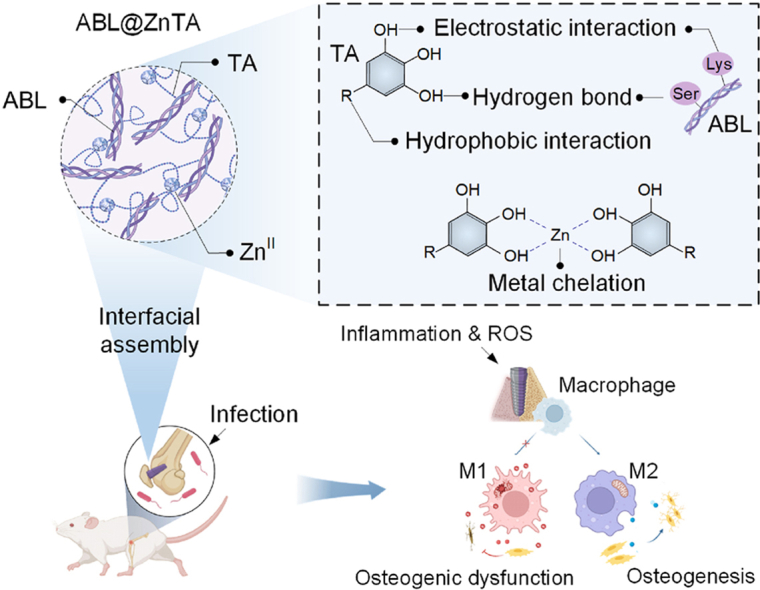
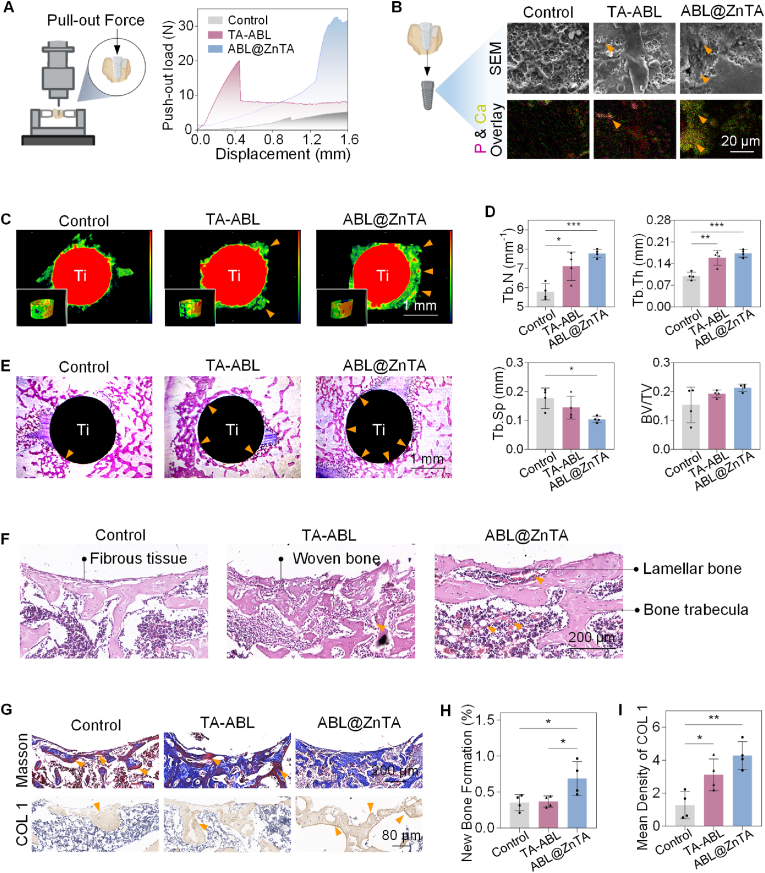
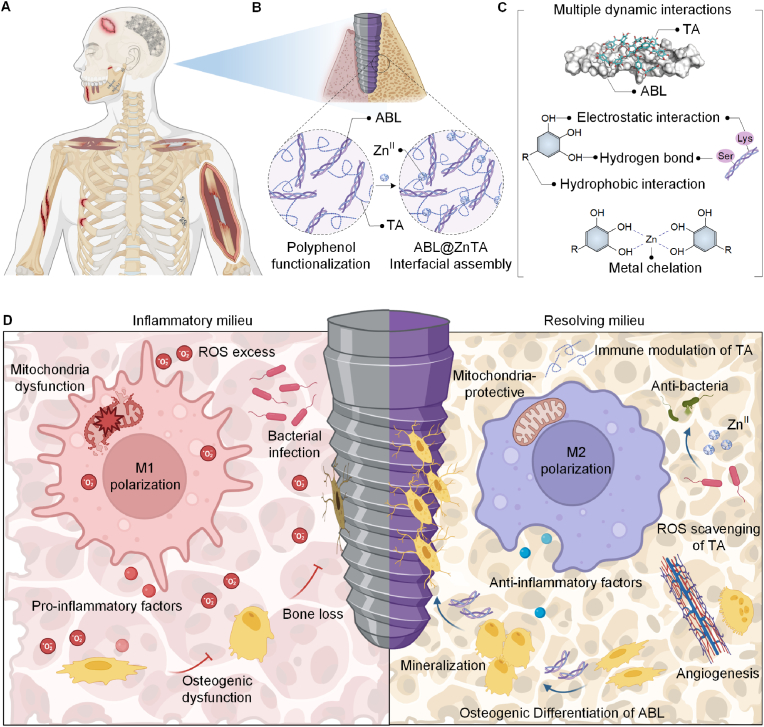
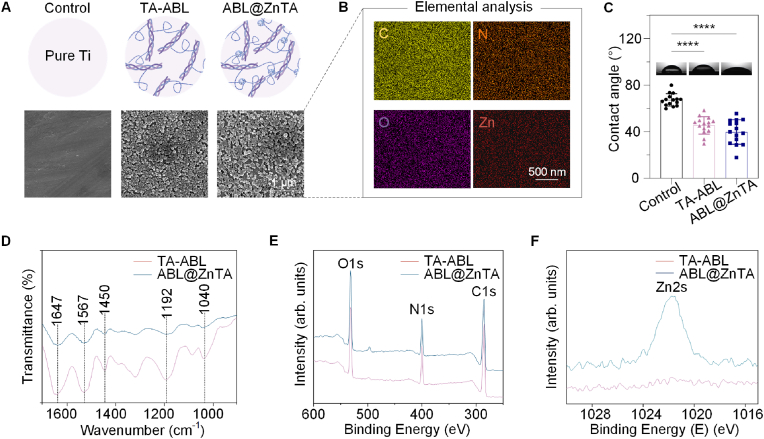
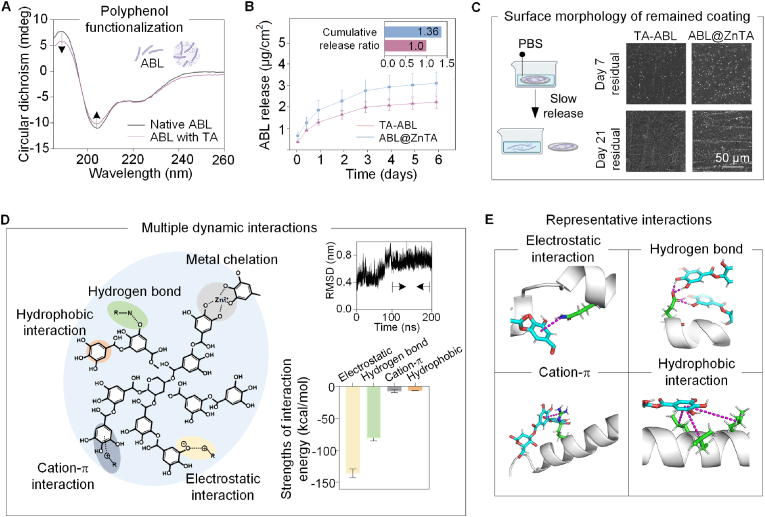
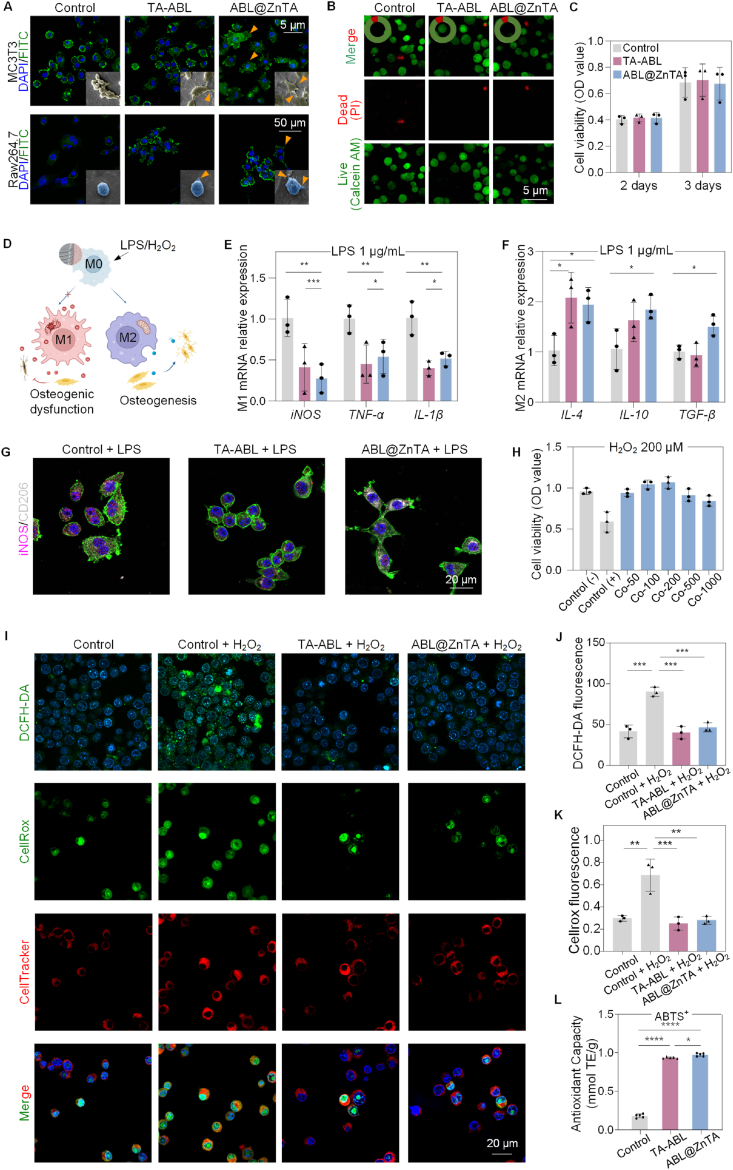
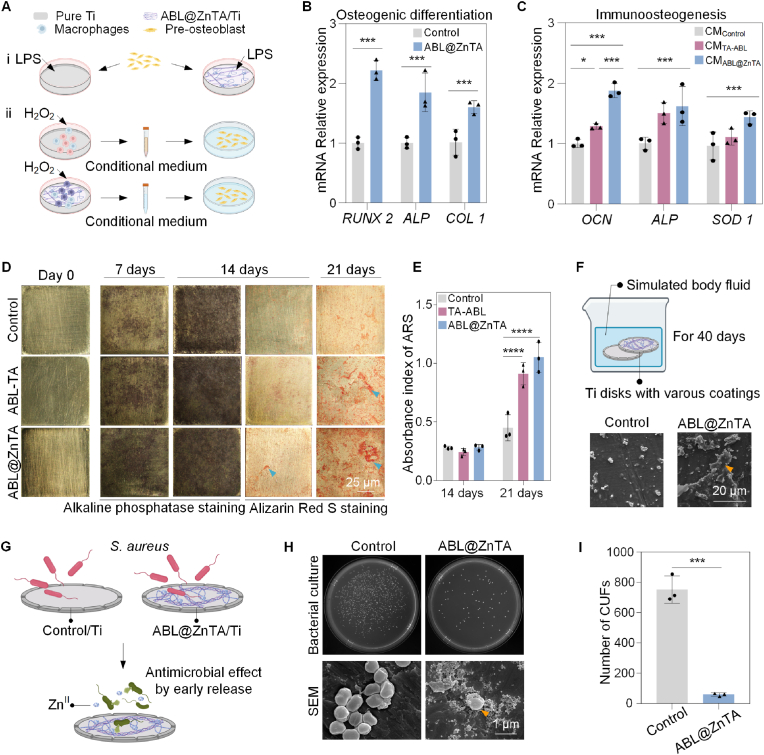
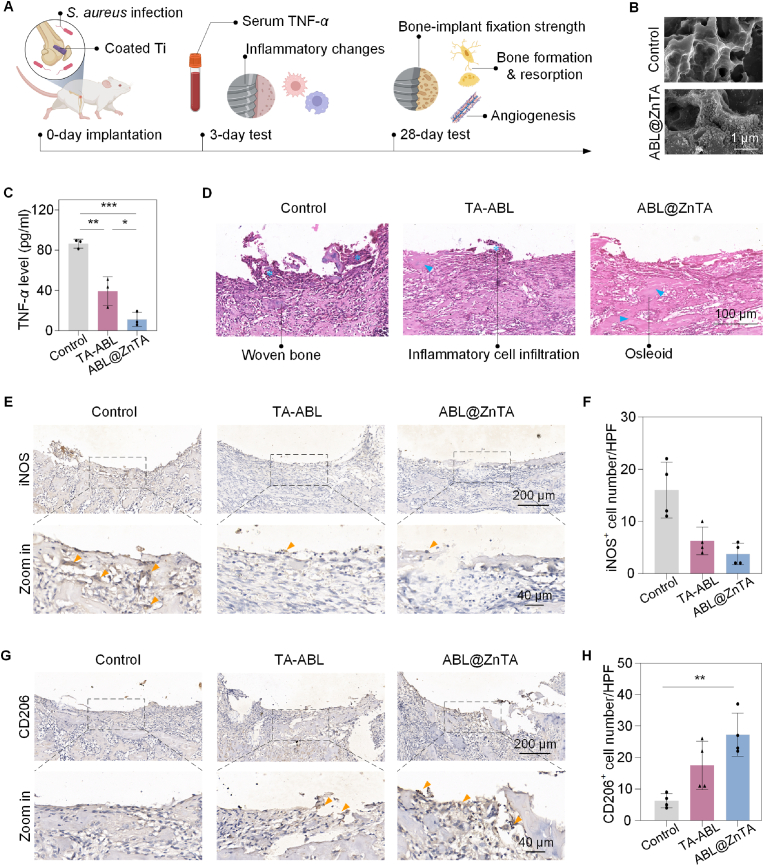
Orthopedic and dental implantations under bacterial infection microenvironment face significant challenges in achieving high-quality bone-implant integration. Designing implant coatings that incorporate both immune defense and anti-inflammation is difficult in conventional single-functional coatings. We introduce a multifunctional nanointerface using a zinc finger-inspired peptide-metal-phenolic nanocoating, designed to enhance implant osseointegration under such conditions. Abaloparatide (ABL), a second-generation anabolic drug for treating osteoporosis, can be integrated into the design of a zinc-phenolic network constructed on the implant surface (ABL@ZnTA). Importantly, the phenolic-coordinated Zn ions in ABL@ZnTA can act as zinc finger motif to co-stabilize the configuration of ABL through multiple molecular interactions, enabling high bioactivity, high loading capacity (1.36 times), and long-term release (>7 days) of ABL. Our results showed that ABL@ZnTA can modulate macrophage polarization from the pro-inflammatory M1 towards the anti-inflammatory M2 phenotype, promoting immune osteogenesis with increased OCN, ALP, and SOD 1 expression. Furthermore, the ABL@ZnTA significantly reduces inflammatory fibrous tissue encapsulation and enhances the long-term stability of the implants indicated by enhanced binding strength (6 times) and functional connectivity (1.5-3 times) in the rat bone defect model infected by . Overall, our research offers a nano-enabled synergistic strategy that balances infection defense and osteogenesis promotion in orthopedic and dental implantations.
在细菌感染微环境下进行骨科和牙科植入时,要实现高质量的骨-植入物整合面临重大挑战。在传统的单功能涂层中,设计兼具免疫防御和抗炎功能的植入物涂层很困难。我们引入了一种多功能纳米界面,即利用受锌指启发的肽-金属-酚纳米涂层,旨在在这种条件下增强植入物的骨整合。阿巴洛肽(ABL)是一种用于治疗骨质疏松症的第二代合成代谢药物,可整合到构建在植入物表面的锌-酚网络设计中(ABL@ZnTA)。重要的是,ABL@ZnTA中酚配位的锌离子可作为锌指基序,通过多种分子相互作用共同稳定ABL的构型,从而实现ABL的高生物活性、高负载能力(1.36倍)和长期释放(>7天)。我们的结果表明,ABL@ZnTA可以调节巨噬细胞从促炎M1型向抗炎M2型极化,通过增加骨钙素、碱性磷酸酶和超氧化物歧化酶1的表达来促进免疫性骨生成。此外,在感染的大鼠骨缺损模型中,ABL@ZnTA显著减少了炎性纤维组织包囊,并通过增强结合强度(6倍)和功能连接性(1.5 - 3倍)提高了植入物的长期稳定性。总体而言,我们的研究提供了一种基于纳米的协同策略,可在骨科和牙科植入中平衡感染防御和骨生成促进。