Division of Nephrology and Hypertension, Department of Medicine, Mayo Clinic, Rochester, MN, USA.
Department of Pharmacy, Mayo Clinic, Rochester, MN, USA.
Ren Fail. 2024 Dec;46(2):2402075. doi: 10.1080/0886022X.2024.2402075. Epub 2024 Sep 11.
ChatGPT, a state-of-the-art large language model, has shown potential in analyzing images and providing accurate information. This study aimed to explore ChatGPT-4 as a tool for identifying commonly prescribed nephrology medications across different versions and testing dates.
25 nephrology medications were obtained from an institutional pharmacy. High-quality images of each medication were captured using an iPhone 13 Pro Max and uploaded to ChatGPT-4 with the query, 'What is this medication?' The accuracy of ChatGPT-4's responses was assessed for medication name, dosage, and imprint. The process was repeated after 2 weeks to evaluate consistency across different versions, including GPT-4, GPT-4 Legacy, and GPT-4.Ø.
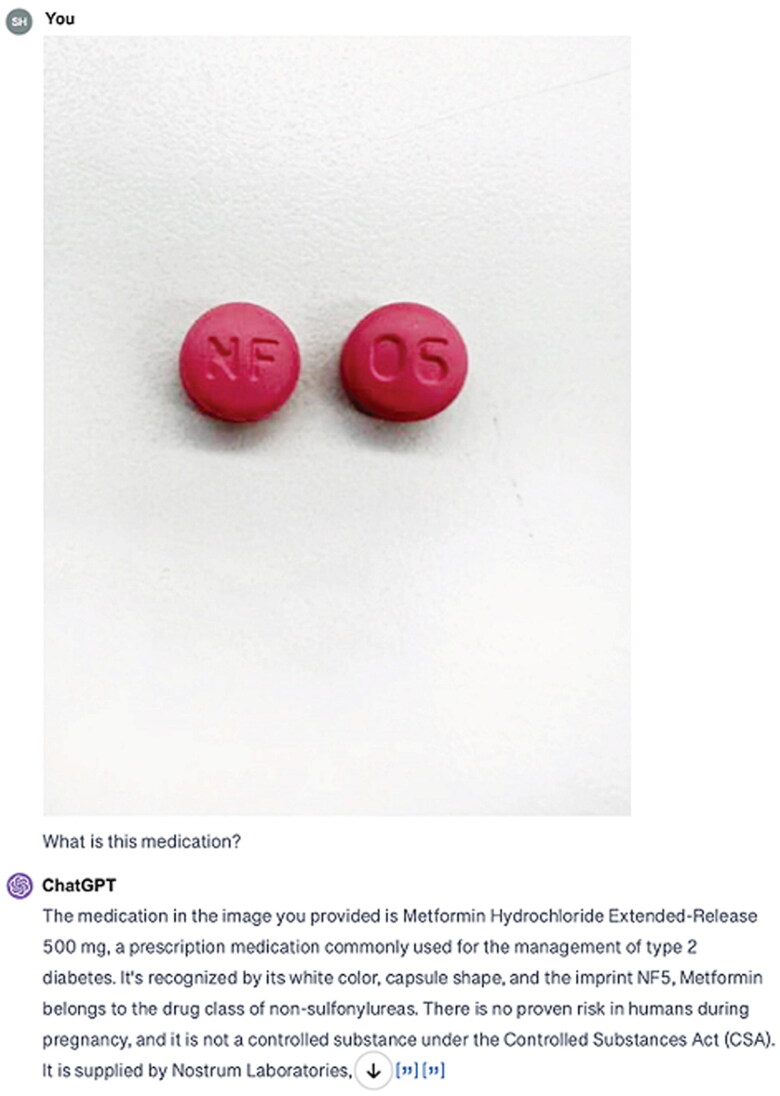
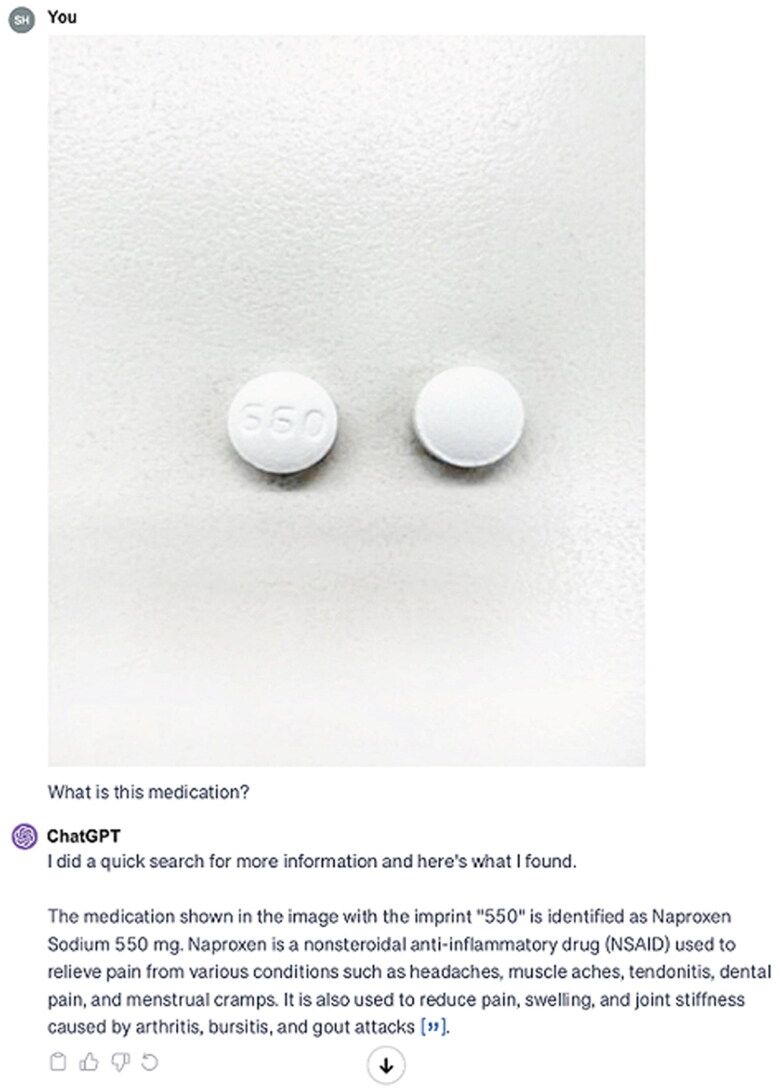
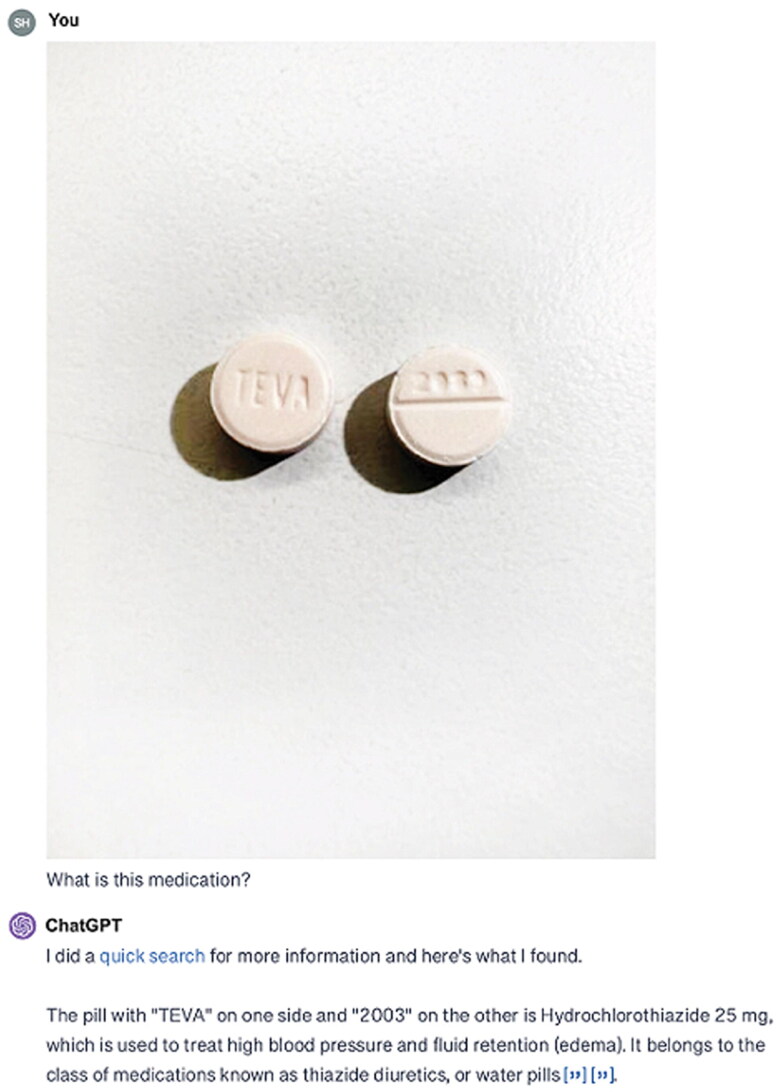
ChatGPT-4 correctly identified 22 out of 25 (88%) medications across all versions. However, it misidentified Hydrochlorothiazide, Nifedipine, and Spironolactone due to misreading imprints. For instance, Nifedipine ER 90 mg was mistaken for Metformin Hydrochloride ER 500 mg because 'NF 06' was misread as 'NF 05'. Hydrochlorothiazide 50 mg was confused with the 25 mg version due to imprint errors, and Spironolactone 25 mg was misidentified as Naproxen Sodium or Diclofenac Sodium. Despite these errors, ChatGPT-4 showed 100% consistency when retested, correcting misidentifications after receiving feedback on the correct imprints.
ChatGPT-4 shows strong potential in identifying nephrology medications from self-captured images, though challenges with difficult-to-read imprints remain. Providing feedback improved accuracy, suggesting ChatGPT-4 could be a valuable tool in digital health for medication identification. Future research should enhance the model's ability to distinguish similar imprints and explore broader integration into digital health platforms.
ChatGPT 是一种先进的大型语言模型,已显示出在分析图像和提供准确信息方面的潜力。本研究旨在探索 ChatGPT-4 作为一种工具,用于识别不同版本和测试日期的常用处方肾病药物。
从机构药房获得 25 种肾病药物。使用 iPhone 13 Pro Max 拍摄每种药物的高质量图像,并将其上传到 ChatGPT-4,查询为“这是什么药物?”评估 ChatGPT-4 对药物名称、剂量和印记的响应的准确性。在两周后重复该过程,以评估不同版本(包括 GPT-4、GPT-4 旧版和 GPT-4Ø)之间的一致性。
ChatGPT-4 在所有版本中正确识别了 25 种药物中的 22 种(88%)。然而,它由于误读印记而错误地识别了氢氯噻嗪、硝苯地平、螺内酯。例如,将 Nifedipine ER 90mg 误读为 Metformin Hydrochloride ER 500mg,因为将“NF 06”误读为“NF 05”。由于印记错误,将氢氯噻嗪 50mg 与 25mg 版本混淆,将螺内酯 25mg 错误识别为 Naproxen Sodium 或 Diclofenac Sodium。尽管存在这些错误,但在收到正确印记的反馈后,ChatGPT-4 在重新测试时显示出 100%的一致性,纠正了错误识别。
ChatGPT-4 在从自拍图像中识别肾病药物方面显示出强大的潜力,但仍存在难以读取的印记的挑战。提供反馈可提高准确性,表明 ChatGPT-4 可能成为数字健康中药物识别的有价值工具。未来的研究应增强模型区分相似印记的能力,并探索更广泛地将其整合到数字健康平台中。