Bell Emma, Chen Jianwei, Richardson William D L, Fustic Milovan, Hubert Casey R J
Department of Biological Sciences, University of Calgary, 2500 University Drive NW, Calgary, Alberta T2N 1N4, Canada.
Department of Geology, Nazarbayev University, 53 Kabanbay Batyr Ave, Astana 010000, Kazakhstan.
ISME Commun. 2024 Sep 4;4(1):ycae107. doi: 10.1093/ismeco/ycae107. eCollection 2024 Jan.
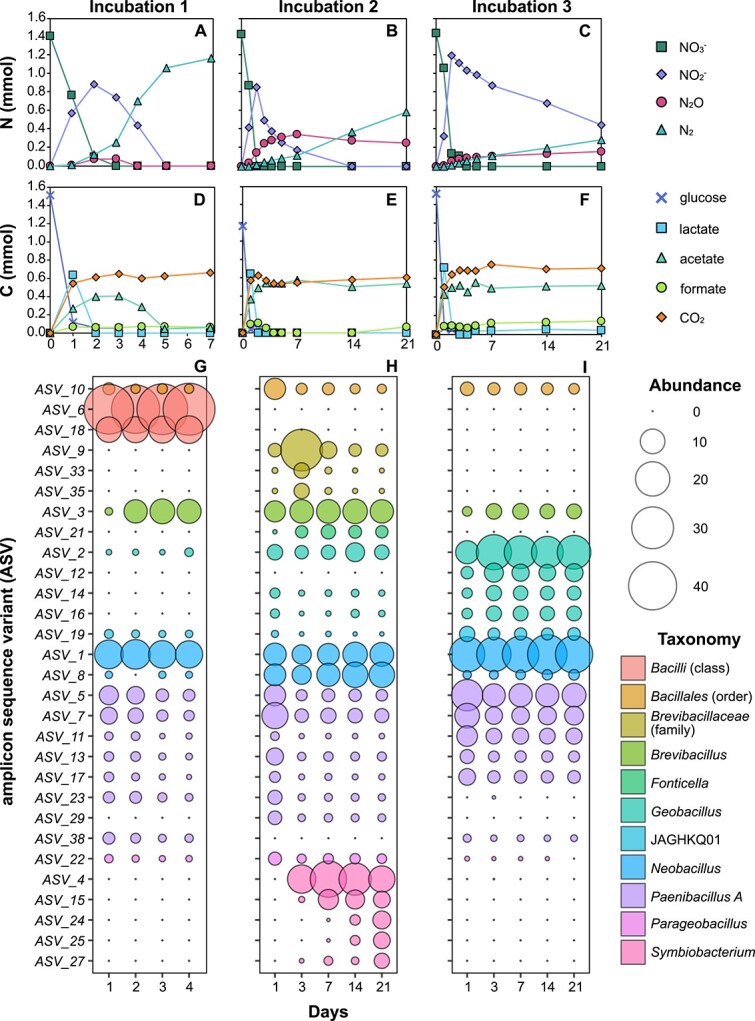
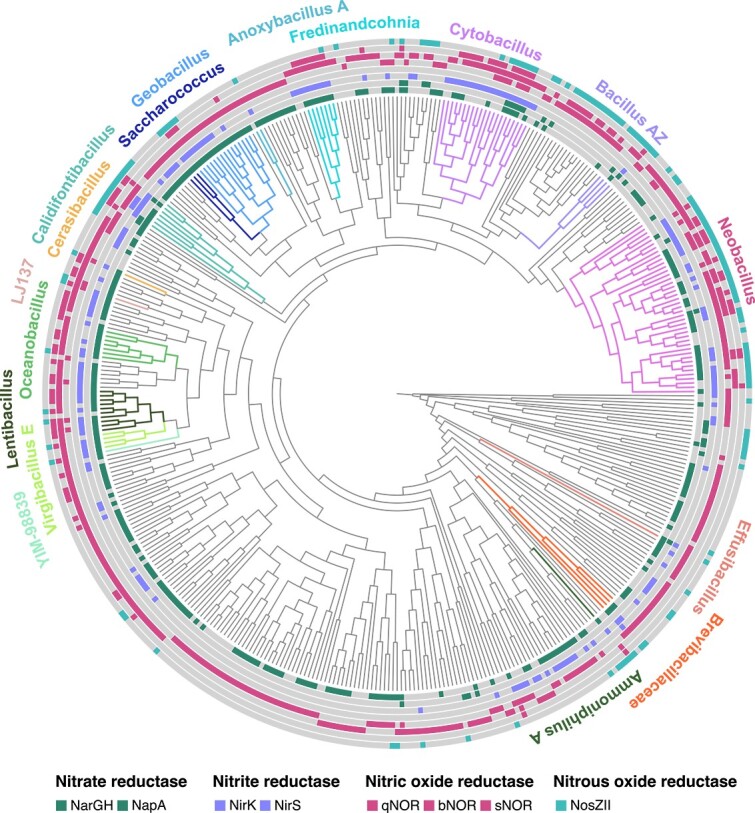
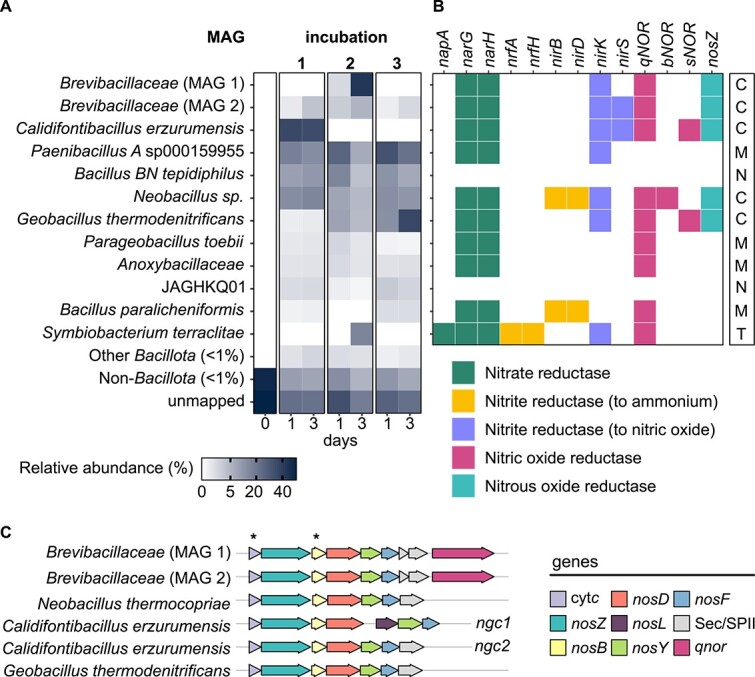
Denitrification is a key metabolic process in the global nitrogen cycle and is performed by taxonomically diverse microorganisms. Despite the widespread importance of this metabolism, challenges remain in identifying denitrifying populations and predicting their metabolic end-products based on their genotype. Here, genome-resolved metagenomics was used to explore the denitrification genotype of enriched in nitrate-amended high temperature incubations with confirmed NO and N production. A set of 12 hidden Markov models (HMMs) was created to target the diversity of denitrification genes in members of the phylum . Genomic potential for complete denitrification was found in five metagenome-assembled genomes from nitrate-amended enrichments, including two novel members of the family. Genomes of complete denitrifiers encode NO reductase gene clusters with clade II-type and often include multiple variants of the nitric oxide reductase gene The HMM set applied to all genomes of from the Genome Taxonomy Database identified 17 genera inferred to contain complete denitrifiers based on their gene content. Among complete denitrifiers it was common for three distinct nitric oxide reductases to be present (qNOR, bNOR, and sNOR) that may reflect the metabolic adaptability of in environments with variable redox conditions.
反硝化作用是全球氮循环中的一个关键代谢过程,由分类学上多样的微生物进行。尽管这种代谢具有广泛的重要性,但在识别反硝化菌群并根据其基因型预测其代谢终产物方面仍存在挑战。在此,利用基因组解析宏基因组学来探索在添加硝酸盐的高温培养中富集的、已确认有一氧化氮(NO)和氮产生的反硝化作用基因型。创建了一组12个隐马尔可夫模型(HMM),以针对该门成员中反硝化基因的多样性。在来自添加硝酸盐富集培养物的5个宏基因组组装基因组中发现了完全反硝化的基因组潜力,包括该科的两个新成员。完全反硝化菌的基因组编码具有II型细胞色素c的一氧化氮还原酶基因簇,并且通常包括一氧化氮还原酶基因的多个变体。应用于来自基因组分类数据库的所有该门基因组的HMM集,根据其基因含量鉴定出17个属推断含有完全反硝化菌。在完全反硝化菌中,通常存在三种不同的一氧化氮还原酶(qNOR、bNOR和sNOR),这可能反映了该门在具有可变氧化还原条件的环境中的代谢适应性。