Department of Botany, Faculty of Science, Palacký University, Olomouc, Czech Republic.
Institute of Experimental Botany of the Czech Academy of Sciences, Centre of Plant Structural and Functional Genomics, Olomouc, Czech Republic.
BMC Plant Biol. 2024 Sep 13;24(1):859. doi: 10.1186/s12870-024-05497-4.
The genus Pulmonaria (Boraginaceae) represents a taxonomically complex group of species in which morphological similarity contrasts with striking karyological variation. The presence of different numbers of chromosomes in the diploid state suggests multiple hybridization/polyploidization events followed by chromosome rearrangements (dysploidy). Unfortunately, the phylogenetic relationships and evolution of the genome, have not yet been elucidated. Our study focused on the P. officinalis group, the most widespread species complex, which includes two morphologically similar species that differ in chromosome number, i.e. P. obscura (2n = 14) and P. officinalis (2n = 16). Ornamental cultivars, morphologically similar to P. officinalis (garden escapes), whose origin is unclear, were also studied. Here, we present a pilot study on genome size and repeatome dynamics of these closely related species in order to gain new information on their genome and chromosome structure.
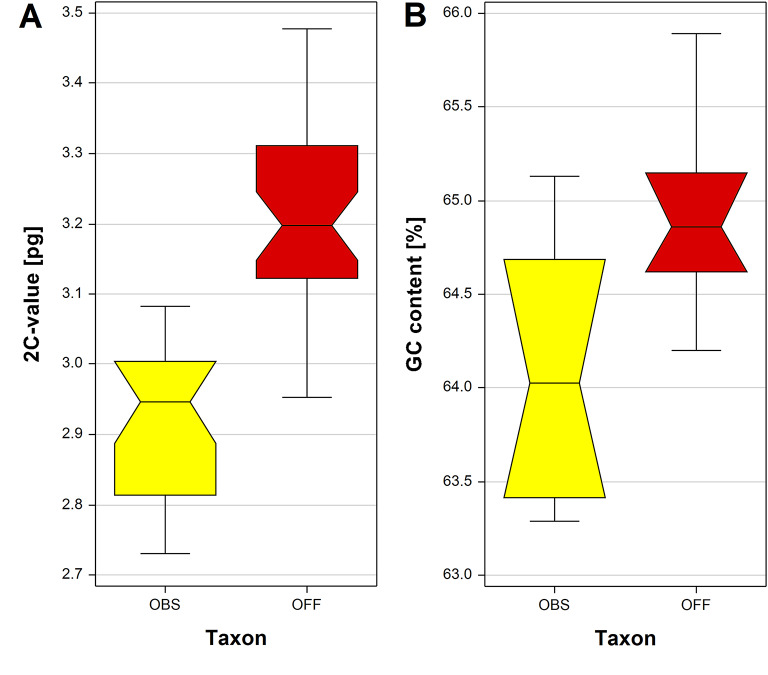
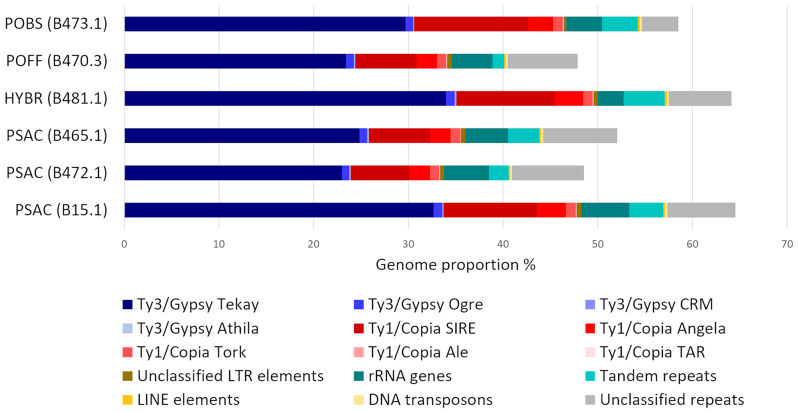
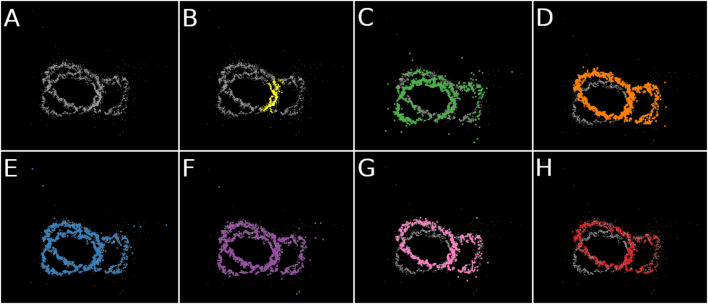
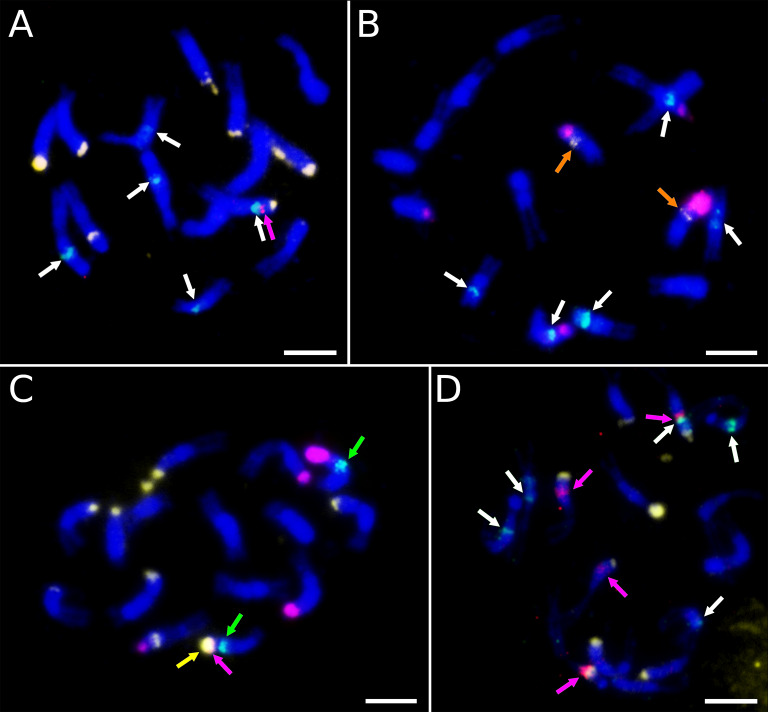
Flow cytometry confirmed a significant difference in genome size between P. obscura and P. officinalis, corresponding to the number of chromosomes. Genome-wide repeatome analysis performed on genome skimming data showed that retrotransposons were the most abundant repeat type, with a higher proportion of Ty3/Gypsy elements, mainly represented by the Tekay lineage. Comparative analysis revealed no species-specific retrotransposons or striking differences in their copy number between the species. A new set of chromosome-specific cytogenetic markers, represented by satellite DNAs, showed that the chromosome structure in P. officinalis was more variable compared to that of P. obscura. Comparative karyotyping supported the hybrid origin of putative hybrids with 2n = 15 collected from a mixed population of both species and outlined the origin of ornamental garden escapes, presumably derived from the P. officinalis complex.
Large-scale genome size analysis and repeatome characterization of the two morphologically similar species of the P. officinalis group improved our knowledge of the genome dynamics and differences in the karyotype structure. A new set of chromosome-specific cytogenetic landmarks was identified and used to reveal the origin of putative hybrids and ornamental cultivars morphologically similar to P. officinalis.
肺草属(紫草科)是一个分类上复杂的物种群,其形态相似性与显著的染色体变异形成鲜明对比。在二倍体状态下存在不同数量的染色体表明,多倍化事件之后发生了染色体重排(非整倍性)。不幸的是,基因组的系统发育关系和进化尚未阐明。我们的研究集中在最广泛的物种复合体 P. officinalis 组,该组包括两个形态相似但染色体数量不同的物种,即 P. obscura(2n=14)和 P. officinalis(2n=16)。我们还研究了形态上与 P. officinalis 相似的、起源不明的观赏栽培品种(花园逃逸种)。在这里,我们对这些密切相关的物种的基因组大小和重复序列动态进行了初步研究,以便获得关于其基因组和染色体结构的新信息。
流式细胞术证实 P. obscura 和 P. officinalis 之间的基因组大小存在显著差异,与染色体数量相对应。基于基因组刮削数据进行的全基因组重复序列分析表明,逆转录转座子是最丰富的重复类型,Ty3/Gypsy 元件的比例较高,主要由 Tekay 谱系代表。比较分析显示,两个物种之间没有物种特异性的逆转录转座子或其拷贝数的显著差异。一组新的染色体特异性细胞遗传学标记,由卫星 DNA 代表,表明 P. officinalis 的染色体结构比 P. obscura 更为多变。比较核型分析支持了从两个物种的混合种群中收集的具有 2n=15 的假定杂种的杂种起源,并概述了观赏花园逃逸种的起源,推测它们源自 P. officinalis 复合体。
对 P. officinalis 组的两个形态相似的物种进行大规模基因组大小分析和重复序列特征分析,提高了我们对基因组动态和染色体结构差异的认识。确定了一组新的染色体特异性细胞遗传学标记,并用于揭示形态上与 P. officinalis 相似的假定杂种和观赏栽培品种的起源。