Gandhi Karan, Paczkowski Freeman, Sowerby Leigh
Department of Otolaryngology-Head and Neck Surgery, Schulich School of Medicine and Dentistry, Western University, London, Ontario, Canada.
Schulich School of Medicine and Dentistry, Western University, London, Ontario, Canada.
Laryngoscope. 2025 Feb;135(2):517-528. doi: 10.1002/lary.31761. Epub 2024 Sep 13.
Nasal irrigation is a common treatment for sinonasal disorders; however, it is unknown if it can reduce SARS-CoV-2 nasopharyngeal viral load (NVL). This systematic review investigated the efficacy of nasal irrigation with saline, povidone iodine (PVP-I), and intranasal corticosteroids (INCS) at reducing SARS-CoV-2 NVL and transmissibility.
Databases including Embase, MEDLINE, Web of Science, and ClinicalTrials.gov.
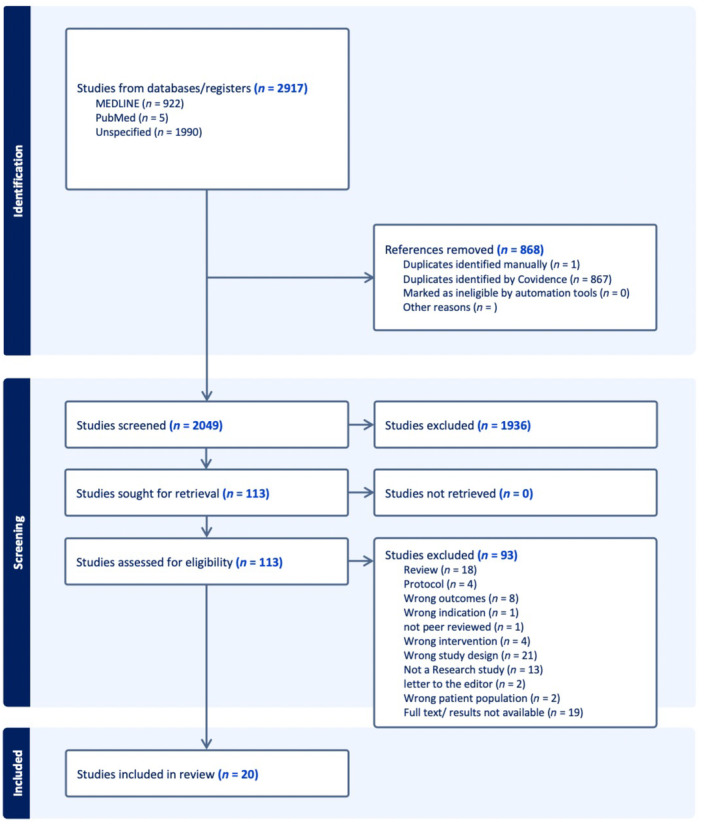
A systematic review was completed with pre-defined search criteria using keywords related to nasal irrigation and COVID-19 from 1946 through January 2024. This review followed PRISMA reporting guidelines and was registered on PROSPERO. Only in-vivo studies testing nasal irrigation with either saline, PVP-I, or INCS for reducing NVL were included.
Nine out of ten studies on saline-based solutions reported positive effects in reducing NVL, with benefits noted in earlier time to negative nasopharyngeal PCR and a greater decline in NVL during early study time points, compared with controls. Isotonic and hypertonic saline mediums were found to be effective with three studies demonstrating enhanced efficacy with additives. Four out of seven studies on PVP-I showed a positive effect on reducing NVL, but results were heterogenous. Four studies demonstrated reduction of transmission with saline or PVP-I. No studies were found on INCS.
Saline nasal irrigation showed the best efficacy in reducing SARS-CoV-2 NVL. Additives to saline may have a clinical benefit, but further studies are needed to elucidate their isolated impacts on NVL. Data on PVP-I is inconclusive and further studies are warranted to determine the ideal concentration for irrigation. Laryngoscope, 135:517-528, 2025.
鼻腔冲洗是鼻窦疾病的常见治疗方法;然而,尚不清楚其是否能降低严重急性呼吸综合征冠状病毒2(SARS-CoV-2)的鼻咽病毒载量(NVL)。本系统评价研究了用生理盐水、聚维酮碘(PVP-I)和鼻内皮质类固醇(INCS)进行鼻腔冲洗在降低SARS-CoV-2 NVL和传播性方面的疗效。
包括Embase、MEDLINE、科学网和临床试验.gov在内的数据库。
采用预定义的搜索标准,使用与1946年至2024年1月期间鼻腔冲洗和2019冠状病毒病相关的关键词,完成了一项系统评价。本综述遵循系统评价和Meta分析的首选报告项目(PRISMA)报告指南,并在国际前瞻性系统评价注册库(PROSPERO)上进行了注册。仅纳入了测试用生理盐水、PVP-I或INCS进行鼻腔冲洗以降低NVL的体内研究。
十项关于盐基溶液的研究中有九项报告了在降低NVL方面的积极效果,与对照组相比,在鼻咽PCR转阴的更早时间以及早期研究时间点NVL的更大下降方面均有获益。发现等渗和高渗盐溶液有效,三项研究表明添加剂可增强疗效。七项关于PVP-I的研究中有四项显示对降低NVL有积极作用,但结果存在异质性。四项研究表明使用生理盐水或PVP-I可减少传播。未发现关于INCS的研究。
盐水鼻腔冲洗在降低SARS-CoV-2 NVL方面显示出最佳疗效。盐水中的添加剂可能具有临床益处,但需要进一步研究以阐明它们对NVL的单独影响。关于PVP-I的数据尚无定论,有必要进行进一步研究以确定冲洗的理想浓度。《喉镜》,135:517 - 528,2025年。