Tobacco Academic Studies Center, 1-16-3, Yokokawa, Sumida-ku, Tokyo, 130-0003, Japan.
BMC Psychol. 2024 Sep 13;12(1):483. doi: 10.1186/s40359-024-01968-3.
Coffee is widely consumed around the world. In Japan, it is a type of "Shikohin" (consumed for flavor, not nutrition). Several medical studies have reported the beneficial effects of coffee consumption, whereas others suggest that these beneficial effects on psychological aspects are marginal. The habit of consuming large amounts of caffeine through coffee may improve short-term resilience in stressful situations and may exhaust individuals in the long term. We hypothesized that people who habitually drink high amounts of coffee would have lower resilience scores and higher acute stress responses.
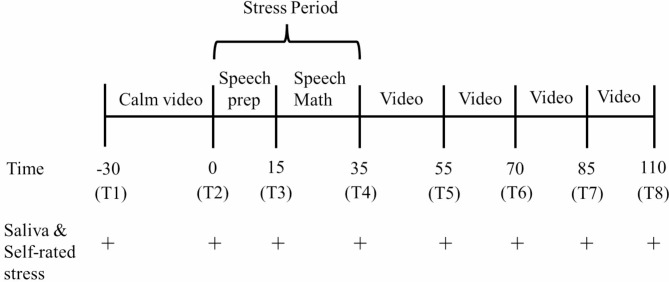
Adult Japanese men completed a questionnaire that included a resilience scale and Shikohin consumption habits. Experimental participants were recruited from the survey respondents and classified into three groups based on their coffee consumption per day: No Coffee, Low Coffee, and High Coffee. All participants were asked to join the Trier Social Stress Test-Online (TSST-OL). Subjective stress and salivary cortisol concentrations was measured at eight time points during the experiment. There were 16 participants in each group for the analysis (mean age = 46.10 years, SD = 12.58).
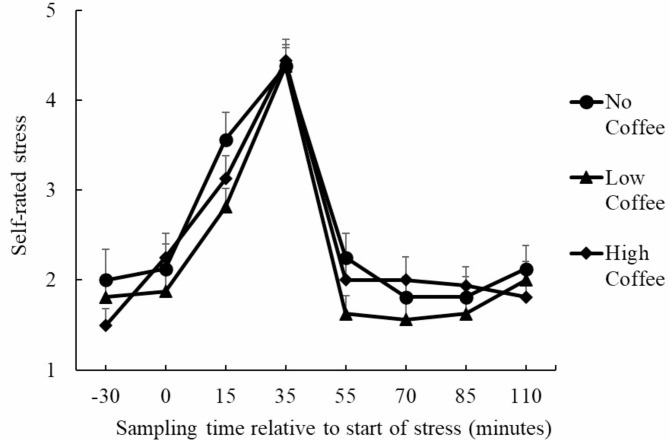
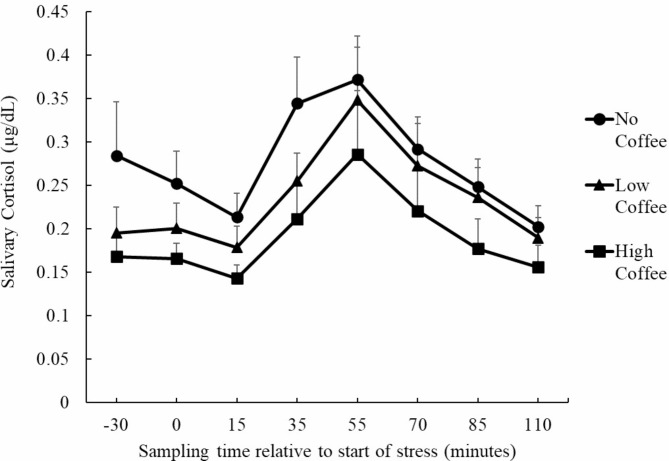
Statistical analysis showed that both subjective stress and salivary cortisol concentrations significantly increased following TSST-OL exposure. However, there were no significant differences among the groups, and the hypotheses were not supported.
This study demonstrated the effectiveness and stability of the TSST-OL. Additionally, coffee consumption habits were not significantly related to resilience scale scores or acute stress responses.
咖啡在全世界范围内广泛饮用。在日本,咖啡被视为一种“嗜好品”(以口感而非营养为目的饮用)。一些医学研究报告了饮用咖啡的有益效果,而另一些研究则表明,咖啡对心理方面的这些有益效果是微不足道的。通过喝咖啡摄入大量咖啡因的习惯可能会提高个体在压力环境下的短期适应力,但从长期来看可能会使个体疲惫不堪。我们假设习惯性饮用大量咖啡的人适应力评分较低,急性应激反应较高。
成年日本男性完成了一份问卷,其中包括适应力量表和嗜好品消费习惯。实验参与者从调查对象中招募,并根据他们每天的咖啡摄入量分为三组:不喝咖啡、低咖啡和高咖啡。所有参与者都被要求参加特里尔社会应激测试在线版(TSST-OL)。在实验过程中的八个时间点测量了主观压力和唾液皮质醇浓度。每组有 16 名参与者进行分析(平均年龄为 46.10 岁,标准差为 12.58)。
统计分析表明,TSST-OL 暴露后,主观压力和唾液皮质醇浓度均显著增加。然而,组间没有显著差异,假设不成立。
本研究证明了 TSST-OL 的有效性和稳定性。此外,咖啡消费习惯与适应力量表评分或急性应激反应之间没有显著关系。