Center for Research and Development of the Morphological and Genetic Studies of Malignant Pathology, "Ovidius" University of Constanta, 145 Tomis Blvd., 900591 Constanta, Romania.
Clinical Service of Pathology, "Sf. Apostol Andrei" Emergency County Hospital, 145 Tomis Blvd., 900591 Constanta, Romania.
Int J Mol Sci. 2024 Aug 28;25(17):9329. doi: 10.3390/ijms25179329.
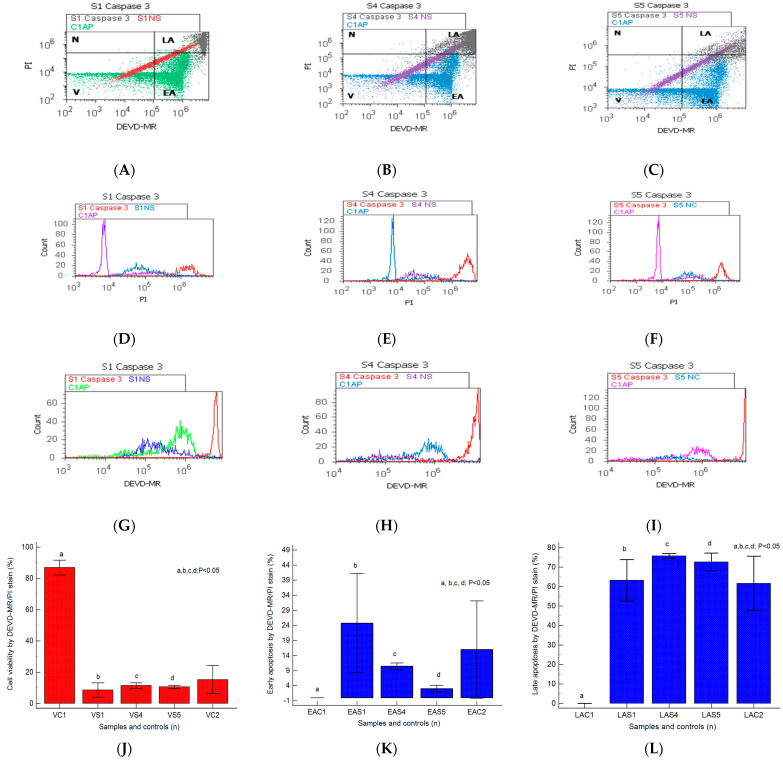
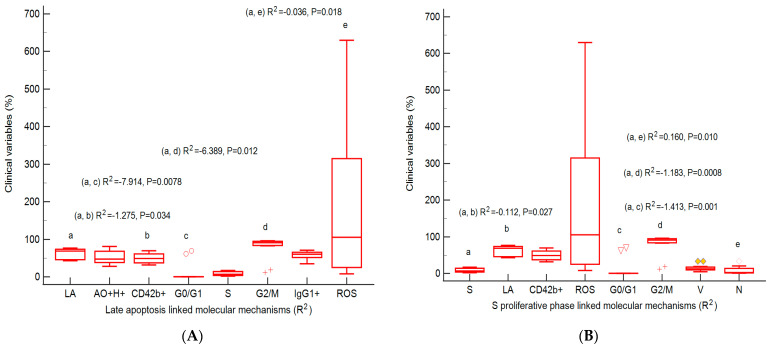
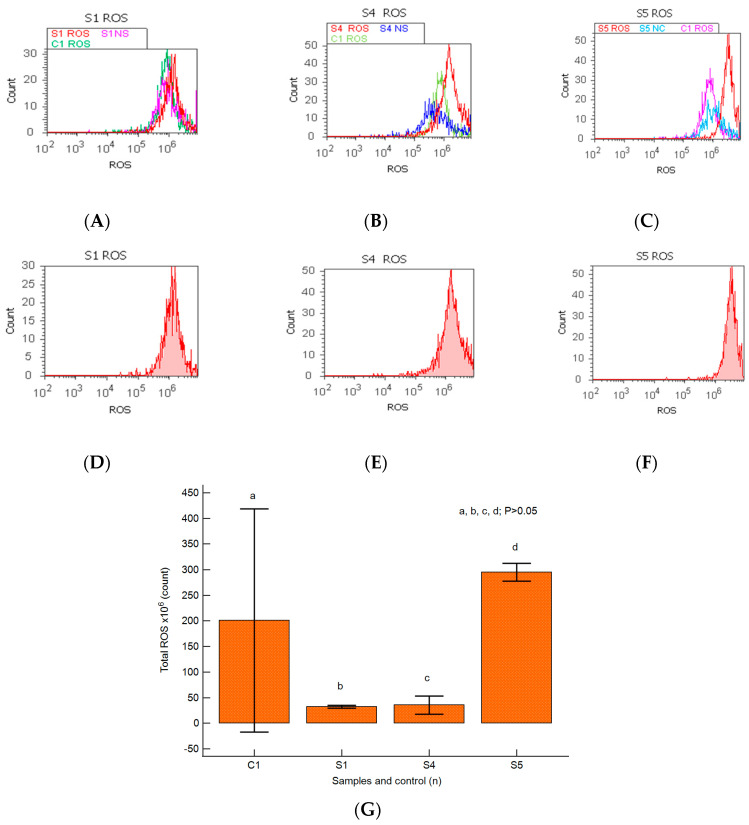
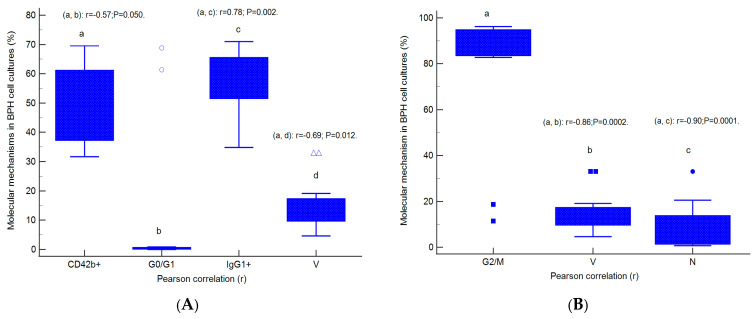
Our study highlights the apoptosis, cell cycle, DNA ploidy, and autophagy molecular mechanisms network to identify prostate pathogenesis and its prognostic role. Caspase 3/7 expressions, cell cycle, adhesion glycoproteins, autophagy, nuclear shrinkage, and oxidative stress by flow-cytometry analysis are used to study the BPH microenvironment's heterogeneity. A high late apoptosis expression by caspases 3/7 activity represents an unfavorable prognostic biomarker, a dependent predictor factor for cell adhesion, growth inhibition by arrest in the G2/M phase, and oxidative stress processes network. The heterogeneous aggressive phenotype prostate adenoma primary cell cultures present a high S-phase category (>12%), with an increased risk of death or recurrence due to aneuploid status presence, representing an unfavorable prognostic biomarker, a dependent predictor factor for caspase 3/7 activity (late apoptosis and necrosis), and cell growth inhibition (G2/M arrest)-linked mechanisms. Increased integrin levels in heterogenous BPH cultures suggest epithelial-mesenchymal transition (EMT) that maintains an aggressive phenotype by escaping cell apoptosis, leading to the cell proliferation necessary in prostate cancer (PCa) development. As predictor biomarkers, the biological mechanisms network involved in apoptosis, the cell cycle, and autophagy help to establish patient prognostic survival or target cancer therapy development.
我们的研究强调了细胞凋亡、细胞周期、DNA 倍体和自噬分子机制网络,以确定前列腺的发病机制及其预后作用。通过流式细胞术分析检测 caspase 3/7 的表达、细胞周期、黏附糖蛋白、自噬、核皱缩和氧化应激,以研究 BPH 微环境的异质性。晚期凋亡表达高(通过 caspase 3/7 活性)是一个不利的预后生物标志物,它是细胞黏附的依赖性预测因素,会导致 G2/M 期阻滞和氧化应激过程网络的生长抑制。具有异质性侵袭性表型的前列腺腺瘤原代细胞培养物具有高 S 期类别(>12%),由于存在非整倍体状态,存在死亡或复发的高风险,这代表了一个不利的预后生物标志物,是 caspase 3/7 活性(晚期凋亡和坏死)和细胞生长抑制(G2/M 期阻滞)相关机制的依赖性预测因素。在异质 BPH 培养物中整合素水平升高提示上皮-间充质转化(EMT),通过逃避细胞凋亡来维持侵袭性表型,从而促进前列腺癌(PCa)发展所必需的细胞增殖。作为预测生物标志物,细胞凋亡、细胞周期和自噬所涉及的生物学机制网络有助于确定患者的预后生存或癌症治疗靶点的开发。