Moreira E Moraes Rafael Ubaldo, Abreu Marcos Andre Pinheiro, Frazão Mayara Cristina Abas, Ferreira Paulo Vitor Campos, Bauer José, Carvalho Ceci Nunes, Carvalho Edilausson Moreno
Dentistry Postgraduate Program, University Ceuma, R. Josué Montello, 1, Renascença II, São Luís 65075-120, Brazil.
School of Dentistry, University Ceuma, R. Josué Montello, 1, Renascença II, São Luís 65075-120, Brazil.
Polymers (Basel). 2024 Aug 24;16(17):2401. doi: 10.3390/polym16172401.
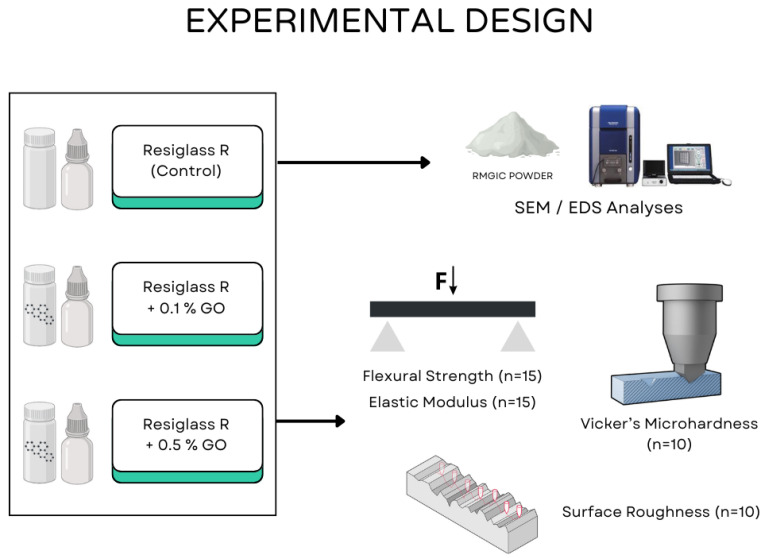
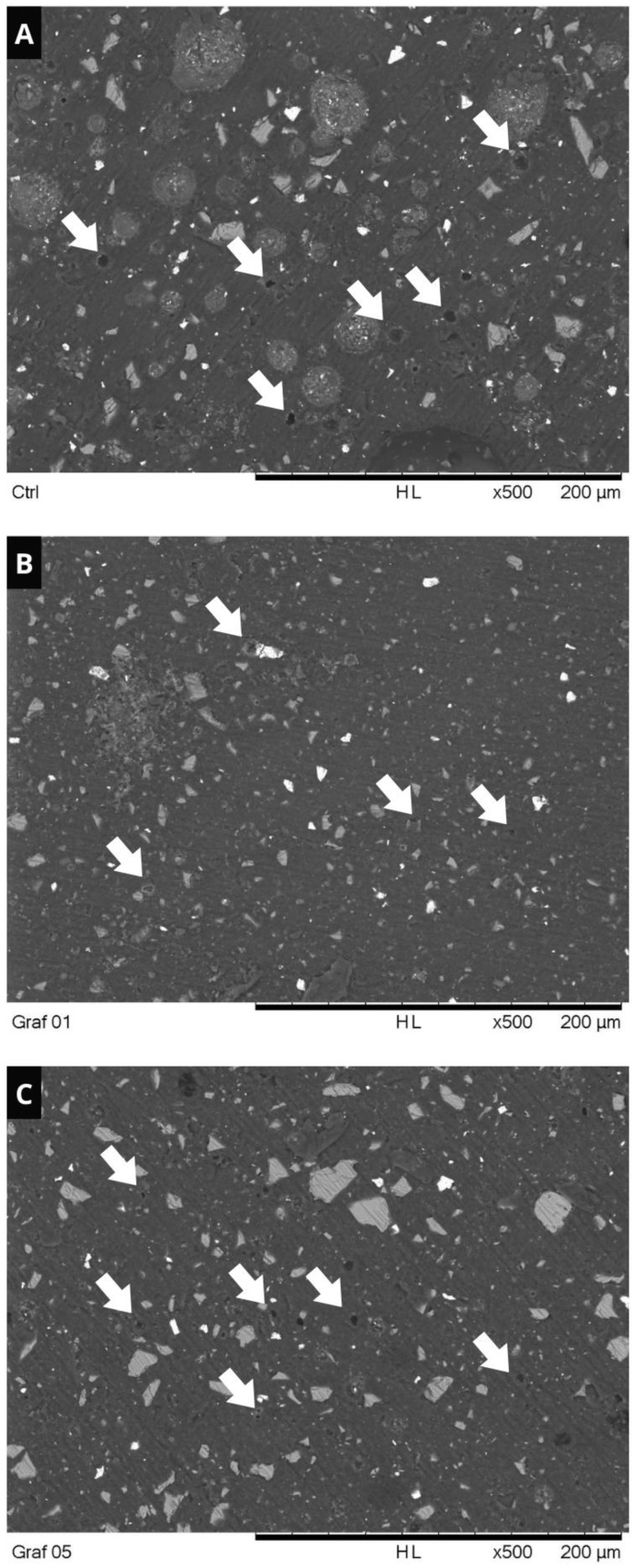
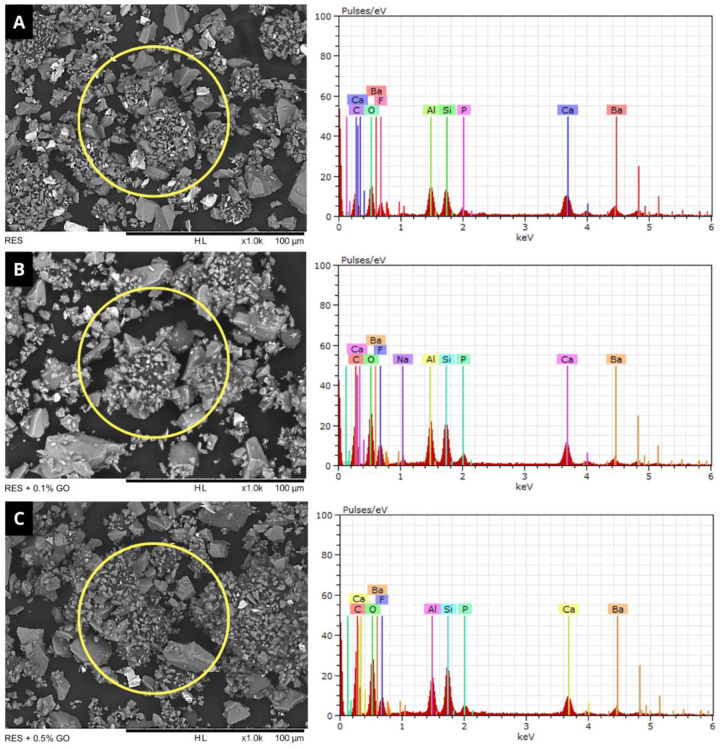
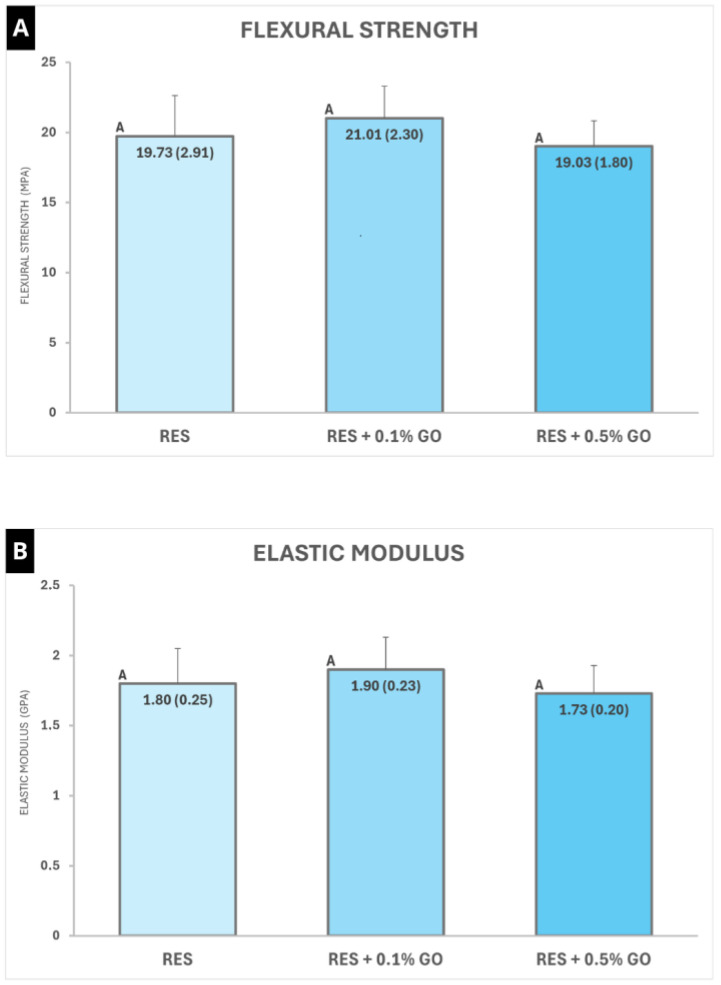
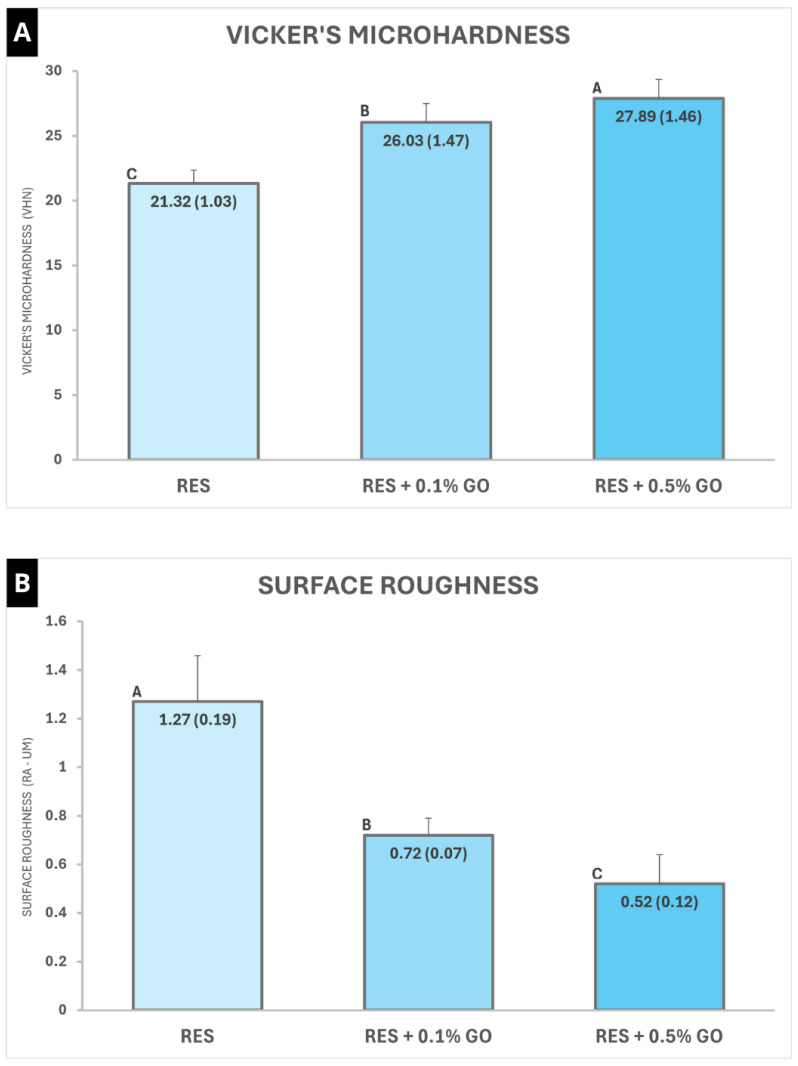
The objective of this study was to evaluate the effect of incorporating different concentrations of graphene oxide (GO) nanoparticles on the mechanical properties of a resin-modified glass ionomer cement (RMGIC). A commercial RMGIC (Resiglass R, Biodinâmica) was modified by incorporating 0.1% and 0.5% (by weight) of GO into the powder's material. An unmodified RMGIC was used as a control group. Powder samples were characterized using Scanning Electron Microscopy (SEM) and Energy Dispersive Spectroscopy (EDS). Specimens were fabricated and subjected to flexural strength ( = 15), modulus of elasticity ( = 15), Vicker's microhardness ( = 10), and surface roughness tests ( = 10). Data were analyzed using one-way ANOVA and Tukey's post hoc test (α = 5%). Experimental groups' powder demonstrated a homogeneous dispersion of GO. No statistically significant difference was observed in flexural strength ( = 0.067) and modulus of elasticity ( = 0.143) tests. The groups containing 0.1% and 0.5% GO showed significantly higher microhardness and lower surface roughness values ( < 0.001) compared to the control group. The incorporation of GO nanoparticles at concentrations of 0.1% and 0.5% improved the microhardness and surface roughness without negatively affecting the flexural strength and modulus of elasticity of an RMGIC.
本研究的目的是评估掺入不同浓度的氧化石墨烯(GO)纳米颗粒对树脂改性玻璃离子水门汀(RMGIC)力学性能的影响。通过将0.1%和0.5%(按重量计)的GO掺入粉末材料中,对市售RMGIC(Resiglass R,Biodinâmica)进行改性。未改性的RMGIC用作对照组。使用扫描电子显微镜(SEM)和能量色散光谱(EDS)对粉末样品进行表征。制备试样并进行弯曲强度(n = 15)、弹性模量(n = 15)、维氏显微硬度(n = 10)和表面粗糙度测试(n = 10)。使用单因素方差分析和Tukey事后检验(α = 5%)对数据进行分析。实验组的粉末显示出GO的均匀分散。在弯曲强度(p = 0.067)和弹性模量(p = 0.143)测试中未观察到统计学上的显著差异。与对照组相比,含有0.1%和0.5% GO的组显示出显著更高的显微硬度和更低的表面粗糙度值(p < 0.001)。掺入0.1%和0.5%浓度的GO纳米颗粒可改善显微硬度和表面粗糙度,而不会对RMGIC的弯曲强度和弹性模量产生负面影响。