
天然黄烷酮及其生物学意义。
Naturally Occurring Xanthones and Their Biological Implications.
机构信息
Department of Chemical and Physical Sciences, Faculty of Natural Sciences, Walter Sisulu University, Nelson Mandela Drive, Mthatha 5117, South Africa.
African Medicinal Flora and Fauna Research Niche, Walter Sisulu University, Nelson Mandela Drive, Mthatha 5117, South Africa.
出版信息
Molecules. 2024 Sep 6;29(17):4241. doi: 10.3390/molecules29174241.
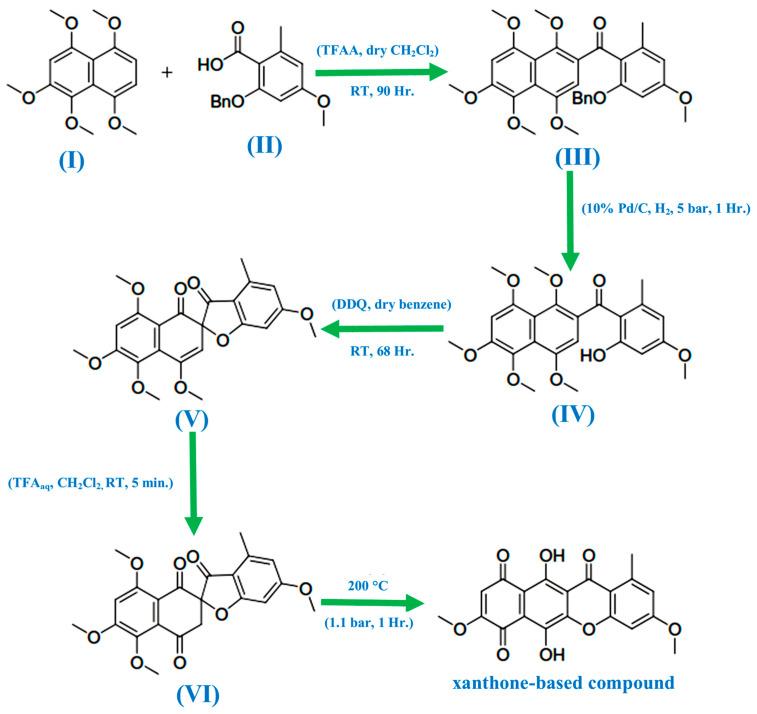
Xanthones are chemical substances in higher plants, marine organisms, and lower microorganisms. The most prevalent naturally occurring sources of xanthones are those belonging to the families Caryophyllaceae, Guttiferae, and Gentianaceae. Structurally, xanthones (9H xanthan-9-one) are heterocyclic compounds with oxygen and a γ-pyrone component. They are densely packed with a two-benzene ring structure. The carbons in xanthones are numbered from their nucleus and biosynthetic construct. They have mixed shikimate-acetate (higher plants) and acetate-malonate (lower organisms) biosynthetic origins, which influence their classification. Based on the level of oxidation of the C-ring, they are classified into monomers, dimers, and heterodimers. While based on the level of oxygenation or the type of ring residue, they can be categorized into mono-, di-, tri-, tetra-, penta- and hexa-oxygenated xanthones, bis-xanthones, prenylated and related xanthones, xanthonolignoids, and other miscellaneous xanthones. This structural diversity has made xanthones exhibit considerable biological properties as promising antioxidant, antifungal, antimicrobial, and anticancer agents. Structure-activity relationship studies suggest C-1, C-3, C-6, and C-8 as the key positions that influence the biological activity of xanthones. Furthermore, the presence of functional groups, such as prenyl, hydroxyl, glycosyl, furan, and pyran, at the key positions of xanthones, may contribute to their spectrum of biological activity. The unique chemical scaffolds of xanthones, their notable biological activities, and the structure-activity relationships of some lead molecules were discussed to identify lead molecules as possible drug candidates.
中文名
二氢杨梅素
英文名
Dihydromyricetin
化学名
3,5,7,3’,4’-五羟基二氢黄酮醇
化学结构式
分子式
C15H12O8
分子量
320.26
CAS 登录号:489-46-9
理化性质
二氢杨梅素为白色针状结晶,在 25℃水中溶解度为 1.22%,易溶于甲醇、乙醇、丙酮,可溶于热水,难溶于氯仿、石油醚。熔点 208-210℃。
产品规格
98%,99%,99.9%
检测方法
HPLC
产品外观
白色结晶粉末
保存条件
干燥、阴凉、密封、避光保存
保质期
24 个月
应用
二氢杨梅素是一种黄酮类化合物,具有抗氧化、抗炎、抗菌、抗病毒等多种生物活性。它被广泛应用于医药、保健品、食品、化妆品等领域。在医药领域,二氢杨梅素具有降血脂、降血压、抗血栓、抗肿瘤等作用,可用于治疗心脑血管疾病、糖尿病、癌症等疾病。在保健品领域,二氢杨梅素被用作抗氧化剂、免疫调节剂、抗衰老剂等,可增强人体免疫力,延缓衰老。在食品领域,二氢杨梅素被用作天然抗氧化剂、防腐剂、保鲜剂等,可延长食品的保质期。在化妆品领域,二氢杨梅素被用作美白剂、保湿剂、防晒剂等,可使皮肤白皙、光滑、有弹性。




 Zotero 插件