Division of Medicine, Federal University of Pará, Belém, PA, Brazil.
Department of Medicine, School of Medicine, University of Padua, Ospedale Civile St., 77, 35121, Padua, Veneto, Italy.
Eur J Pediatr. 2024 Nov;183(11):4623-4633. doi: 10.1007/s00431-024-05768-0. Epub 2024 Sep 18.
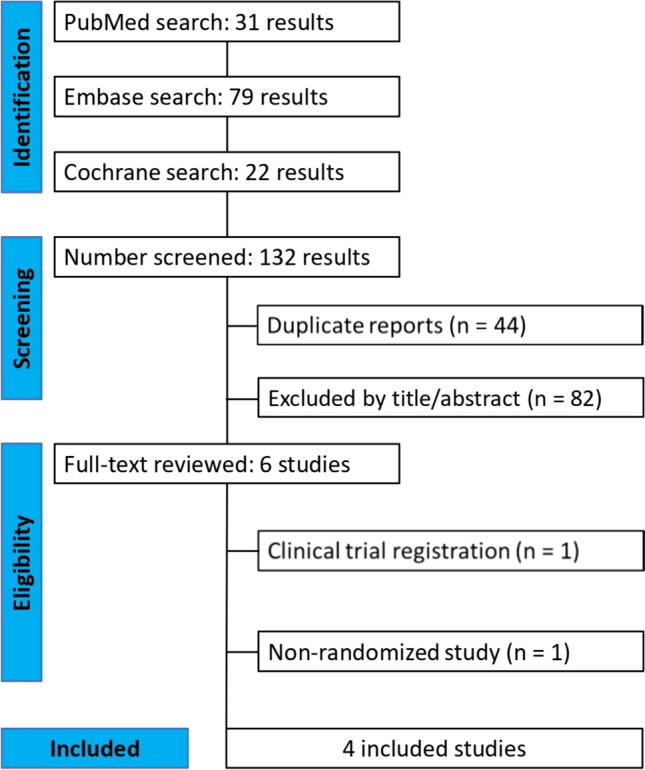
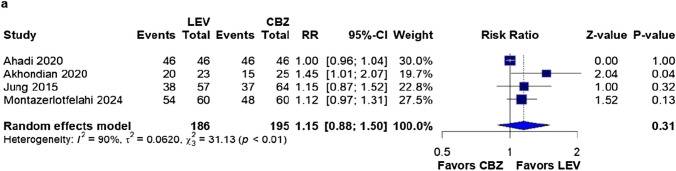
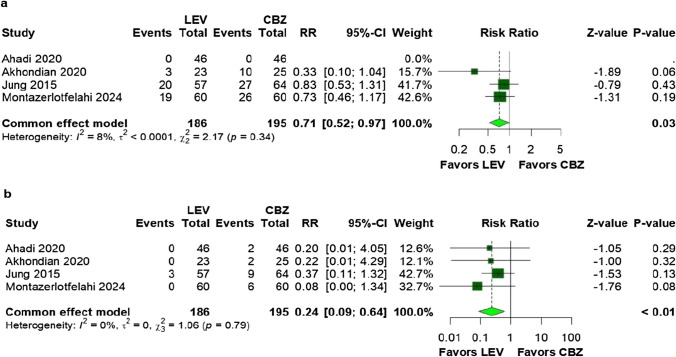
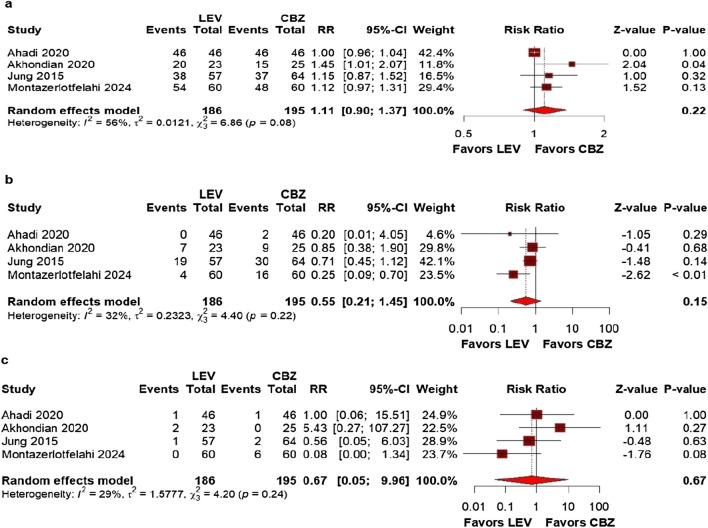
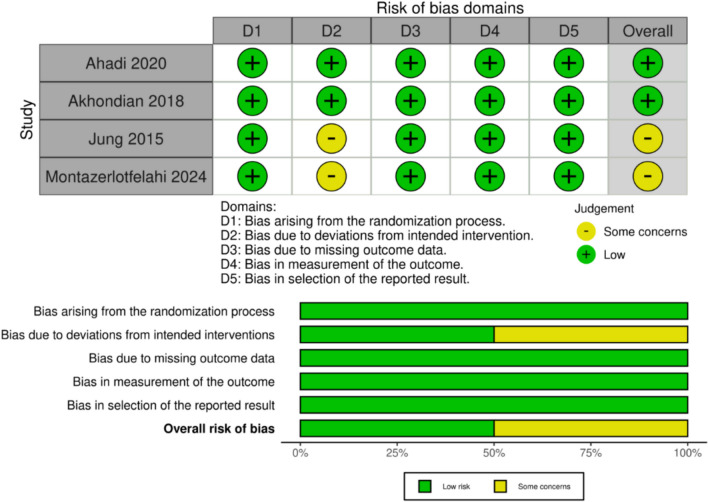
Levetiracetam (LEV) and carbamazepine (CBZ) are effective monotherapies for focal epilepsy in children. However, the best drug remains controversial. Therefore, we performed a systematic review and meta-analysis comparing LEV and CBZ monotherapy in the management of pediatric focal epilepsy (PFE). We searched PubMed, Embase, and Cochrane databases for randomized controlled trials (RCTs) published until February 2024 comparing LEV and CBZ monotherapy in PFE. Statistical analysis was performed using R version 4.2.2, heterogeneity was assessed using I statistics, and the risk of bias was evaluated using the RoB-2 tool. Risk Ratios (RR) with p < 0.05 were considered significant. The outcomes of interest were seizure freedom, any adverse events, adverse events leading to treatment discontinuation, dermatologic adverse events, and the frequency of at least one seizure, defined as the proportion of patients experiencing one or more seizures during the treatment period. Four RCTs comprising 381 children with a mean age of 7.32 to 9.28 years were included, of whom 186 (48.8%) received LEV monotherapy. There was no significant difference between groups (RR: 1.15; 95% CI 0.88-1.50; p = 0.31; I = 90%) regarding seizure freedom. The frequency of at least one seizure (RR: 0.71; 95% CI 0.52-0.97; p = 0.03; I = 8%) and dermatologic adverse events (RR: 0.24; 95% CI 0.09-0.64; p < 0.01; I = 0%) were both significantly lower in the LEV group. There were no significant differences in the presence of any adverse events (RR: 0.58; 95% CI 0.33-1.01; p = 0.05; I = 36%) or adverse events leading to treatment discontinuation (RR: 0.67; 95% CI 0.13-3.42; p = 0.63; I = 30%).Conclusion: In monotherapy, LEV was more advantageous than CBZ for PFE, with a lower frequency of seizures and fewer dermatological adverse events. However, both drugs are equally effective in achieving seizure freedom, adverse events without specification, and those that lead to treatment discontinuation. Our findings have important implications for clinical practice and decision-making in this condition.
左乙拉西坦(LEV)和卡马西平(CBZ)是治疗儿童局灶性癫痫的有效单药治疗方法。然而,哪种药物更好仍存在争议。因此,我们进行了一项系统评价和荟萃分析,比较了 LEV 和 CBZ 单药治疗在儿童局灶性癫痫(PFE)管理中的疗效。我们检索了 PubMed、Embase 和 Cochrane 数据库,以获取截至 2024 年 2 月发表的比较 LEV 和 CBZ 单药治疗 PFE 的随机对照试验(RCT)。使用 R 版本 4.2.2 进行统计分析,使用 I 统计量评估异质性,使用 RoB-2 工具评估偏倚风险。RR<0.05 被认为有统计学意义。主要结局为无癫痫发作、任何不良事件、导致治疗终止的不良事件、皮肤不良事件和至少一次发作的频率,定义为治疗期间发生一次或多次发作的患者比例。纳入了四项 RCT,共 381 名平均年龄为 7.32 至 9.28 岁的儿童,其中 186 名(48.8%)接受了 LEV 单药治疗。两组之间在无癫痫发作方面没有显著差异(RR:1.15;95%CI 0.88-1.50;p=0.31;I=90%)。至少一次发作的频率(RR:0.71;95%CI 0.52-0.97;p=0.03;I=8%)和皮肤不良事件(RR:0.24;95%CI 0.09-0.64;p<0.01;I=0%)在 LEV 组均显著较低。任何不良事件的发生率(RR:0.58;95%CI 0.33-1.01;p=0.05;I=36%)或导致治疗终止的不良事件发生率(RR:0.67;95%CI 0.13-3.42;p=0.63;I=30%)均无显著差异。结论:在单药治疗中,LEV 比 CBZ 更有利于 PFE,发作频率更低,皮肤不良事件更少。然而,两种药物在实现无癫痫发作、无特定不良事件以及导致治疗终止的不良事件方面同样有效。我们的研究结果对该疾病的临床实践和决策具有重要意义。