Jarmila Prieložná, Veronika Mikušová, Peter Mikuš
Department of Galenic Pharmacy, Faculty of Pharmacy, Comenius University Bratislava, Odbojárov 10, 83232 Bratislava, Slovakia.
Department of Pharmaceutical Analysis and Nuclear Pharmacy, Faculty of Pharmacy, Comenius University Bratislava, Odbojárov 10, 83232 Bratislava, Slovakia.
Int J Pharm X. 2024 Aug 28;8:100281. doi: 10.1016/j.ijpx.2024.100281. eCollection 2024 Dec.
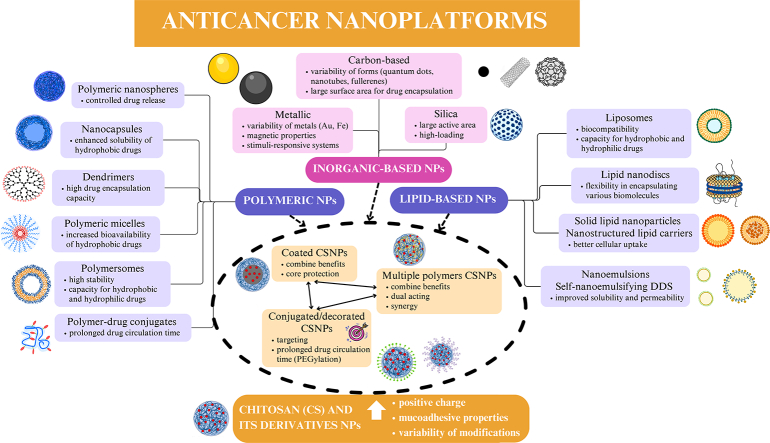
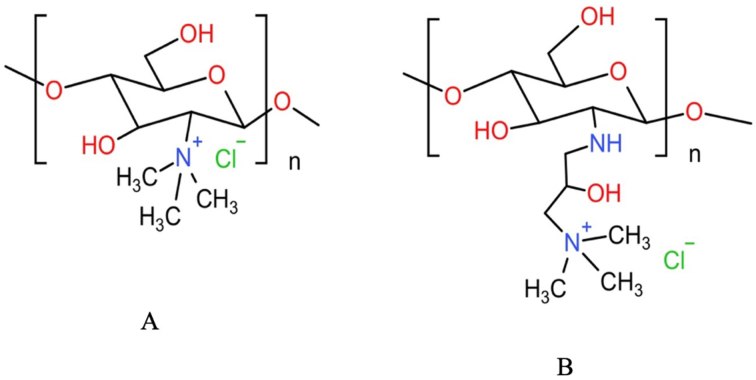
Cancer is the leading cause of death globally, and conventional treatments have limited efficacy with severe side effects. The use of nanotechnology has the potential to reduce the side effects of drugs by creating efficient and controlled anticancer drug delivery systems. Nanoparticles (NPs) used as drug carriers offer several advantages, including enhanced drug protection, biodistribution, selectivity and, pharmacokinetics. Therefore, this review is devoted to various organic (lipid, polymeric) as well as inorganic nanoparticles based on different building units and providing a wide range of potent anticancer drug delivery systems. Within these nanoparticulate systems, chitosan (CS)-based NPs are discussed with particular emphasis due to the unique properties of CS and its derivatives including non-toxicity, biodegradability, mucoadhesivity, and tunable physico-chemical as well as biological properties allowing their alteration to specifically target cancer cells. In the context of streamlining the nanoparticulate drug delivery systems (DDS), innovative nanoplatform-based cancer therapy pathways involving passive and active targeting as well as stimuli-responsive DDS enhancing overall orthogonality of developed NP-DDS towards the target are included. The most up-to-date information on delivering anti-cancer drugs using modern dosage forms based on various nanoparticulate systems and, specifically, CSNPs, are summarised and evaluated concerning their benefits, limitations, and advanced applications.
癌症是全球主要的死亡原因,传统治疗方法疗效有限且副作用严重。纳米技术的应用有潜力通过创建高效且可控的抗癌药物递送系统来减少药物的副作用。用作药物载体的纳米颗粒(NPs)具有多种优势,包括增强药物保护、生物分布、选择性以及药代动力学。因此,本综述致力于基于不同构建单元的各种有机(脂质、聚合物)以及无机纳米颗粒,并提供广泛的强效抗癌药物递送系统。在这些纳米颗粒系统中,基于壳聚糖(CS)的纳米颗粒因其独特性质及其衍生物(包括无毒、可生物降解、粘膜粘附性以及可调节的物理化学和生物学性质,使其能够进行改变以特异性靶向癌细胞)而被特别强调地进行了讨论。在简化纳米颗粒药物递送系统(DDS)的背景下,纳入了基于创新纳米平台的癌症治疗途径,包括被动和主动靶向以及刺激响应性DDS,这些途径增强了所开发的NP - DDS对靶点的整体正交性。总结并评估了使用基于各种纳米颗粒系统,特别是CSNPs的现代剂型递送抗癌药物的最新信息,涉及它们的益处、局限性和先进应用。