Department of Medicine, Cardiovascular Division, Brigham and Women's Hospital, Harvard Medical School, Boston, MA 02115, USA.
Feinberg School of Medicine, Northwestern University, Chicago, IL 60611, USA.
Genes (Basel). 2020 Nov 16;11(11):1354. doi: 10.3390/genes11111354.
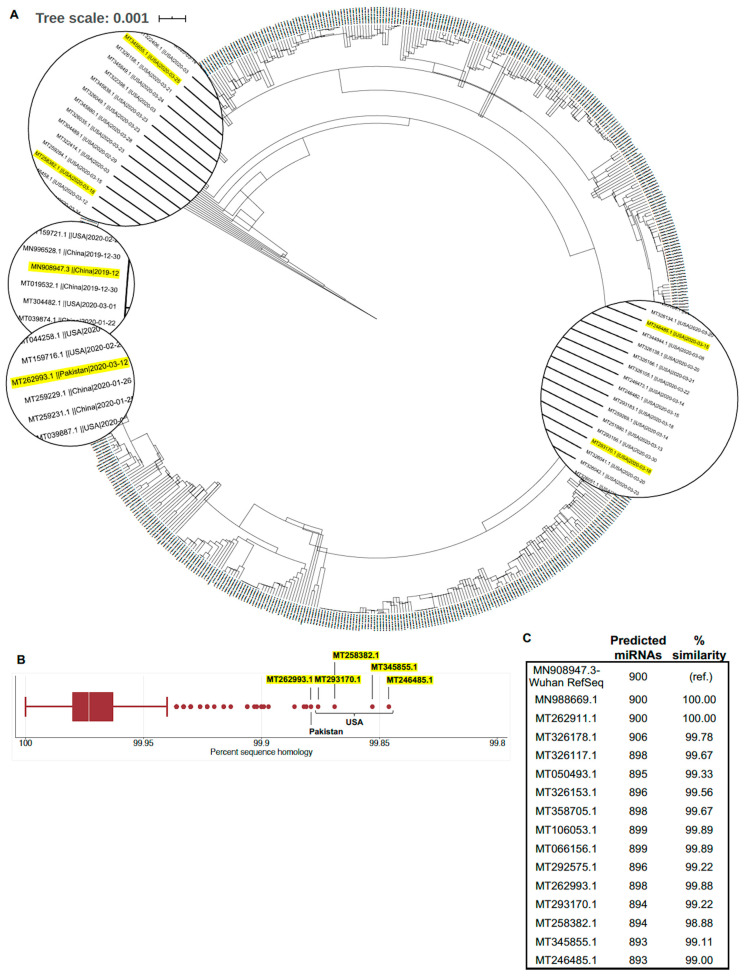
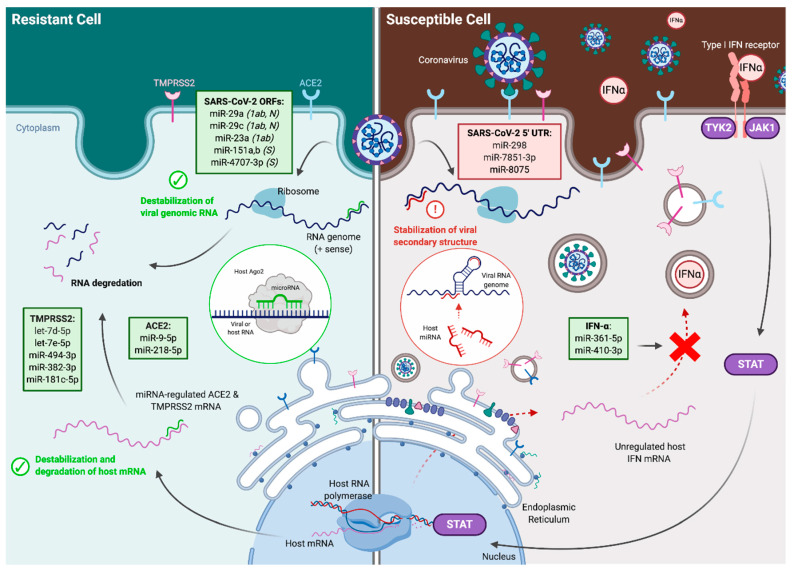
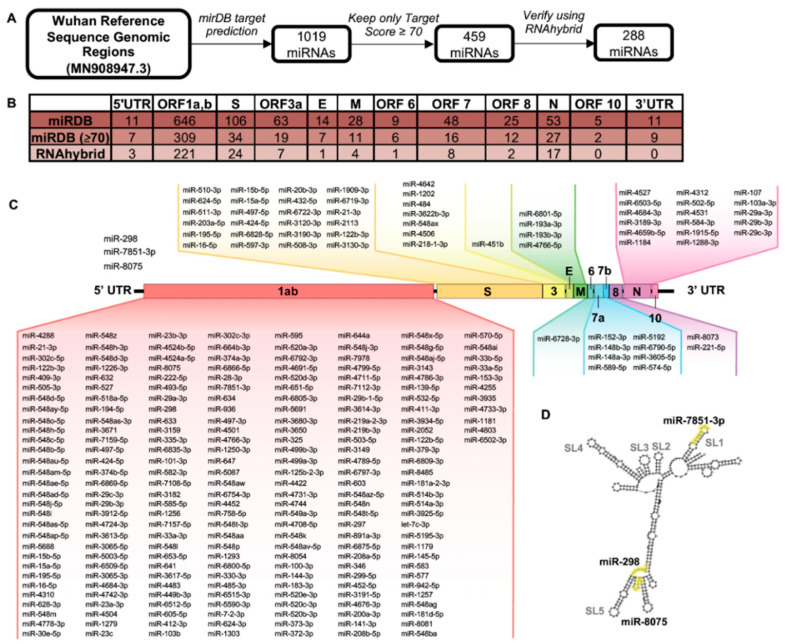
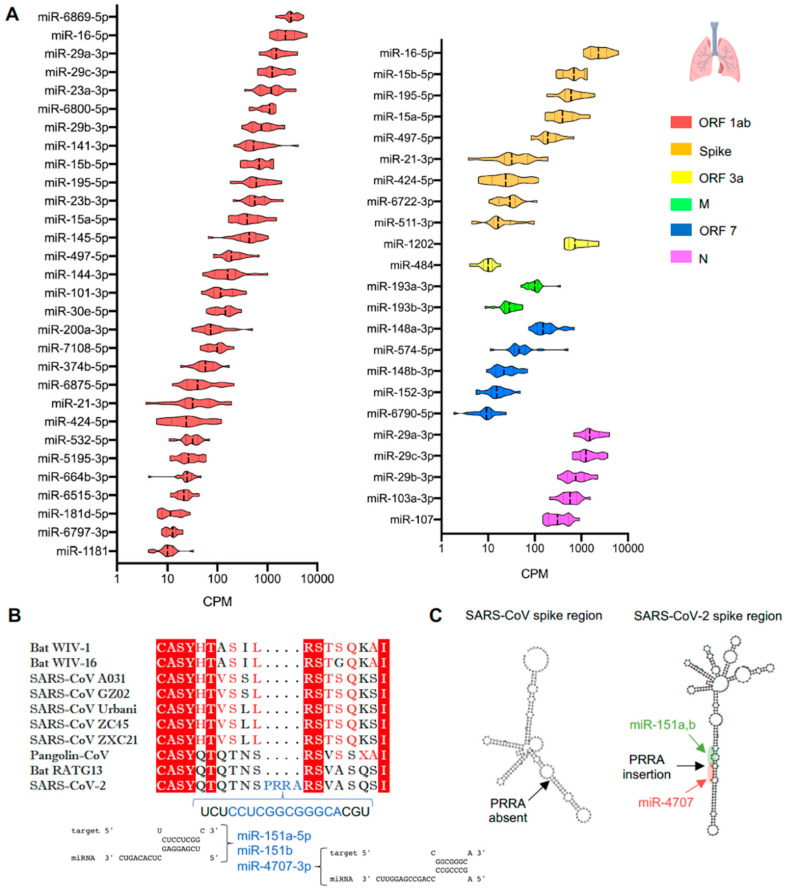
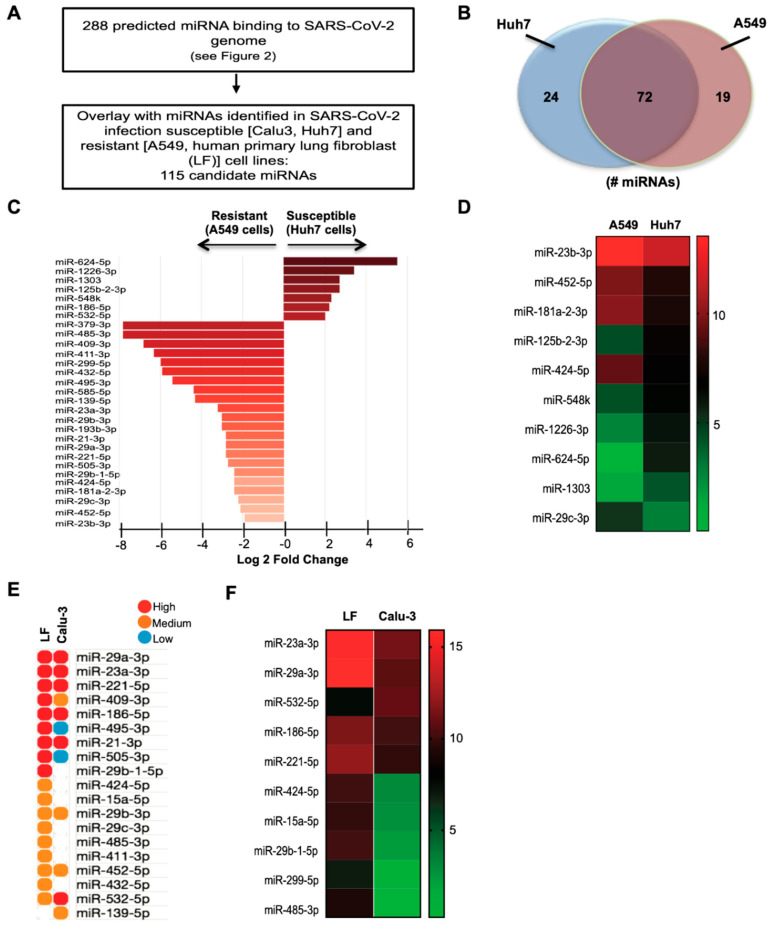
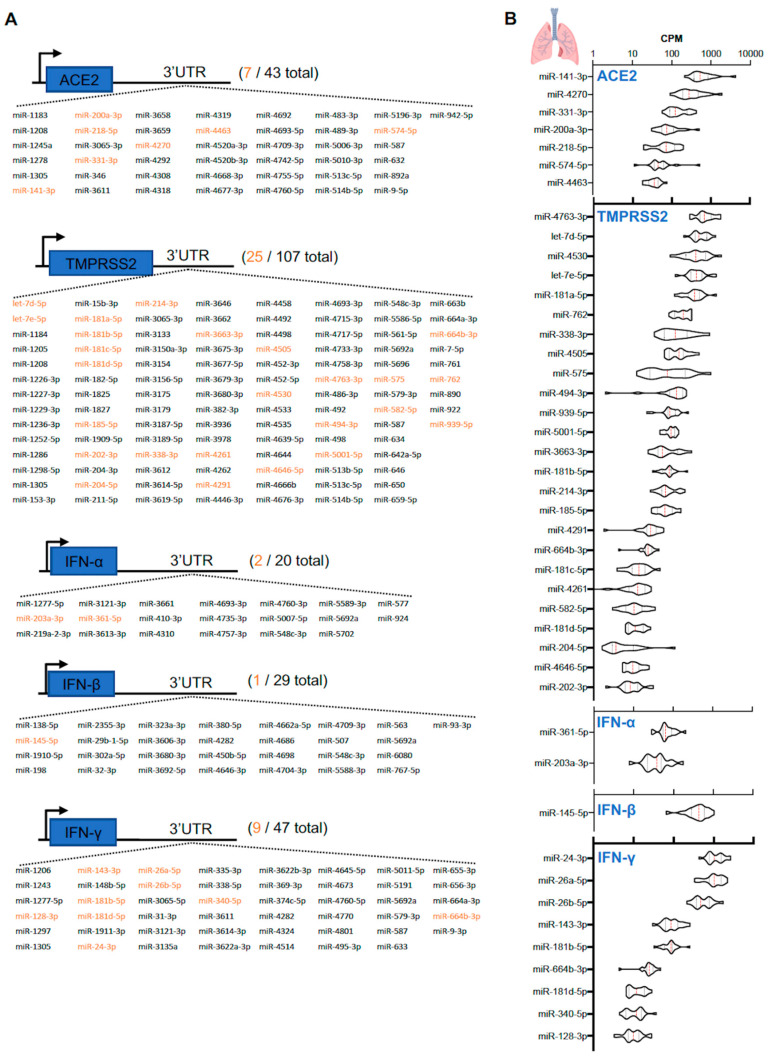
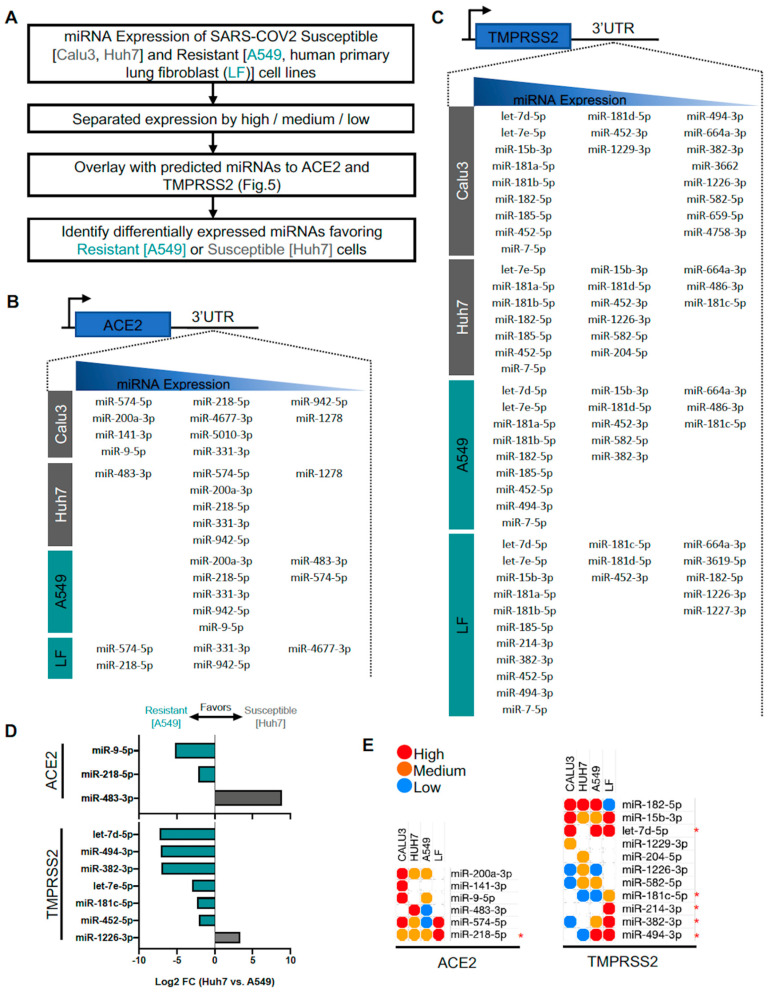
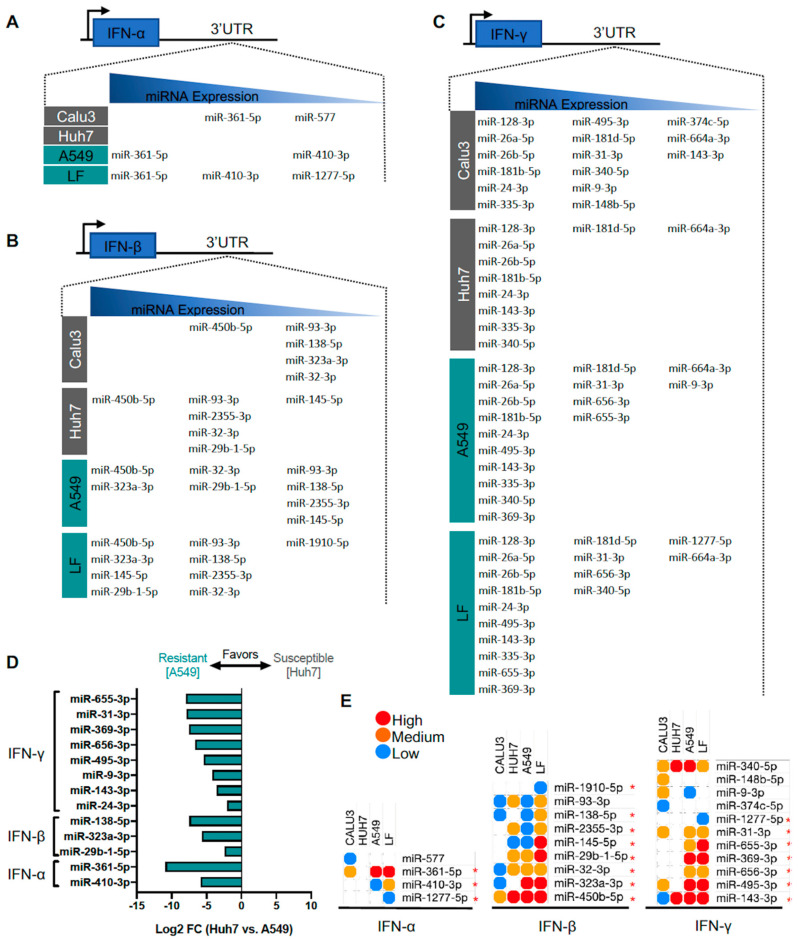
Rapid spread of severe acute respiratory syndrome coronavirus 2 (SARS-CoV-2), the virus responsible for coronavirus disease 2019 (COVID-19), has led to a global pandemic, failures of local health care systems, and global economic recession. MicroRNAs (miRNAs) have recently emerged as important regulators of viral pathogenesis, particularly among RNA viruses, but the impact of host miRNAs on SARS-CoV-2 infectivity remains unknown. In this study, we utilize the combination of powerful bioinformatic prediction algorithms and miRNA profiling to predict endogenous host miRNAs that may play important roles in regulating SARS-CoV-2 infectivity. We provide a collection of high-probability miRNA binding sites within the SARS-CoV-2 genome as well as within mRNA transcripts of critical viral entry proteins ACE2 and TMPRSS2 and their upstream modulators, the interferons (IFN). By utilizing miRNA profiling datasets of SARS-CoV-2-resistant and -susceptible cell lines, we verify the biological plausibility of the predicted miRNA-target RNA interactions. Finally, we utilize miRNA profiling of SARS-CoV-2-infected cells to identify predicted miRNAs that are differentially regulated in infected cells. In particular, we identify predicted miRNA binders to SARS-CoV-2 ORFs (miR-23a (1ab), miR-29a, -29c (1ab, N), miR-151a, -151b (S), miR-4707-3p (S), miR-298 (5'-UTR), miR-7851-3p (5'-UTR), miR-8075 (5'-UTR)), ACE2 3'-UTR (miR-9-5p, miR-218-5p), TMPRSS2 3'-UTR (let-7d-5p, -7e-5p, miR-494-3p, miR-382-3p, miR-181c-5p), and IFN-α 3'-UTR (miR-361-5p, miR-410-3p). Overall, this study provides insight into potential novel regulatory mechanisms of SARS-CoV-2 by host miRNAs and lays the foundation for future investigation of these miRNAs as potential therapeutic targets or biomarkers.
严重急性呼吸综合征冠状病毒 2(SARS-CoV-2)的迅速传播,导致了冠状病毒病 2019(COVID-19)的全球性大流行,使当地医疗保健系统崩溃,并导致全球经济衰退。microRNAs(miRNAs)最近成为病毒发病机制的重要调节剂,特别是在 RNA 病毒中,但宿主 miRNAs 对 SARS-CoV-2 感染性的影响尚不清楚。在这项研究中,我们利用强大的生物信息预测算法和 miRNA 谱分析相结合,预测可能在调节 SARS-CoV-2 感染性方面发挥重要作用的内源性宿主 miRNAs。我们提供了 SARS-CoV-2 基因组内以及关键病毒进入蛋白 ACE2 和 TMPRSS2 及其上游调节剂干扰素(IFN)的 mRNA 转录本中高概率 miRNA 结合位点的集合。通过利用 SARS-CoV-2 抗性和易感细胞系的 miRNA 谱分析数据集,我们验证了预测的 miRNA-靶 RNA 相互作用的生物学合理性。最后,我们利用 SARS-CoV-2 感染细胞的 miRNA 谱分析来鉴定在感染细胞中差异调节的预测 miRNA。特别是,我们鉴定了 SARS-CoV-2 ORFs 的预测 miRNA 结合物(miR-23a(1ab)、miR-29a、-29c(1ab、N)、miR-151a、-151b(S)、miR-4707-3p(S)、miR-298(5'-UTR)、miR-7851-3p(5'-UTR)、miR-8075(5'-UTR))、ACE2 3'-UTR(miR-9-5p、miR-218-5p)、TMPRSS2 3'-UTR(let-7d-5p、-7e-5p、miR-494-3p、miR-382-3p、miR-181c-5p)和 IFN-α 3'-UTR(miR-361-5p、miR-410-3p)。总的来说,这项研究为宿主 miRNAs 对 SARS-CoV-2 的潜在新调控机制提供了深入了解,并为进一步研究这些 miRNAs 作为潜在的治疗靶点或生物标志物奠定了基础。