Ku Chia-Chi, Lin Cheng-Yu, Yang Chin-Rur, Yang Yu-Chih, Chen Po-Ling, Lin Yi-Te, Wang Pei-Ru, Lee Min-Shi, Liang Shu-Mei, Hsiao Pei-Wen
Graduate Institute of Immunology, National Taiwan University, College of Medicine, Taipei 10051, Taiwan.
Agricultural Biotechnology Research Center, Academia Sinica, 128 Academia Rd., Section 2, Nankang, Taipei 11529, Taiwan.
Vaccine X. 2024 Sep 6;20:100552. doi: 10.1016/j.jvacx.2024.100552. eCollection 2024 Oct.
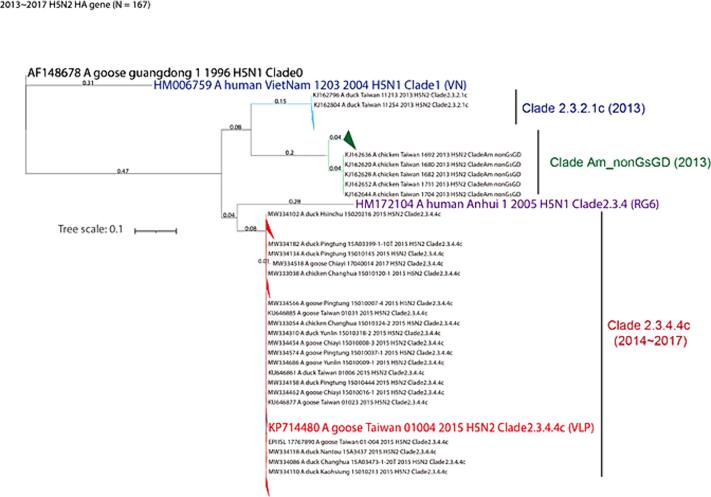
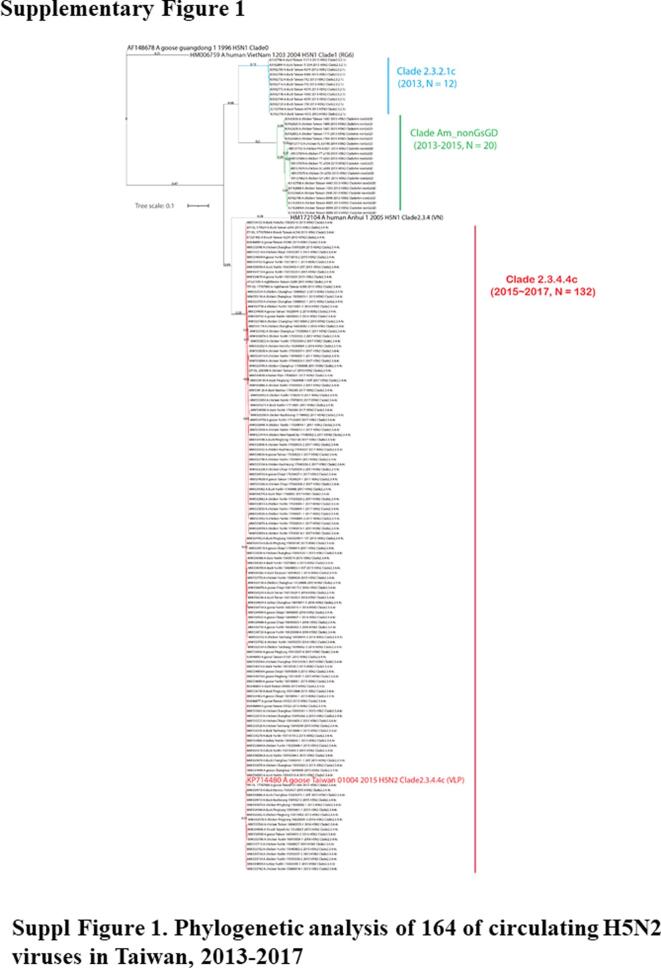
Recent outbreaks of clade 2.3.4.4b highly pathogenic avian influenza (HPAI) H5N1 viruses in regions previously less affected since 2020 have raised global concerns. Implementing mass immunization or ring vaccination in poultry should be a countermeasure ready to contain disease outbreaks. This study focuses on developing a recombinant H5N2 vaccine based on virus-like particles (VLPs) against clade 2.3.4.4c, the predominant HPAI subclade in Taiwan since its emergence, leading to a large outbreak in 2015.
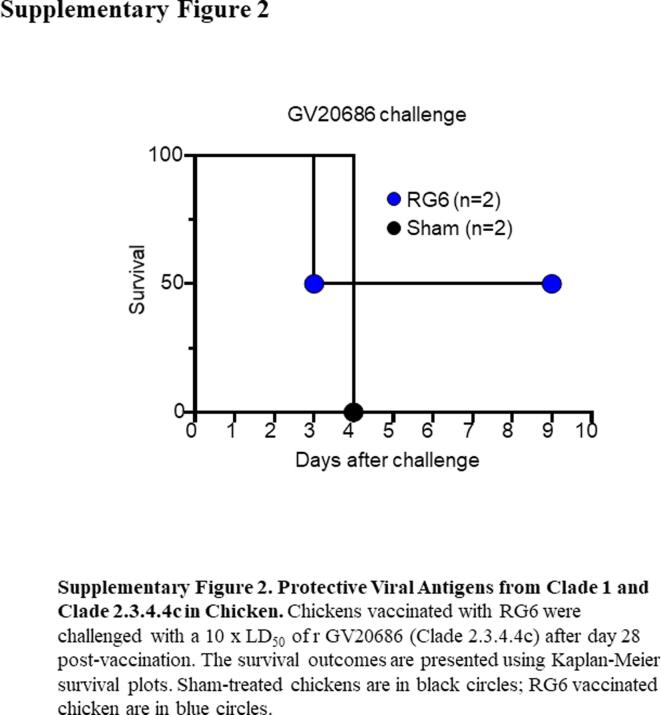
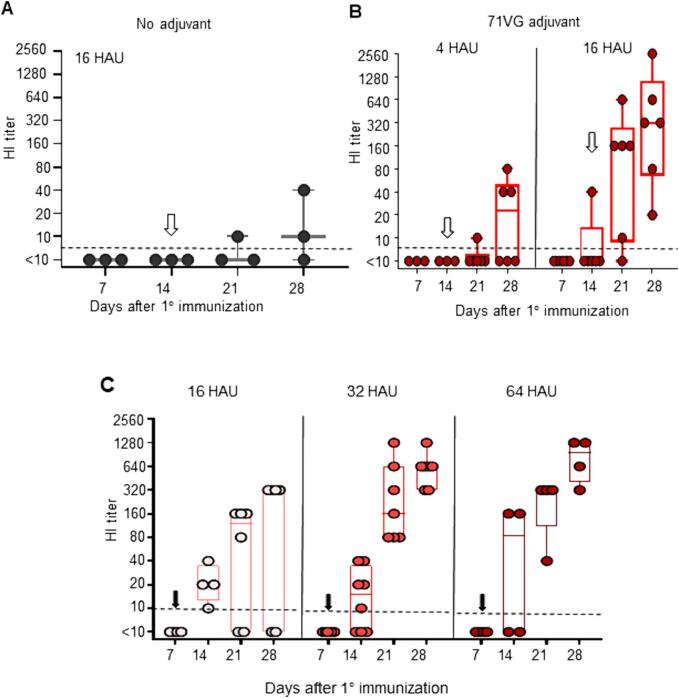
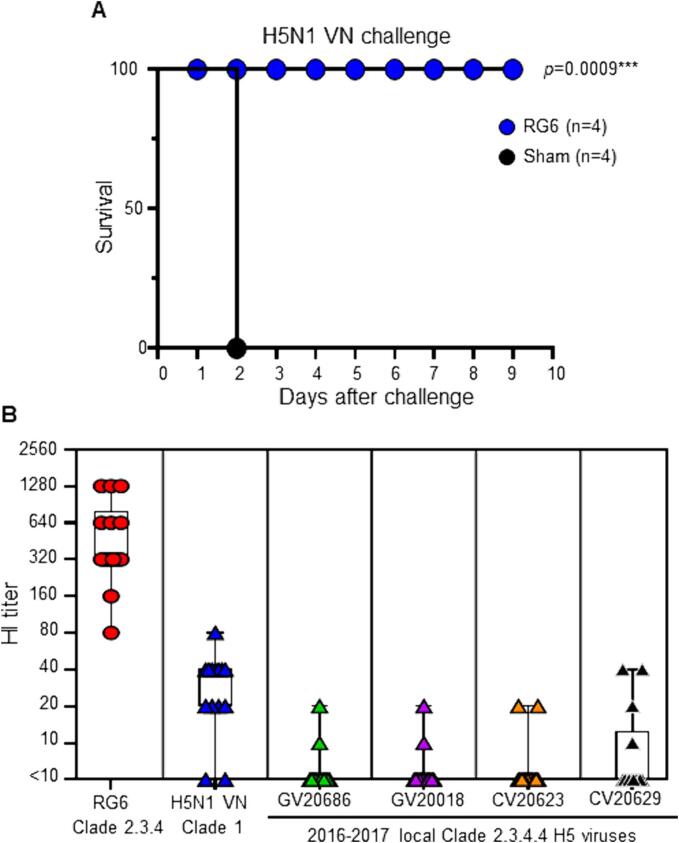
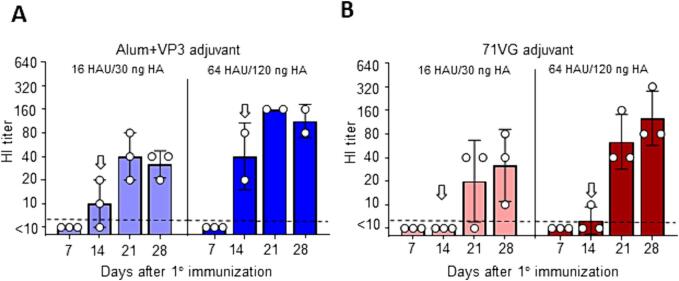
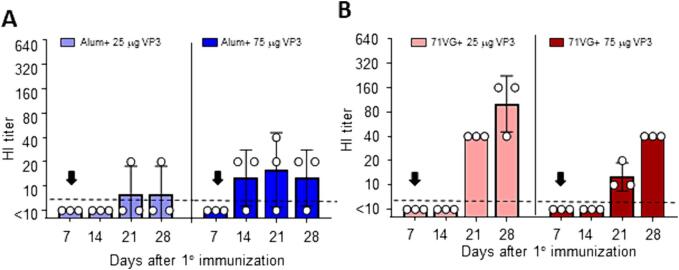
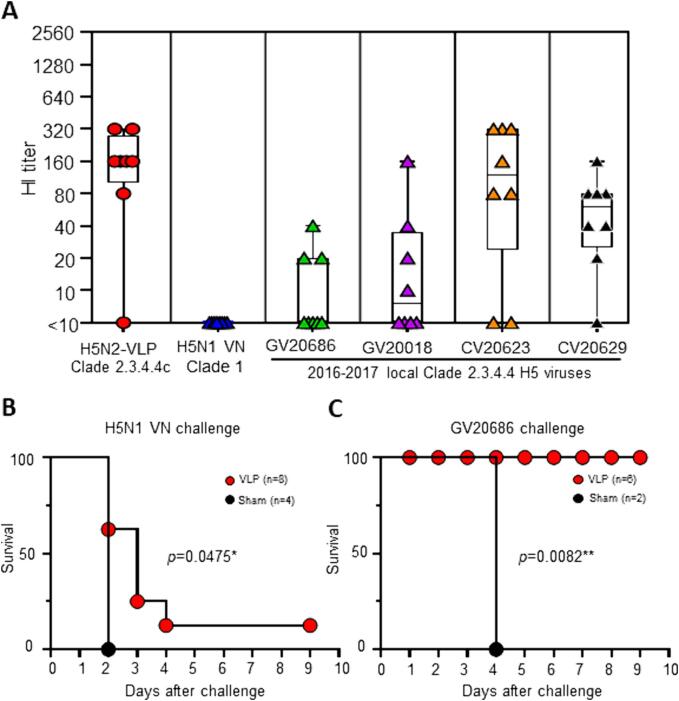
The study aimed to confirm the effectiveness of clade 2.3.4.4c H5N2 VLPs in protecting chickens and identify the best adjuvants for the VLP vaccine. We used Montanide 71VG-adjuvanted inactivated RG6 to establish the immunization protocol, followed by prime-boost H5N2-VLP immunizations. We compared adjuvants: 71VG, 71VG with VP3, and Alum with VP3. Serum samples were tested for antibodies against homologous vaccine antigens and cross-clade antigens by hemagglutination inhibition (HI) assays. Finally, we evaluated the protective efficacy by lethally challenging immunized chickens with H5 viruses from clade 1 or 2.3.4.4c.
Poultry adjuvant 71VG significantly enhanced antibody responses in chickens with inactivated RG6 compared to unadjuvanted inactivated virus. While increasing antigen dosage enhanced 71VG adjuvanted RG6-induced antibody titers, the vaccine displayed minimal cross-reactivity against locally circulating HPAI H5N2. In contrast, H5N2-VLP containing the HA protein of clade 2.3.4.4c, adjuvanted with (FMDV) VP3 in 71VG, significantly promoted HI antibody responses. All H5N2-VLP immunized chickens survived lethal challenges with the local clade 2.3.4.4c H5 strain.
The study demonstrated the immunogenic potential of the VLP vaccine in chickens. Our findings offer insights for optimizing VLP vaccines, allowing the incorporation of the HA of currently circulating H5 viruses to effectively mitigate the impact of the rapidly evolving clade 2.3.4.4 H5 outbreaks.
2020年以来,2.3.4.4b分支高致病性禽流感(HPAI)H5N1病毒在以往受影响较小的地区爆发,引起了全球关注。在家禽中实施大规模免疫或环状疫苗接种应是控制疾病爆发的一项应对措施。本研究重点研发一种基于病毒样颗粒(VLP)的重组H5N2疫苗,用于对抗2.3.4.4c分支,该分支自出现以来一直是台湾地区高致病性禽流感的主要亚分支,并在2015年导致了一次大规模疫情爆发。
本研究旨在确认2.3.4.4c分支H5N2 VLP在保护鸡方面的有效性,并确定VLP疫苗的最佳佐剂。我们使用Montanide 71VG佐剂灭活的RG6建立免疫方案,随后进行H5N2-VLP的加强免疫。我们比较了几种佐剂:71VG、71VG与VP3、明矾与VP3。通过血凝抑制(HI)试验检测血清样本中针对同源疫苗抗原和跨分支抗原的抗体。最后,我们用1分支或2.3.4.4c分支的H5病毒对免疫后的鸡进行致死性攻毒,评估其保护效果。
与未加佐剂的灭活病毒相比,家禽佐剂71VG显著增强了灭活RG6免疫鸡的抗体反应。虽然增加抗原剂量可提高71VG佐剂的RG6诱导的抗体滴度,但该疫苗对本地流行的高致病性禽流感H5N2的交叉反应性最小。相比之下,在71VG中添加口蹄疫病毒(FMDV)VP3佐剂的含有2.3.4.4c分支HA蛋白的H5N2-VLP显著促进了HI抗体反应。所有接种H5N2-VLP的鸡在受到本地2.3.4.4c分支H5毒株的致死性攻毒后均存活。
该研究证明了VLP疫苗在鸡中的免疫原性潜力。我们的研究结果为优化VLP疫苗提供了见解,使目前流行的H5病毒的HA能够被纳入其中,以有效减轻快速演变的2.3.4.4分支H5疫情的影响。