Rana Md Masud, Siddiqee Mohammad Safaet, Sakib Md Nazmus, Ahamed Md Rafi
Department of Management, University of Dhaka, Bangladesh.
Department of International Business, University of Dhaka, Bangladesh.
Heliyon. 2024 Sep 10;10(18):e37569. doi: 10.1016/j.heliyon.2024.e37569. eCollection 2024 Sep 30.
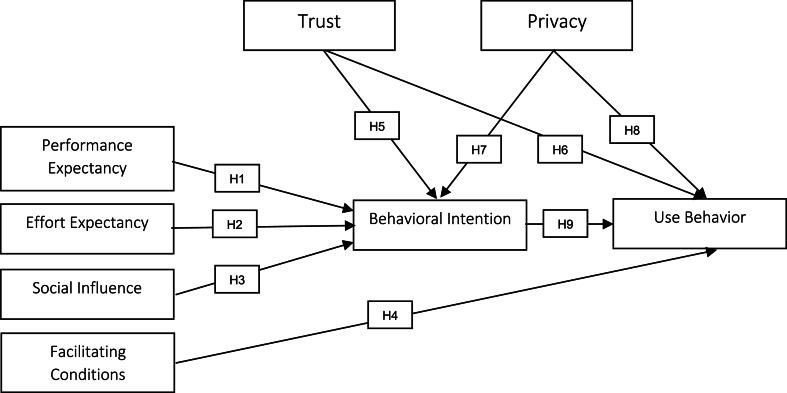
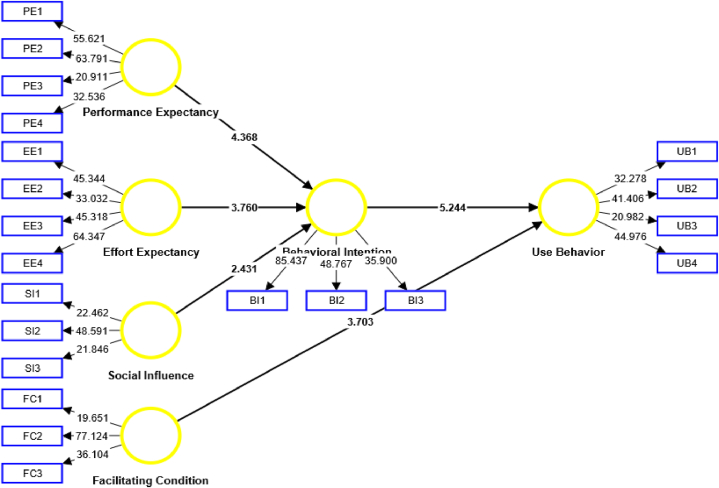
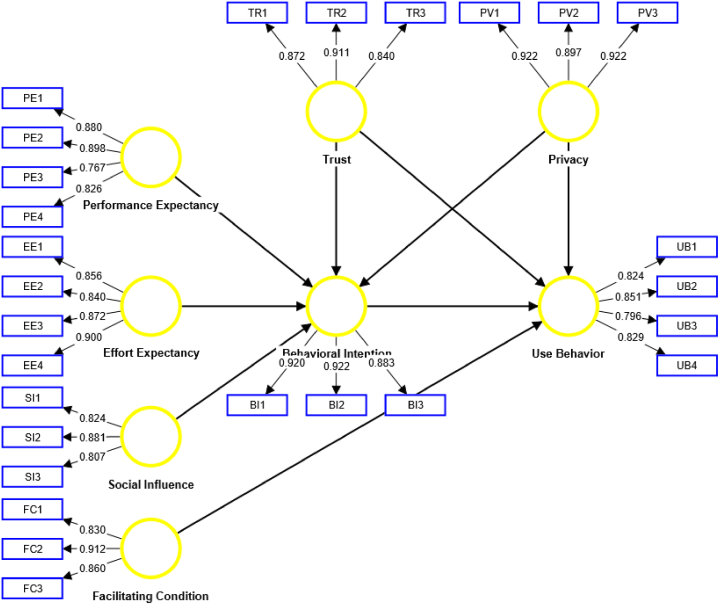
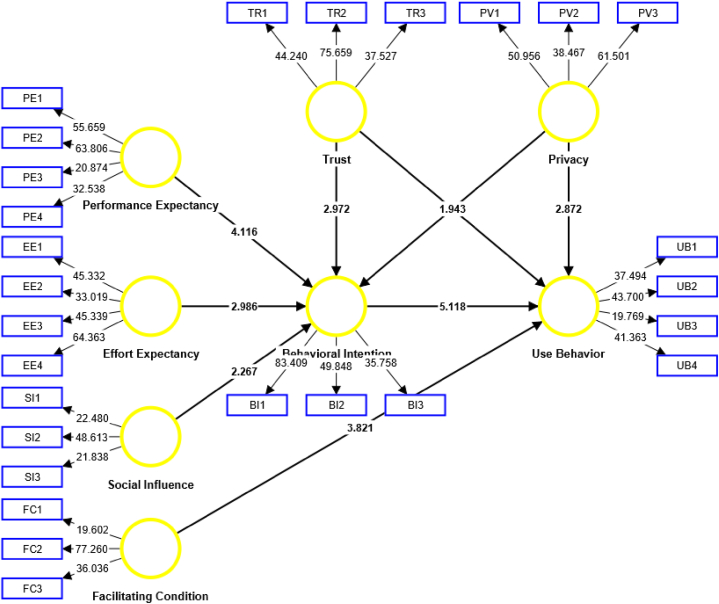
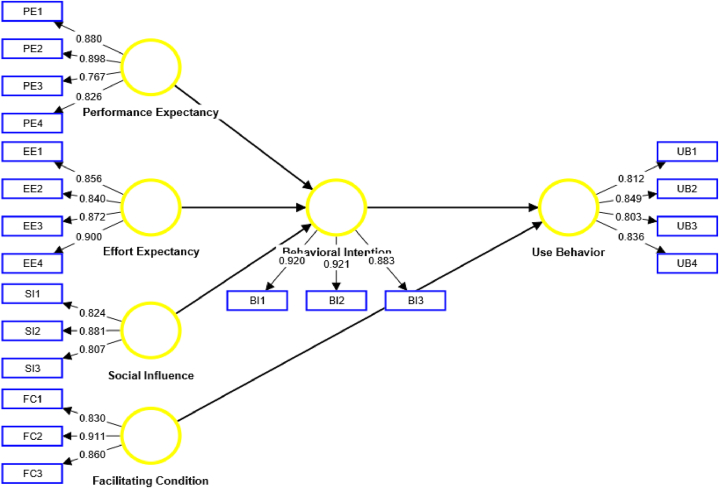
The rapid evolution of Artificial Intelligence (AI) and its widespread adoption have given rise to a critical need for understanding the underlying factors that shape users' behavioral intentions. Therefore, the main objective of this study is to explain user perceived behavioral intentions and use behavior of AI technologies for academic purposes in a developing country. This study has adopted the unified theory of acceptance and use of technology (UTAUT) model and extended it with two dimensions: trust and privacy. Data have been collected from 310 AI users including teachers, researchers, and students. This study finds that users' behavioral intention is positively and significantly associated with trust, social influence, effort expectancy, and performance expectancy. Privacy, on the other hand, has a negative yet significant relationship with behavioral intention unveiling that concerns over privacy can deter users from intending to use AI technologies which is a valuable insight for developers and educators. In determining use behavior, facilitating condition, behavioral intention, and privacy have significant positive impact. This study hasn't found any significant relationship between trust and use behavior elucidating that service providers should have unwavering focus on security measures, credible endorsements, and transparency to build user confidence. In an era dominated by the fourth industrial revolution, this research underscores the pivotal roles of trust and privacy in technology adoption. In addition, this study sheds light on users' perspective to effectively align AI-based technologies with the education system of developing countries. The practical implications encompass insights for service providers, educational institutions, and policymakers, facilitating the smooth adoption of AI technologies in developing countries while emphasizing the importance of trust, privacy, and ongoing refinement.
人工智能(AI)的快速发展及其广泛应用引发了对理解影响用户行为意图的潜在因素的迫切需求。因此,本研究的主要目的是解释发展中国家用户对人工智能技术用于学术目的的感知行为意图和使用行为。本研究采用了技术接受与使用统一理论(UTAUT)模型,并从信任和隐私两个维度对其进行了扩展。数据收集自310名人工智能用户,包括教师、研究人员和学生。本研究发现,用户的行为意图与信任、社会影响、努力期望和绩效期望呈正相关且具有显著意义。另一方面,隐私与行为意图呈负相关但具有显著关系,这表明对隐私的担忧会阻碍用户使用人工智能技术的意图,这对开发者和教育工作者来说是一个有价值的见解。在确定使用行为时,便利条件、行为意图和隐私具有显著的积极影响。本研究未发现信任与使用行为之间存在任何显著关系,这表明服务提供商应始终专注于安全措施、可靠的背书和透明度,以建立用户信心。在由第四次工业革命主导的时代,本研究强调了信任和隐私在技术采用中的关键作用。此外,本研究揭示了用户的观点,以便有效地使基于人工智能的技术与发展中国家的教育系统相匹配。实际意义包括为服务提供商、教育机构和政策制定者提供见解,促进人工智能技术在发展中国家的顺利采用,同时强调信任、隐私和持续改进的重要性。