Liu Menghua, Wu Anping, Liu Jiaxin, Huang Hen-Wei, Li Yang, Shi Qing, Huang Qiang, Wang Huaping
Intelligent Robotics Institute, School of Mechatronical Engineering, Beijing Institute of Technology, Beijing 100081, China.
Laboratory for Translational Engineering, Harvard Medical School, Cambridge, MA 02139, USA.
iScience. 2024 Sep 4;27(10):110885. doi: 10.1016/j.isci.2024.110885. eCollection 2024 Oct 18.
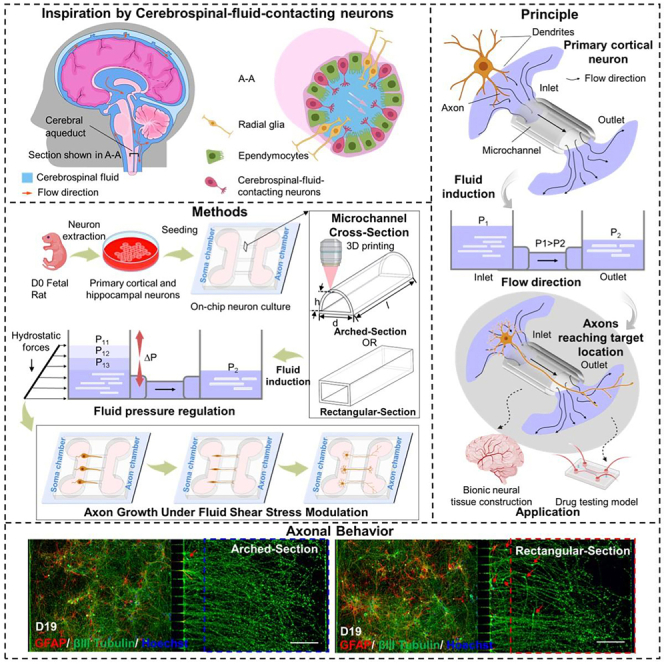
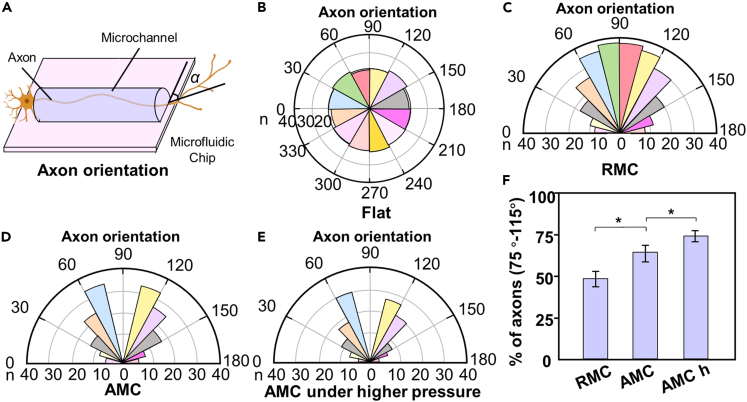
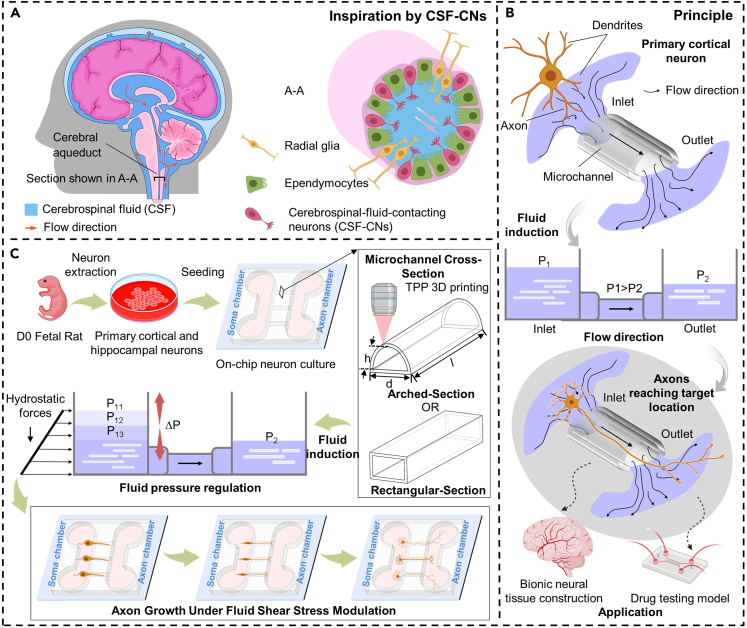
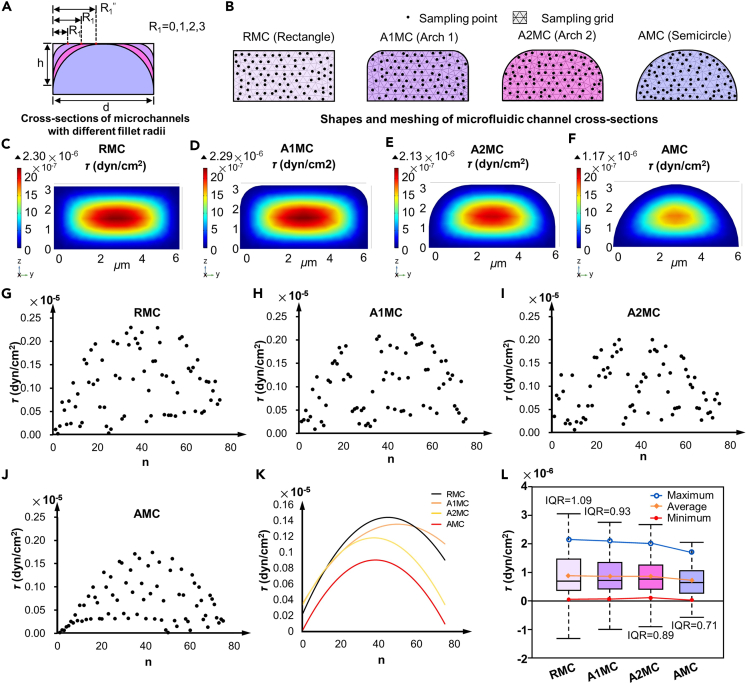
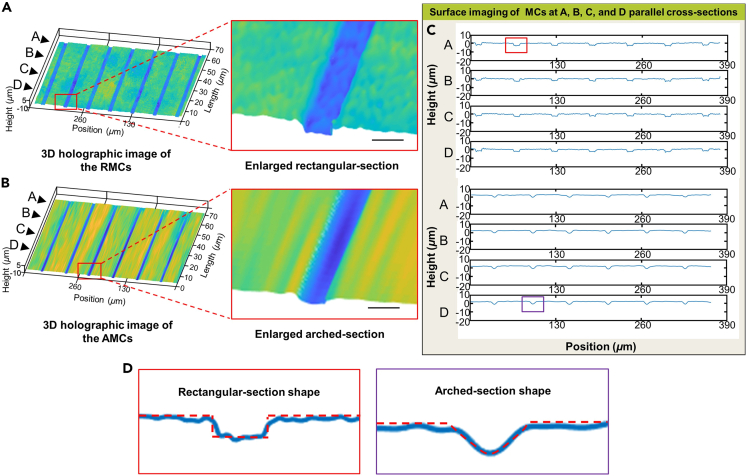
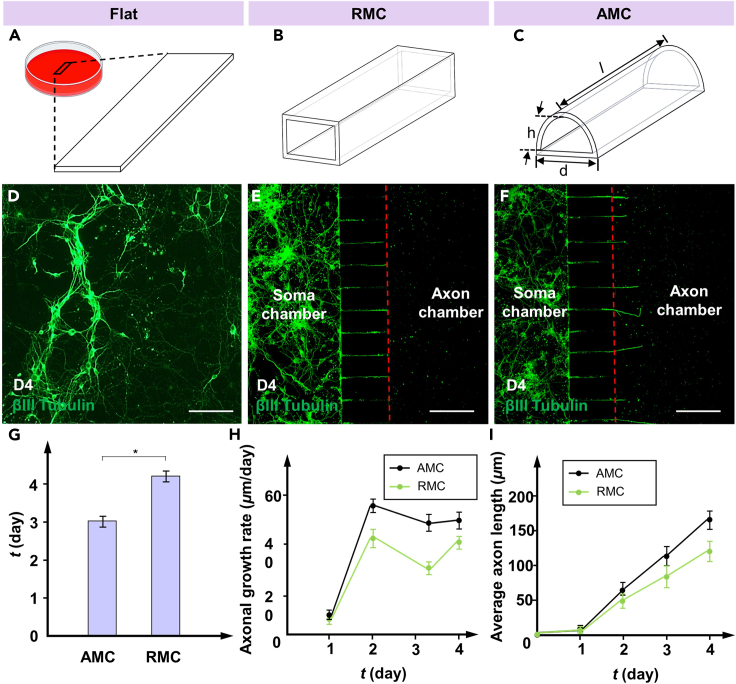
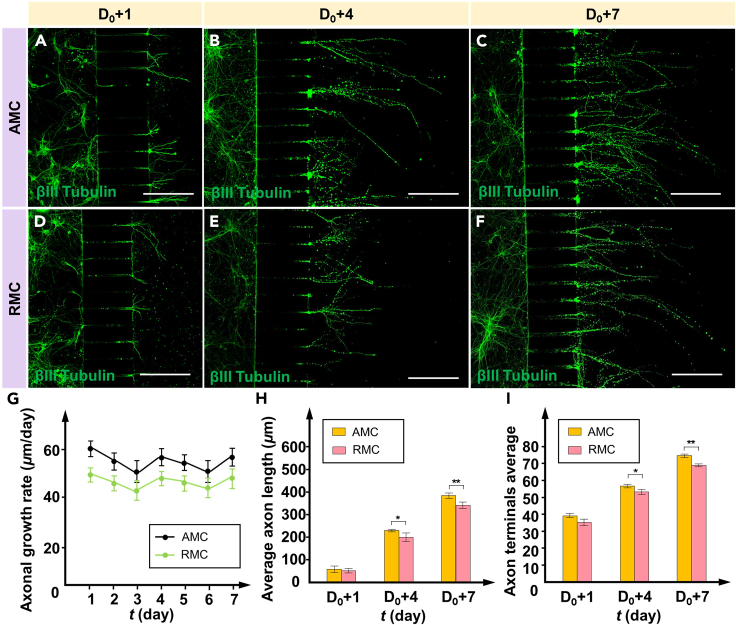
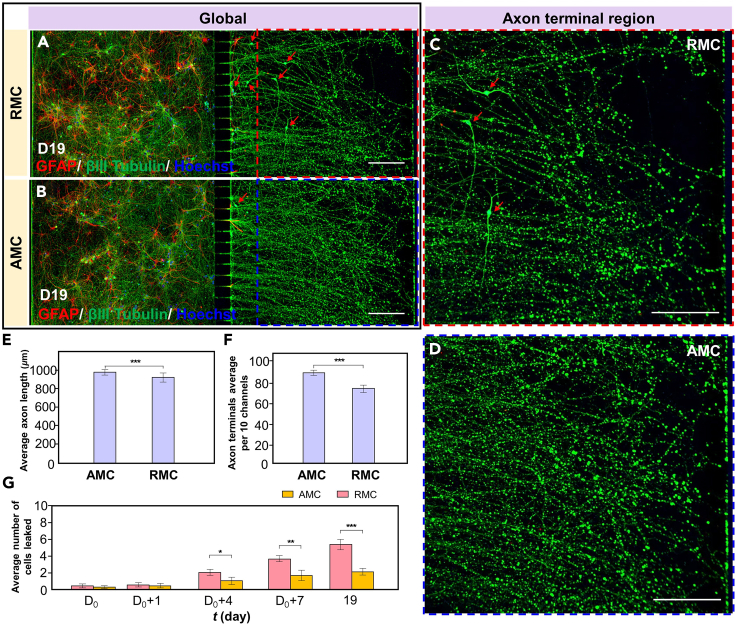
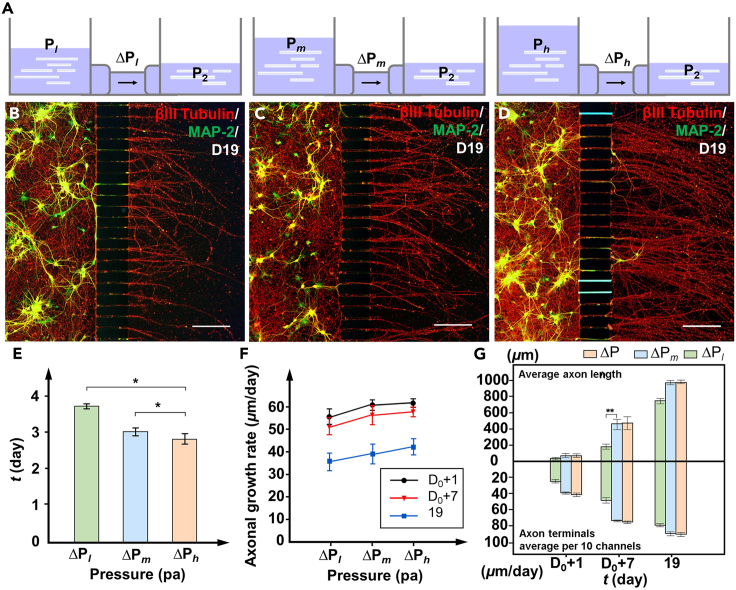
Uniformly distributed fluid shear stress can promote axonal growth, aiding in the efficient construction of functional neural interfaces. However, challenges remain in the construction of the micro-scale environment with a uniform fluidic stress distribution. In this study, we designed and fabricated a microfluidic chip with arched-section microfluidic channels (AMCs) to increase primary cortical neuron growth rate and terminal number by constructing a uniform-stress-distributed environment. Inspired by the three-dimensional (3D) microenvironment where cerebrospinal-fluid-contacting neurons are located, the surface curvature of the traditional rectangular-section microfluidic channel (RMC) was adjusted to construct structures with 3D curved surfaces. Compared with those on the RMC chips, the average growth rate of the axons on the AMC chips increased by 8.9% within 19 days, and the average number of terminals increased by 14.9%. This platform provides a structure that can effectively promote neuron growth and has potential in constructing more complex functional neural interfaces.
均匀分布的流体剪切应力可以促进轴突生长,有助于高效构建功能性神经接口。然而,在构建具有均匀流体应力分布的微尺度环境方面仍然存在挑战。在本研究中,我们设计并制造了一种带有拱形截面微流控通道(AMC)的微流控芯片,通过构建均匀应力分布环境来提高原代皮层神经元的生长速率和终末数量。受脑脊液接触神经元所处的三维(3D)微环境启发,调整传统矩形截面微流控通道(RMC)的表面曲率以构建具有3D曲面的结构。与RMC芯片上的轴突相比,AMC芯片上的轴突在19天内平均生长速率提高了8.9%,终末平均数量增加了14.9%。该平台提供了一种能够有效促进神经元生长的结构,在构建更复杂的功能性神经接口方面具有潜力。