Liaoning Key Laboratory of Marine Sensing and Intelligent Detection, Department of Information Science and Technology, Dalian Maritime University, Dalian 116026, China.
2020 X-Lab, Shanghai Institute of Microsystem and Information Technology, Chinese Academy of Sciences, Shanghai 200050, China.
Biosensors (Basel). 2024 Aug 27;14(9):417. doi: 10.3390/bios14090417.
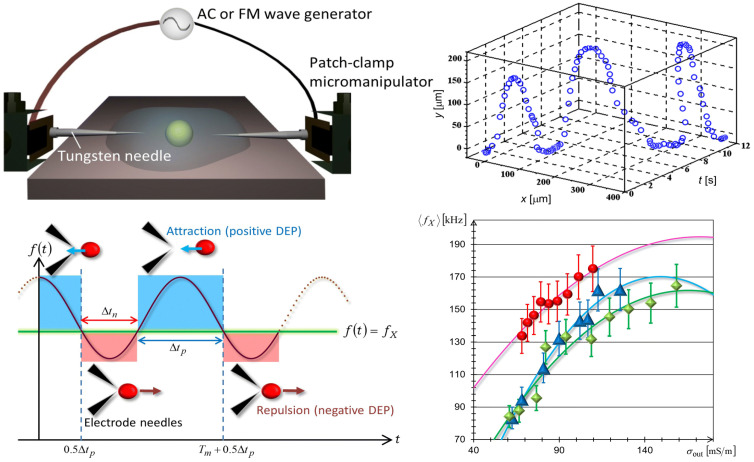
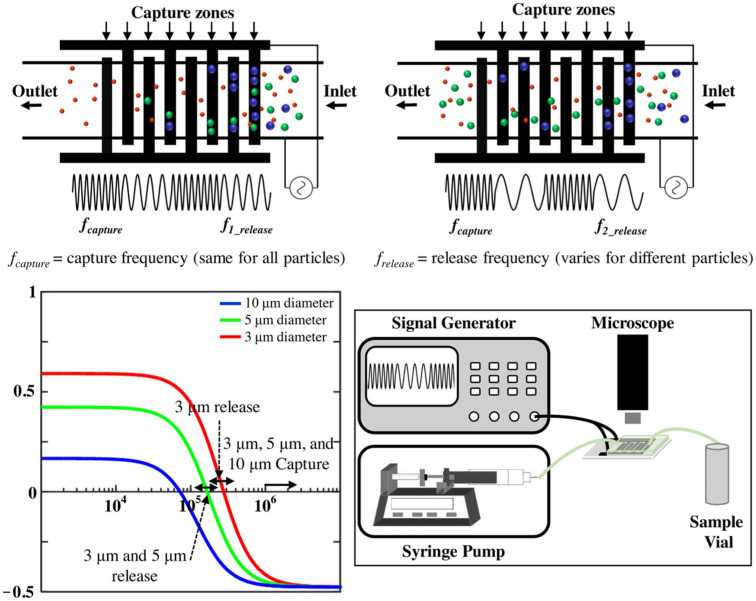
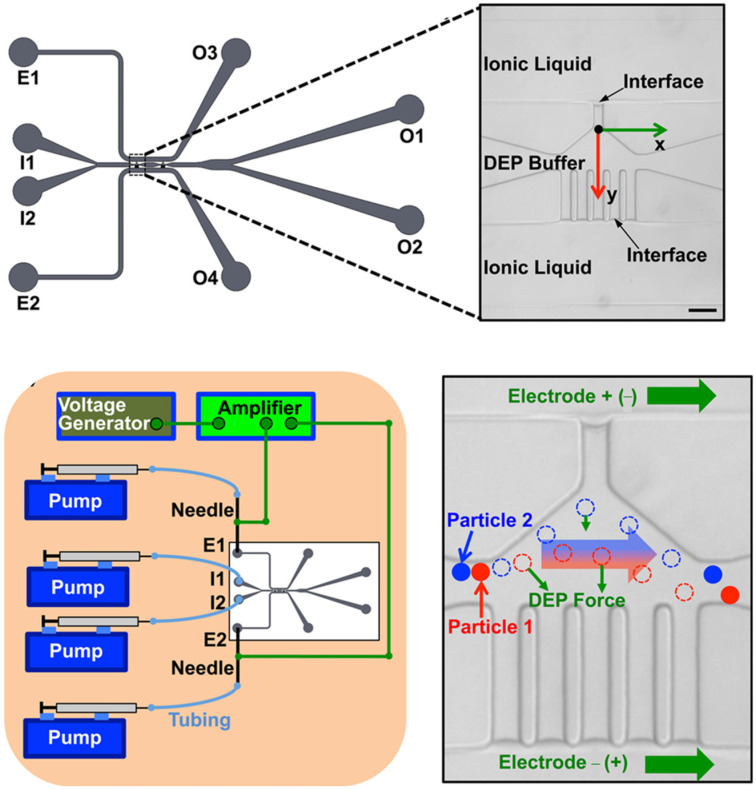
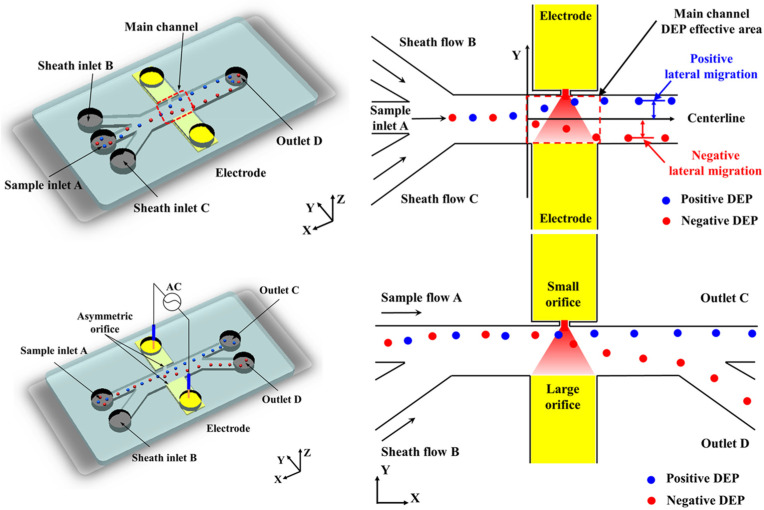
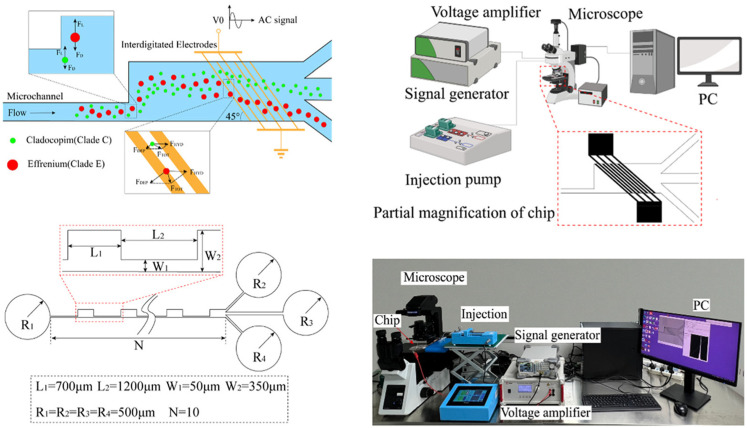
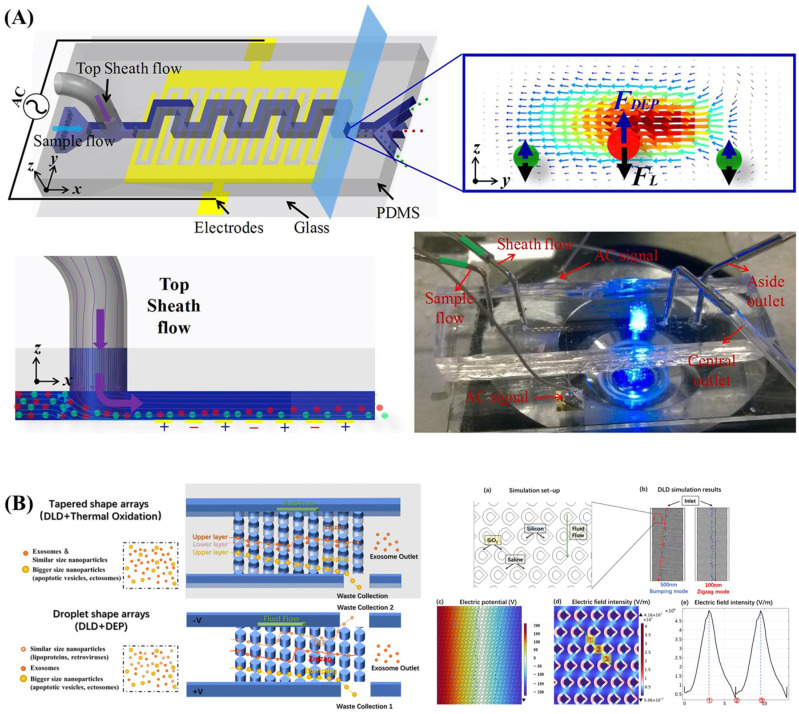
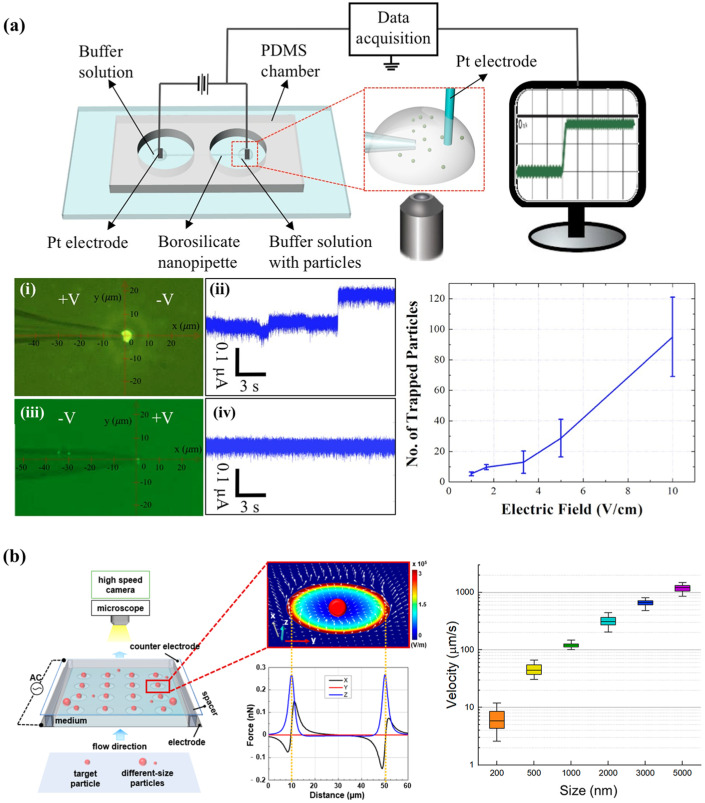
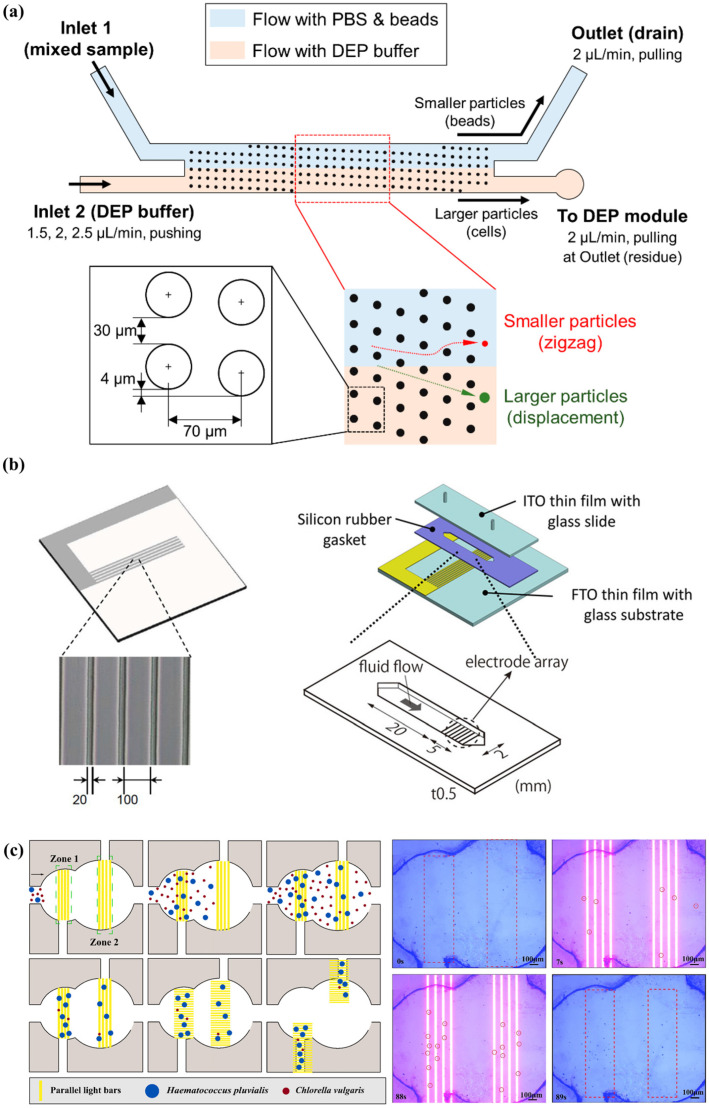
Dielectrophoresis (DEP) is an advanced microfluidic manipulation technique that is based on the interaction of polarized particles with the spatial gradient of a non-uniform electric field to achieve non-contact and highly selective manipulation of particles. In recent years, DEP has made remarkable progress in the field of microfluidics, and it has gradually transitioned from laboratory-scale research to high-throughput manipulation in practical applications. This paper reviews the recent advances in dielectric manipulation and separation of microparticles and biological cells and discusses in detail the design of chip structures for the two main methods, direct current dielectrophoresis (DC-DEP) and alternating current dielectrophoresis (AC-DEP). The working principles, technical implementation details, and other improved designs of electrode-based and insulator-based chips are summarized. Functional customization of DEP systems with specific capabilities, including separation, capture, purification, aggregation, and assembly of particles and cells, is then performed. The aim of this paper is to provide new ideas for the design of novel DEP micro/nano platforms with the desired high throughput for further development in practical applications.
介电泳(DEP)是一种先进的微流控操纵技术,它基于极化粒子与非均匀电场的空间梯度之间的相互作用,实现对粒子的非接触和高度选择性的操纵。近年来,DEP 在微流控领域取得了显著的进展,已经逐渐从实验室规模的研究过渡到实际应用中的高通量操纵。本文综述了微粒子和生物细胞的介电操纵和分离方面的最新进展,详细讨论了两种主要方法——直流介电泳(DC-DEP)和交流介电泳(AC-DEP)的芯片结构设计。总结了基于电极和基于绝缘体的芯片的工作原理、技术实现细节和其他改进设计。然后对 DEP 系统进行功能定制,使其具有特定的功能,包括粒子和细胞的分离、捕获、纯化、聚集和组装。本文的目的是为具有所需高通量的新型 DEP 微/纳平台的设计提供新的思路,以促进其在实际应用中的进一步发展。