CAS Key Laboratory for Biomedical Effects of Nanomaterials and Nanosafety, Institute of High Energy Physics, Chinese Academy of Sciences and New Cornerstone Science Laboratory, CAS Center for Excellence in Nanoscience, National Center for Nanoscience and Technology of China, Beijing, 100049, PR China.
Sino-Danish College, University of Chinese Academy of Sciences, Beijing, 100049, PR China.
Nat Commun. 2024 Sep 27;15(1):8349. doi: 10.1038/s41467-024-52609-7.
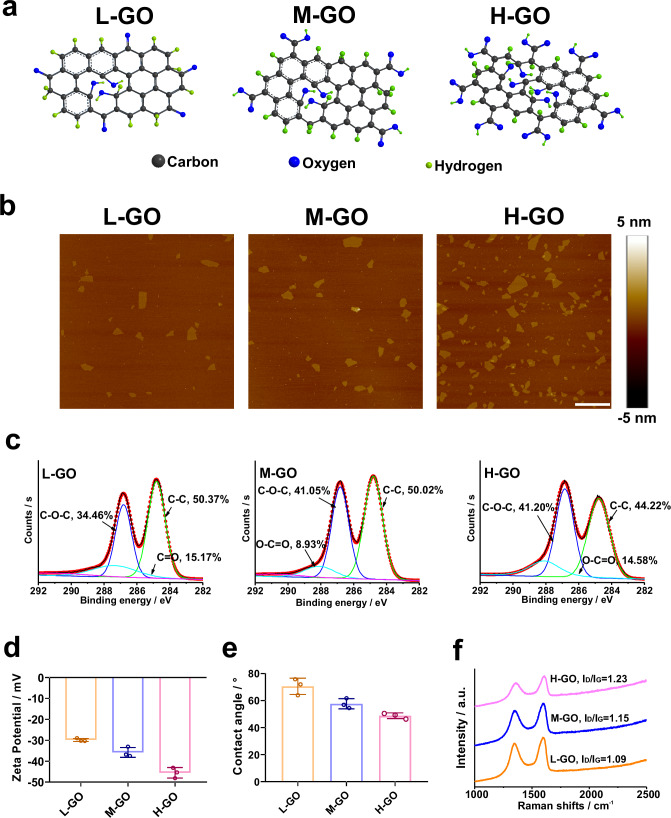
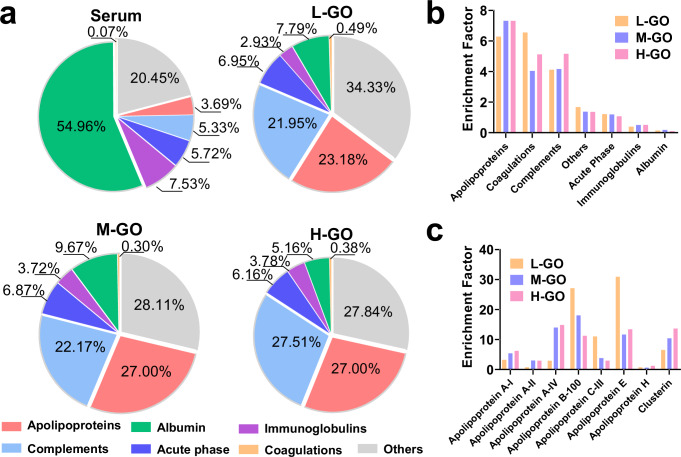
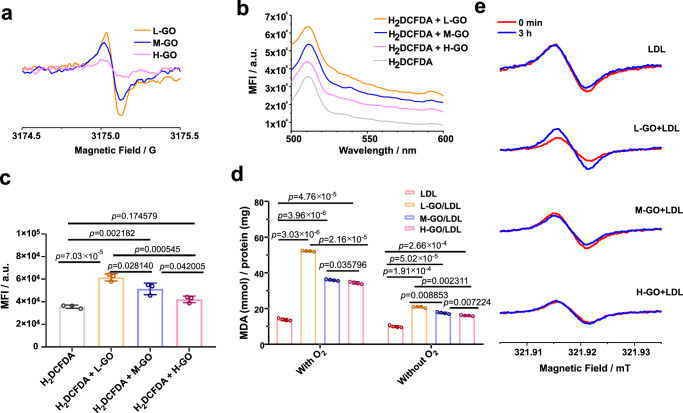
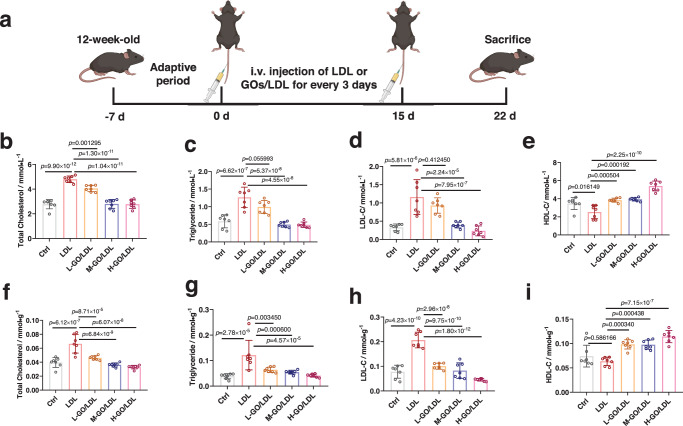
Understanding the interface between nanomaterials and lipoproteins is crucial for gaining insights into their impact on lipoprotein structure and lipid metabolism. Here, we use graphene oxide (GOs) nanosheets as a controlled carbon nanomaterial model to study how surface properties influence lipoprotein corona formation and show that GOs have strong binding affinity with low-density lipoprotein (LDL). We use advanced techniques including X-ray reflectivity, circular dichroism, and molecular simulations to explore the interfacial interactions between GOs and LDL. Specifically, hydrophobic GOs preferentially associate with LDL's lipid components, whereas hydrophilic GOs tend to bind with apolipoproteins. Furthermore, these GOs distinctly modulate a variety of lipid metabolism pathways, including LDL recognition, uptake, hydrolysis, efflux, and lipid droplet formation. This study underscores the importance of structure analysis at the nano-biomolecule interface, emphasizing how nanomaterials' surface properties critically influence cellular lipid metabolism. These insights will inspire the design and application of future biocompatible nanomaterials and nanomedicines.
了解纳米材料与脂蛋白之间的相互作用对于深入了解它们对脂蛋白结构和脂质代谢的影响至关重要。在这里,我们使用氧化石墨烯 (GOs) 纳米片作为一种可控的碳纳米材料模型,研究表面性质如何影响脂蛋白冠的形成,并表明 GOs 与低密度脂蛋白 (LDL) 具有很强的结合亲和力。我们使用包括 X 射线反射率、圆二色性和分子模拟在内的先进技术来探索 GOs 与 LDL 之间的界面相互作用。具体而言,疏水性 GOs 优先与 LDL 的脂质成分结合,而亲水性 GOs 则倾向于与载脂蛋白结合。此外,这些 GOs 明显调节多种脂质代谢途径,包括 LDL 的识别、摄取、水解、外排和脂滴形成。这项研究强调了在纳米-生物分子界面进行结构分析的重要性,突出了纳米材料表面性质如何对细胞脂质代谢产生关键影响。这些见解将激发未来生物相容性纳米材料和纳米药物的设计和应用。