El-Naggar Noura El-Ahmady, Shweqa Nada S, Abdelmigid Hala M, Alyamani Amal A, Elshafey Naglaa, Soliman Hoda M, Heikal Yasmin M
Department of Bioprocess Development, Genetic Engineering and Biotechnology Research Institute, City of Scientific Research and Technological Applications (SRTA-City), New Borg El Arab City 21934, Egypt.
Botany Department, Faculty of Science, Mansoura University, Mansoura 35516, Egypt.
Biomolecules. 2024 Sep 18;14(9):1170. doi: 10.3390/biom14091170.
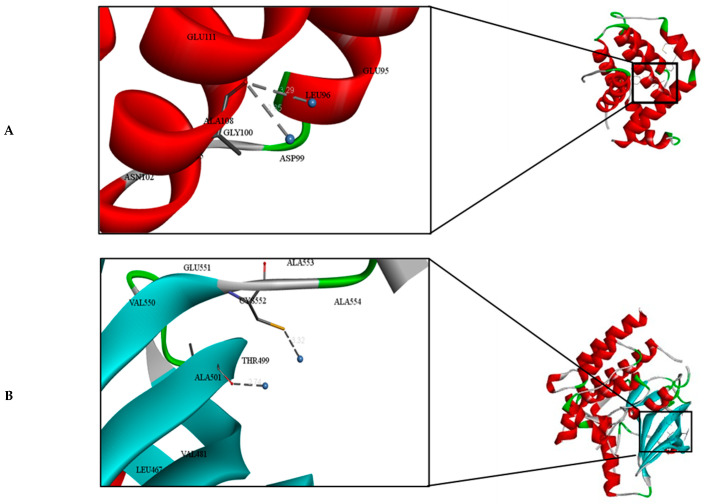
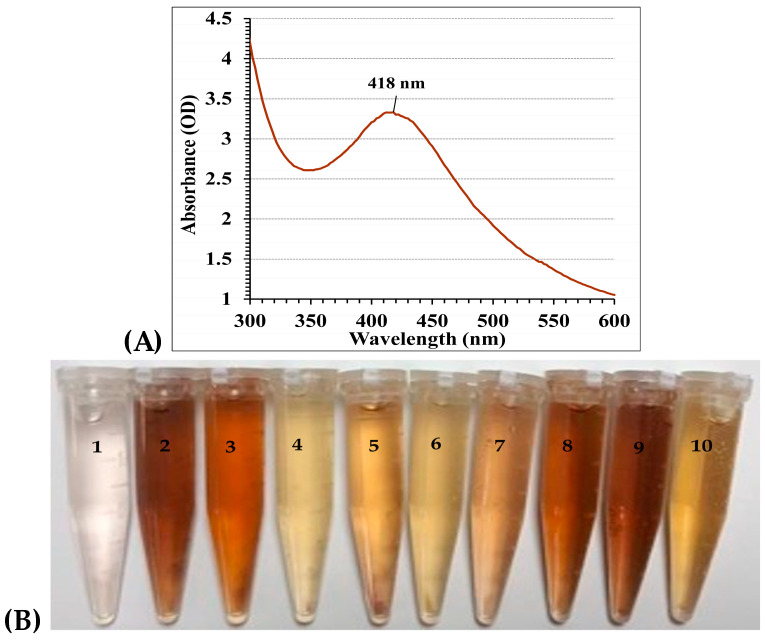
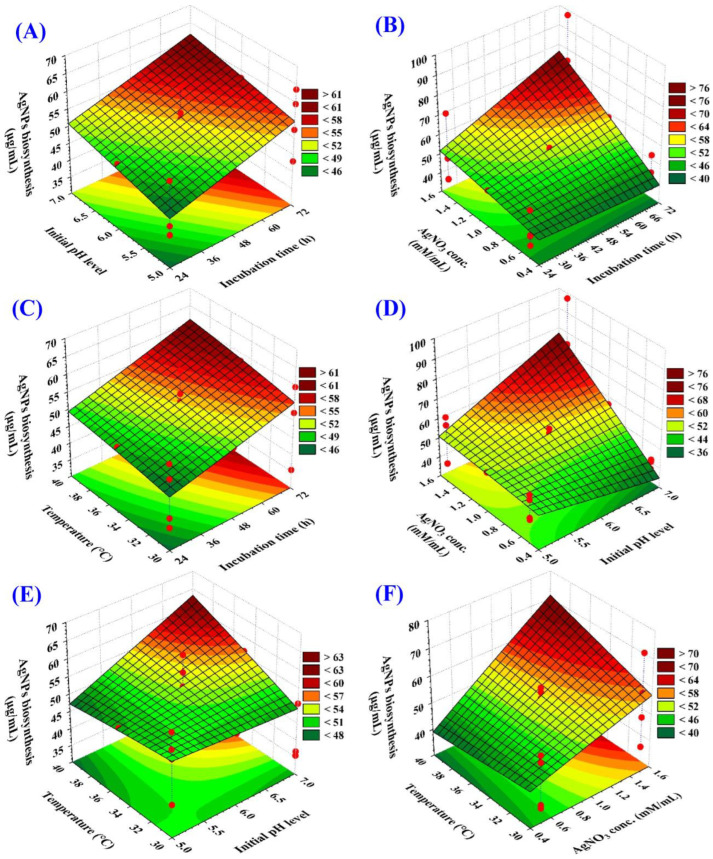
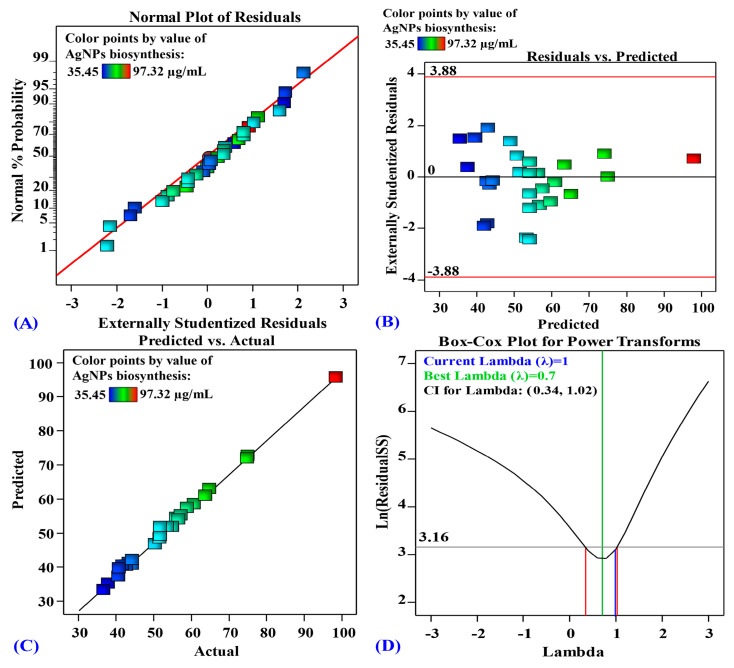
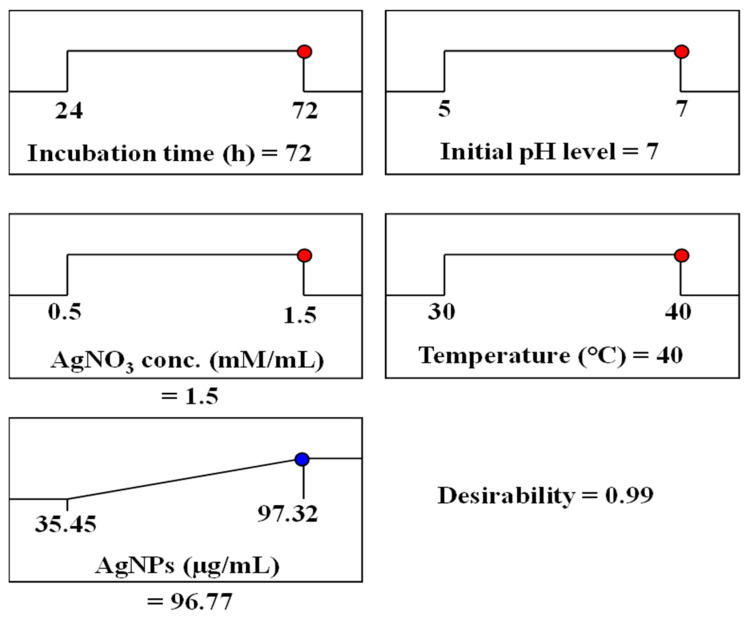
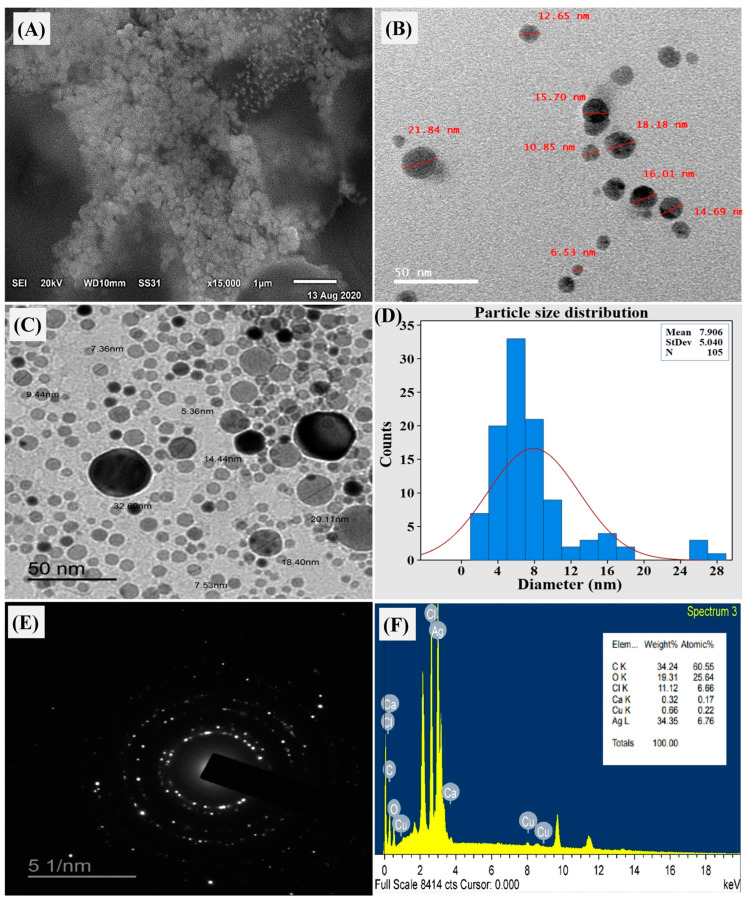
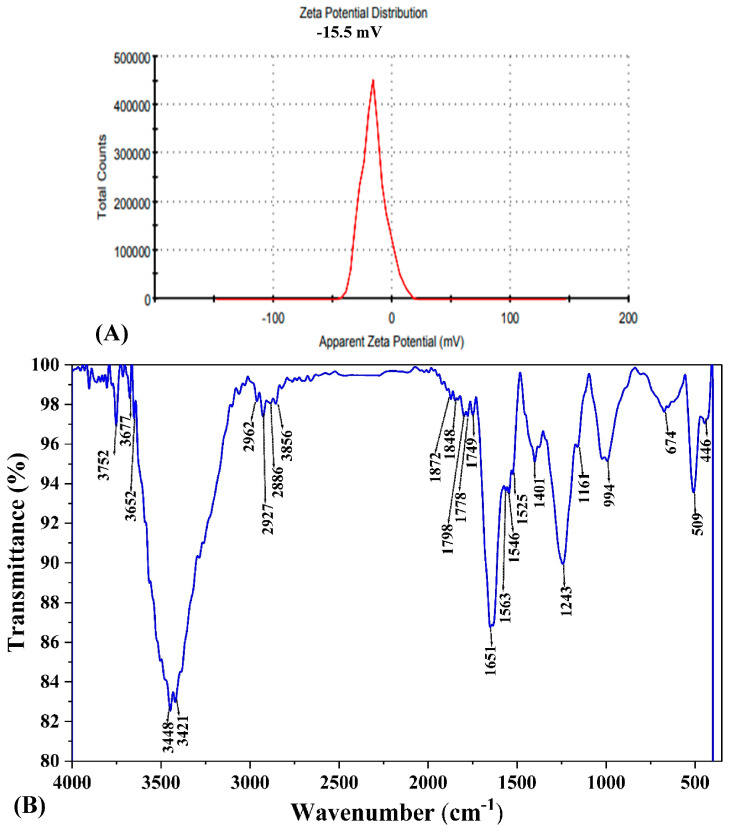
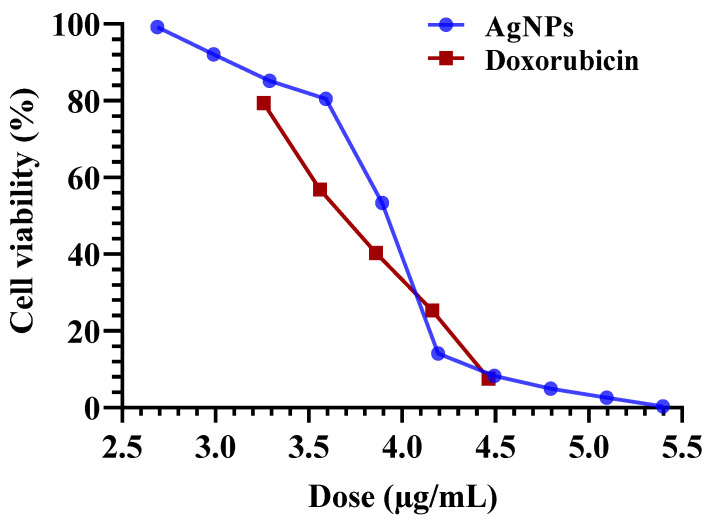
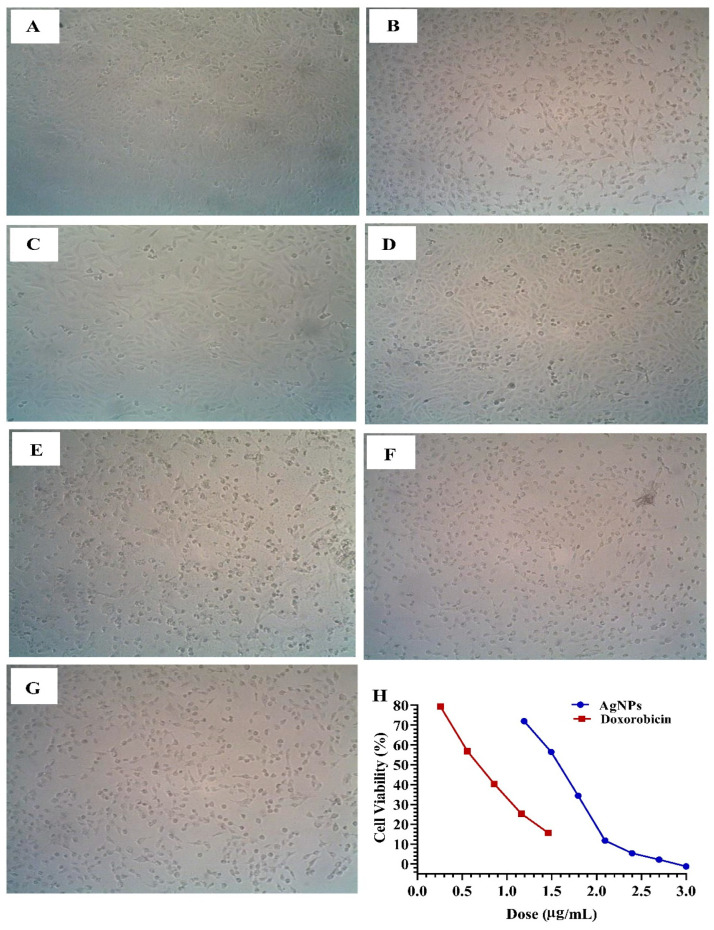
This study explored the green synthesis of silver nanoparticles (AgNPs) using the extracellular filtrate of as a reducing agent and evaluated their antitumor potential through in vitro and in silico approaches. The biosynthesis of AgNPs was monitored by visual observation of the color change and confirmed by UV-Vis spectroscopy, revealing a characteristic peak at 418 nm. Scanning electron microscopy (SEM) and transmission electron microscopy (TEM) analyses showed spherical nanoparticles ranging from 6.53 to 21.84 nm in size, with stable colloidal behavior and a negative zeta potential of -15.5 mV. Selected area electron diffraction (SAED) confirmed the crystalline nature of the AgNPs, whereas energy-dispersive X-ray (EDX) indicated the presence of elemental silver at 34.35%. A face-centered central composite design (FCCD) was employed to optimize the biosynthesis process, yielding a maximum AgNPs yield of 96.77 µg/mL under the optimized conditions. The antitumor efficacy of AgNPs against MCF-7 and HepG2 cancer cell lines was assessed, with IC values of 35.4 µg/mL and 7.6 µg/mL, respectively. Molecular docking revealed interactions between Ag metal and key amino acids of BCL-2 (B-cell lymphoma-2) and FGF19 (fibroblast growth factor 19), consistent with in vitro data. These findings highlight the potential of biologically derived AgNPs as promising therapeutic agents for cancer treatment and demonstrate the utility of these methods for understanding the reaction mechanisms and optimizing nanomaterial synthesis.
本研究探索了利用[具体名称未给出]的细胞外滤液作为还原剂绿色合成银纳米颗粒(AgNPs),并通过体外和计算机模拟方法评估了它们的抗肿瘤潜力。通过肉眼观察颜色变化监测AgNPs的生物合成,并通过紫外可见光谱法进行确认,在418nm处呈现特征峰。扫描电子显微镜(SEM)和透射电子显微镜(TEM)分析显示,纳米颗粒呈球形,尺寸范围为6.53至21.84nm,具有稳定的胶体行为,zeta电位为-15.5mV。选区电子衍射(SAED)证实了AgNPs的晶体性质,而能量色散X射线(EDX)表明元素银的含量为34.35%。采用面心中心复合设计(FCCD)优化生物合成过程,在优化条件下AgNPs的最大产量为96.77μg/mL。评估了AgNPs对MCF-7和HepG2癌细胞系的抗肿瘤功效,其IC值分别为35.4μg/mL和7.6μg/mL。分子对接揭示了Ag金属与BCL-2(B细胞淋巴瘤-2)和FGF19(成纤维细胞生长因子19)的关键氨基酸之间的相互作用,与体外数据一致。这些发现突出了生物衍生的AgNPs作为有前景的癌症治疗药物的潜力,并证明了这些方法在理解反应机制和优化纳米材料合成方面的实用性。